Kettlebell Sumo High Pull: Proper Form, Muscles Worked, Sets, Tips & FAQ
Learn how to perform the Kettlebell Sumo High Pull with proper form. Discover muscles worked, setup, step-by-step execution, sets and reps by goal, common mistakes, FAQs, and recommended equipment.
Kettlebell Sumo High Pull
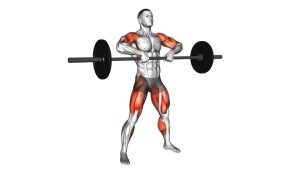
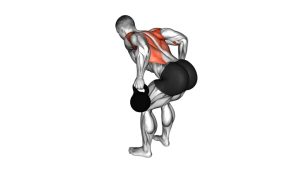
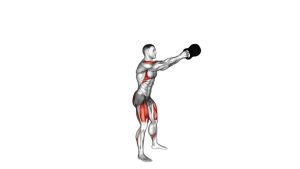
This exercise works best when the movement starts from the lower body, not the arms. A strong rep begins with a stable sumo setup, a forceful hip extension, and a smooth transition into the high pull. You should feel the kettlebell “float” upward from momentum rather than being yanked with the shoulders. Keep your chest proud, spine neutral, and elbows leading at the top.
Quick Overview
| Body Part | Back |
|---|---|
| Primary Muscle | Trapezius, glutes, hamstrings |
| Secondary Muscle | Rear deltoids, rhomboids, latissimus dorsi, quadriceps, core |
| Equipment | Kettlebell |
| Difficulty | Intermediate (requires timing, hip drive, and shoulder control) |
Sets & Reps (By Goal)
- Technique practice: 3-4 sets x 6-8 reps with a light kettlebell and full rest between sets
- Strength & power: 4-5 sets x 5-6 reps with crisp, explosive reps and 90-120 sec rest
- Conditioning: 3-4 sets x 10-15 reps with 45-75 sec rest
- Fat-loss circuits: 2-4 rounds x 8-12 reps paired with swings, goblet squats, or rows
Progression rule: Increase load only after you can keep the kettlebell close, drive with the hips, and finish each rep without shrugging too early or overextending the lower back.
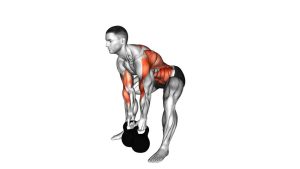
Setup / Starting Position
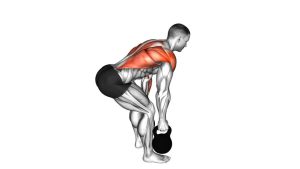
- Take a wide sumo stance: Place your feet wider than shoulder width with the toes turned slightly outward.
- Set the kettlebell between your feet: The handle should be centered and easy to reach without rounding forward.
- Brace and hinge: Push the hips back, bend the knees, keep the chest up, and maintain a neutral spine.
- Grip with both hands: Hold the handle firmly with straight arms and relaxed shoulders.
- Load the legs and hips: Feel tension through the glutes, hamstrings, and inner thighs before initiating the lift.
Tip: Think “legs and hips first, arms second.” The kettlebell should feel connected to your body, not far out in front.
Execution (Step-by-Step)
- Drive through the floor: Push through your heels and mid-foot as you begin extending the knees and hips.
- Snap the hips forward: Explosively extend the hips to generate upward momentum for the kettlebell.
- Keep the kettlebell close: Let the bell travel upward along the line of the body rather than swinging far forward.
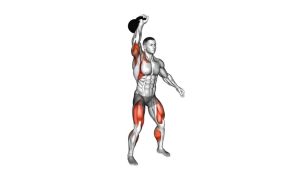
- Pull high with the elbows: Once momentum is created, guide the kettlebell upward by lifting the elbows high and outside.
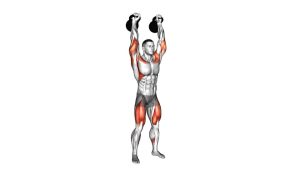
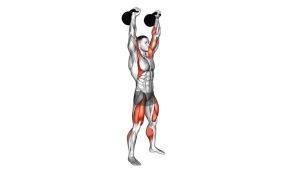
- Reach the top under control: Stand tall with the chest lifted, core braced, and the kettlebell near chest height.
- Lower with control: Extend the arms, let the kettlebell descend, then hinge and bend the knees to return to the starting position.
- Reset and repeat: Maintain posture and rhythm for every rep instead of rushing the descent.
Pro Tips & Common Mistakes
- Drive with the hips: The high pull starts from explosive lower-body power, not from the arms.
- Keep the bell close: A tight path improves control and reduces unnecessary shoulder stress.
- Lead with the elbows: Think elbows up and out instead of curling the kettlebell.
- Do not overlean backward: Finish tall, but avoid arching the lower back at the top.
- Don’t squat it too much: This is not a deep squat; it is a hinge-dominant power movement with a wide stance.
- Avoid early shrugging: Let the hips create momentum before the upper traps assist the finish.
- Use manageable weight: A lighter kettlebell with perfect rhythm is better than a heavy one with sloppy mechanics.
FAQ
What muscles does the kettlebell sumo high pull work most?
It primarily trains the glutes, hamstrings, and trapezius, while the rear delts, rhomboids, lats, quads, and core assist throughout the movement.
Is this exercise more for back or legs?
It is a hybrid movement. The lower body creates the force through the hinge and hip extension, while the upper back and shoulders help finish the high pull. That makes it both a back and posterior-chain exercise.
Should the kettlebell go overhead?
No. In a sumo high pull, the kettlebell typically rises to about chest height. It is not an overhead snatch or press variation.
Is the kettlebell sumo high pull good for fat loss?
Yes, it can be very useful in conditioning workouts because it combines large muscle groups with an explosive movement pattern, which can raise heart rate quickly when programmed correctly.
Who should be cautious with this exercise?
Anyone with active shoulder pain, poor hinge mechanics, uncontrolled lower-back symptoms, or very limited kettlebell experience should start with simpler drills first, such as deadlifts, swings, or upright pull progressions.
Recommended Equipment
- Amazon Basics Cast Iron Kettlebell — solid cast-iron option with a textured wide handle for two-hand kettlebell work
- Adjustable Kettlebell — practical for progressive loading without buying multiple bells
- Lifting Chalk — helps improve grip security when hands get sweaty during explosive reps
- Interlocking Home Gym Floor Mats — useful for protecting floors and creating a more stable kettlebell training area
- Cast Iron Kettlebell Set — good for lifters who want multiple fixed-weight options for strength and conditioning
Tip: For this movement, the best equipment choice is usually a kettlebell that allows you to stay explosive, balanced, and technically clean instead of simply going as heavy as possible.