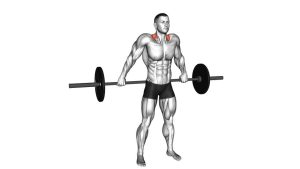
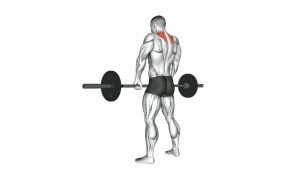
Barbell Overhead Shrug: Proper Form, Benefits, Sets & FAQ
Learn how to do the Barbell Overhead Shrug with proper form to build upper traps, improve overhead stability, and strengthen scapular control. Includes setup, execution, sets by goal, common mistakes, FAQs, and recommended equipment.
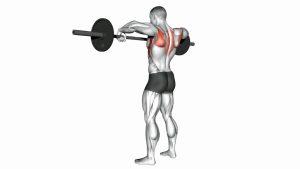
Barbell Overhead Shrug
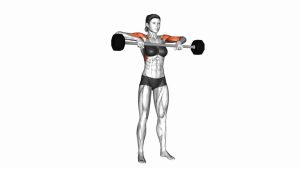
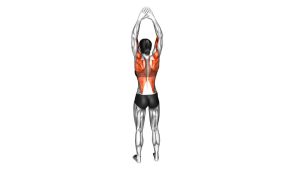
This exercise demands more than trap strength alone. To perform it well, you need solid overhead mobility, locked elbows, a braced core, and precise scapular control. The visible range of motion is usually small, but the muscular demand is high because the shoulders must stabilize the bar overhead while the scapulae move. Done correctly, the Barbell Overhead Shrug strengthens the upper traps without turning the movement into a press or a loose, momentum-based shrug.
Quick Overview
| Body Part | Shoulders |
|---|---|
| Primary Muscle | Upper trapezius |
| Secondary Muscle | Serratus anterior, middle trapezius, rotator cuff, deltoids, levator scapulae |
| Equipment | Barbell, weight plates, squat rack or clean-to-overhead setup space |
| Difficulty | Intermediate to advanced |
Sets & Reps (By Goal)
- Overhead stability: 3–4 sets × 6–10 reps with a controlled 1–2 second pause at the top
- Trap hypertrophy: 3–5 sets × 8–12 reps with steady tempo and strict form
- Strength support for presses/Olympic lifts: 3–4 sets × 5–8 reps using moderate to heavy weight
- Technique practice: 2–3 sets × 6–8 reps with light weight and full focus on bar path stability
Progression rule: Add load only when you can keep the elbows locked, ribcage stacked, and shoulders moving smoothly without turning the rep into a push press or leaning compensation.
Setup / Starting Position
- Set the bar overhead: Press, jerk, or take the bar to a secure overhead lockout position with a grip that allows stable stacking.
- Stack the joints: Keep the bar roughly over the mid-foot with wrists, elbows, shoulders, and torso aligned beneath it.
- Lock the elbows: Arms stay straight throughout the entire set. The movement should come from the shoulder girdle, not the elbows.
- Brace the torso: Tighten the core and glutes to prevent rib flare, lower-back arching, or swaying under the bar.
- Set the head neutral: Look forward and keep the neck long rather than jutting the chin up toward the bar.
Tip: Start lighter than you think you need. Overhead control matters more than load in this variation.
Execution (Step-by-Step)
- Stabilize the overhead lockout: Before moving, make sure the bar is steady and directly supported over your base.
- Shrug the shoulders upward: Elevate the scapulae toward the ears without bending the elbows or changing torso position.
- Allow a small vertical rise: The bar may travel slightly upward as the shoulders elevate, but the motion should stay controlled and balanced.
- Pause briefly at the top: Squeeze the upper traps while maintaining full-body tension and an even overhead position.
- Lower under control: Depress the shoulders slowly back to the start without dropping the bar or relaxing the core.
- Repeat with strict tempo: Every rep should look nearly identical, with no bounce, no knee dip, and no pressing motion.
Pro Tips & Common Mistakes
- Keep the arms locked: This is a shrug, not an overhead press or press-out.
- Use a short, strict range: The movement is naturally small, so don’t force exaggerated elevation.
- Stay stacked: Keep the bar over the mid-foot and avoid leaning backward to “make room” overhead.
- Brace the trunk hard: A stable ribcage and pelvis make the shoulders more efficient overhead.
- Don’t roll the shoulders: Move straight up and down through scapular elevation and controlled lowering.
- Control the descent: Letting the shoulders suddenly drop can irritate the neck and reduce training quality.
- Earn the exercise: If your overhead hold is shaky, master overhead carries, presses, or lighter stability work first.
FAQ
What muscles does the Barbell Overhead Shrug work the most?
The main target is the upper trapezius. Secondary stabilizers include the serratus anterior, rotator cuff, deltoids, and other muscles that help maintain a strong, balanced overhead position.
Is the Barbell Overhead Shrug better than a regular shrug?
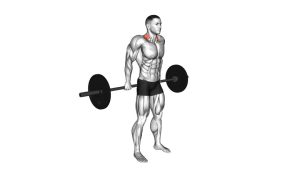
It is not necessarily better, but it is more specific for overhead stability and scapular control. Regular shrugs are usually simpler for pure trap loading, while overhead shrugs challenge coordination and lockout strength more.
How heavy should I go on overhead shrugs?
Use a load you can stabilize overhead without elbow bend, rib flare, or bar drift. For most lifters, this means starting lighter than traditional shrugs and progressing only when overhead mechanics stay clean.
Can beginners do this exercise?
Most beginners should first build overhead mobility, pressing strength, and control before using this movement. It fits best for intermediate and advanced lifters who already own a safe overhead position.
Should I feel this in my neck?
You may feel the upper traps working near the base of the neck, but you should not feel sharp pinching, nerve symptoms, or joint discomfort. The sensation should feel muscular and controlled.
Recommended Equipment
- Olympic Barbell — the primary tool for performing overhead shrugs with stable grip and balanced loading
- Bumper Plates — useful for safe loading and better floor protection in overhead strength training setups
- Power Rack — helpful for setting up the bar safely and improving training confidence with overhead work
- Weightlifting Belt — can help experienced lifters reinforce trunk bracing during heavier overhead sets
- Wrist Wraps — useful for extra wrist support when maintaining a firm and comfortable overhead lockout
Tip: Stable overhead positions come from a combination of mobility, technique, and strength. Equipment can support the movement, but it cannot replace clean mechanics.