Band-Assisted Pull-Up: Proper Form, Sets, Muscles Worked & FAQ
Learn how to do the Band-Assisted Pull-Up with proper form to build back strength, improve pull-up performance, and train lats safely. Includes setup, execution, sets and reps, tips, FAQs, and recommended equipment.
Band-Assisted Pull-Up
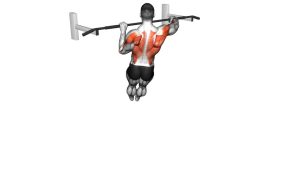
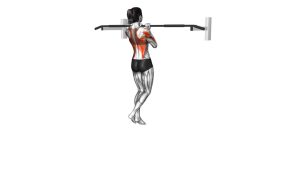
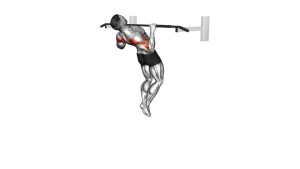
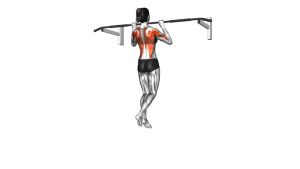
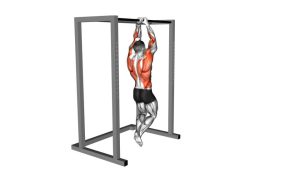
This exercise is ideal for lifters who are not yet strong enough for multiple strict pull-ups or who want to accumulate more pulling volume with better form. From the back view, the movement clearly emphasizes lat engagement, scapular depression, and upper-back contraction. The goal is not to let the band do all the work. Use the assistance only to help you move through a controlled full range while still actively driving yourself upward.
Quick Overview
| Body Part | Back |
|---|---|
| Primary Muscle | Latissimus dorsi |
| Secondary Muscle | Rhomboids, middle and lower traps, biceps, brachialis, rear delts, forearms, core |
| Equipment | Pull-up bar and loop resistance band |
| Difficulty | Beginner to intermediate |
Sets & Reps (By Goal)
- Pull-up progression: 3–5 sets × 4–8 reps with 60–120 seconds rest
- Back strength: 4–5 sets × 5–8 reps with controlled tempo and full range
- Muscle building: 3–4 sets × 6–12 reps with moderate band assistance
- Technique practice: 2–4 sets × 3–6 smooth reps focusing on scapular control
- Finisher or accessory work: 2–3 sets close to technical failure without swinging
Progression rule: First reduce band assistance over time, then increase total reps, then work toward stricter unassisted pull-ups. Quality always matters more than simply using a lighter band too early.
Setup / Starting Position
- Anchor the band securely: Loop a long resistance band over the pull-up bar and pull one end through the other so it tightens around the bar.
- Place your foot or knee in the band: Step into the hanging loop carefully while maintaining control of your balance.
- Grip the bar: Use an overhand grip around shoulder width or slightly wider, depending on comfort and shoulder structure.
- Start from a dead hang: Let the arms extend fully while keeping the torso stable and the core lightly braced.
- Set the shoulders: Before pulling, think about drawing the shoulders down away from the ears to create a stronger pulling position.
Tip: Use a stronger band if you cannot complete clean reps through a full range. Use a lighter band only when your current reps are already controlled and symmetrical.
Execution (Step-by-Step)
- Initiate with the shoulder blades: Begin by depressing the scapulae slightly before bending the elbows. This helps the lats engage first.
- Drive the elbows down: Pull your elbows toward your sides instead of thinking only about lifting the chin.
- Keep the chest proud: Let the chest rise naturally toward the bar without excessive lower-back arching.
- Reach the top under control: Pull until your chin reaches bar level or slightly above, while maintaining tension through the back.
- Pause briefly: Hold the top for a moment to reinforce control and avoid bouncing.
- Lower slowly: Extend the elbows and return to the dead hang with a smooth eccentric phase instead of dropping quickly.
- Reset each rep: Re-establish your shoulder position and body control before starting the next repetition.
Pro Tips & Common Mistakes
- Pull with your elbows: Thinking “elbows down” usually improves lat engagement better than thinking only about getting the chin over the bar.
- Control the lowering phase: The eccentric portion builds strength fast, so do not waste it by dropping immediately.
- Do not over-rely on the band: Too much assistance can hide weak pulling mechanics and reduce real strength carryover.
- Avoid swinging: Kipping or leg movement makes the exercise easier but removes tension from the target muscles.
- Keep the ribs under control: A slight chest lift is fine, but excessive arching often turns the rep messy and unstable.
- Use full range: Start from a true hang and finish as high as your form allows without craning the neck.
- Stay symmetrical: Watch for one elbow flaring more or one shoulder hiking upward sooner than the other.
- Pair it smartly: This movement works well with rows, scapular pull-ups, dead hangs, and lat-focused accessory work.
FAQ
Is the band-assisted pull-up good for beginners?
Yes. It is one of the best beginner-friendly pull-up progressions because it lets you practice the real movement pattern with less load while still building back and arm strength.
Should I place my foot or knee in the band?
Either can work. A foot-in-band position often feels more stable and easier to control, while a knee-in-band setup can be more comfortable for some lifters. Choose the version that keeps your body steadier.
How strong should the band be?
Use enough assistance to complete clean reps with full range and minimal swinging. If you can only do partial reps or your form breaks down badly, the band is probably too light.
Will band-assisted pull-ups help me get my first strict pull-up?
Absolutely. They help build pulling strength, improve technique, and teach body control. For best results, combine them with eccentric pull-ups, scapular pull-ups, and horizontal rowing work.
What are the most common mistakes with this exercise?
The most common mistakes are using too much momentum, choosing the wrong band tension, cutting the range short, shrugging the shoulders excessively, and lowering too fast between reps.
Recommended Equipment (Optional)
- Pull-Up Assistance Bands Set — lets you scale assistance levels as your pull-up strength improves
- Doorway Pull-Up Bar — practical home option for pull-ups, hangs, and band-assisted work
- Workout Grips or Hand Protectors — helpful for reducing palm irritation during higher-volume pulling sessions
- Liquid Chalk — improves grip security on the bar, especially during sweaty sessions
- Adjustable Dip Belt — useful later when you progress from assisted pull-ups to weighted pull-ups
Tip: Start with the band set first. As your reps improve, gradually move toward lighter assistance rather than rushing into unassisted or weighted work too soon.