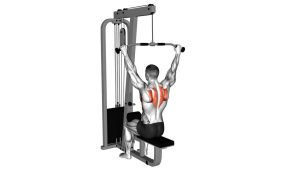
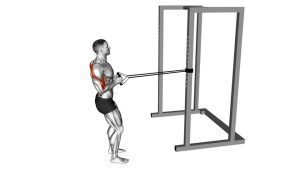
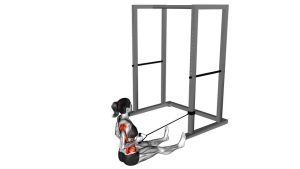
Band Kneeling Lat Pulldown: Proper Form, Sets, Tips & FAQ
Learn how to perform the Band Kneeling Lat Pulldown with proper form for better lat activation and back strength. Includes setup, execution, sets by goal, common mistakes, FAQs, and recommended equipment.
Band Kneeling Lat Pulldown
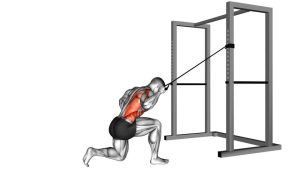
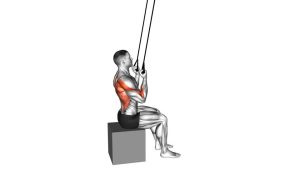
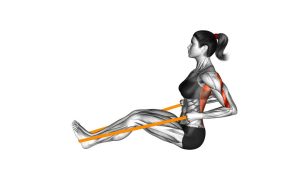
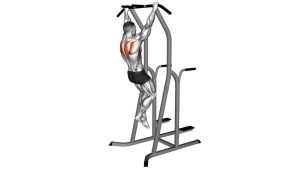
This exercise works best when each rep is driven by the back rather than the arms. The goal is to create a clean vertical pull with the elbows moving down and slightly back while the chest stays tall and the core stays braced. A properly performed rep should produce a clear contraction through the lats and upper back, not excessive swinging, shrugging, or leaning.
Quick Overview
| Body Part | Back |
|---|---|
| Primary Muscle | Latissimus dorsi |
| Secondary Muscle | Rhomboids, middle traps, rear delts, biceps, teres major |
| Equipment | Resistance band with a secure overhead anchor point |
| Difficulty | Beginner to Intermediate |
Sets & Reps (By Goal)
- Muscle growth: 3–4 sets × 8–15 reps with controlled tempo and 60–90 seconds of rest
- Technique and lat activation: 2–3 sets × 10–15 reps using lighter resistance and smooth reps
- Endurance / home back workout: 2–4 sets × 15–20 reps with strict form and short rest periods
- Warm-up before heavier pulling: 2 sets × 12–15 reps with light tension and strong scapular control
Progression rule: Increase reps first, then band tension. Only progress when you can keep the elbows tracking well, avoid shrugging, and fully control the return phase.
Setup / Starting Position
- Anchor the band overhead: Attach the resistance band to a strong pull-up bar, rack, or door anchor positioned above you.
- Kneel under the anchor point: Take a stable kneeling position with knees about hip-width apart and torso upright.
- Grip the band evenly: Hold both ends or handles with arms extended overhead and palms facing forward or slightly inward.
- Set your posture: Brace the core, keep the ribs down, lift the chest slightly, and keep the shoulders away from the ears.
- Start long: Begin with the lats stretched, elbows straight but not locked hard, and head in a neutral position.
Tip: If the band pulls you off balance, move slightly farther back or reduce band tension so you can stay tall and stable.
Execution (Step-by-Step)
- Initiate with the shoulders: Start by pulling the shoulders down, thinking about depressing the shoulder blades before bending the elbows.
- Drive the elbows down: Pull the band toward the upper chest by bringing the elbows down and slightly back toward your sides.
- Keep the torso steady: Stay upright without turning the movement into a row by leaning backward.
- Squeeze the back: At the bottom, pause briefly and contract the lats, mid-back, and upper back without overextending the lower back.
- Return under control: Slowly extend the arms back overhead and resist the upward pull of the band through the entire eccentric phase.
Pro Tips & Common Mistakes
- Lead with the elbows: Pulling with the elbows helps keep tension on the lats rather than overloading the forearms and biceps.
- Do not shrug: Keep the shoulders down throughout the rep to prevent the upper traps from dominating.
- Avoid leaning back too much: Excessive torso lean changes the movement into more of a row than a true vertical pulldown.
- Control the eccentric: Letting the band snap upward reduces time under tension and weakens the training effect.
- Use full but safe range: Stretch at the top, then pull to a strong bottom position without forcing the shoulders into discomfort.
- Match band tension to your level: A band that is too heavy often causes momentum, shortened range of motion, and poor scapular mechanics.
FAQ
What muscles does the Band Kneeling Lat Pulldown work?
The primary target is the latissimus dorsi. It also trains the rhomboids, middle traps, rear delts, teres major, and biceps while reinforcing scapular control through a vertical pulling pattern.
Is this a good substitute for machine lat pulldowns?
Yes, especially for home training. While band resistance feels different from a cable stack, it still provides a useful vertical pull pattern for lat activation, back hypertrophy, and general pulling strength.
Should I pull to my chest or lower?
Most lifters should pull to the upper chest or collarbone area while keeping the elbows driving down. Going much lower often leads to compensation through the wrists, shoulders, or torso.
Why do I feel this mostly in my arms?
That usually happens when you pull with the hands instead of leading with the elbows, or when the shoulders shrug upward. Reduce the resistance, slow the rep down, and focus on pulling the elbows toward your sides.
Can beginners use this exercise?
Absolutely. It is beginner-friendly when the band tension is appropriate and the anchor is secure. It is also useful for learning lat engagement before progressing to heavier pulldowns or pull-up variations.
Recommended Equipment (Optional)
- Resistance Bands Set — a versatile option for adjusting tension as you progress through lat and back exercises
- Resistance Band Door Anchor — helps create a stable overhead anchor point for home pulldown variations
- Doorway Pull-Up Bar — useful as a strong anchor position for bands and for additional back-training options
- Exercise Kneeling Pad — improves comfort during kneeling sets and helps maintain a stable training position
- Lifting Straps — optional for reducing grip fatigue during higher-volume pulling sessions
Tip: Prioritize a secure anchor and the right band tension first. Those two details have the biggest impact on both safety and exercise quality.