Backhand Raise: Form, Rear Delt Benefits, Sets, Tips & FAQ
Learn how to do the Backhand Raise with proper form to target the rear delts and upper back. Includes setup, execution, sets by goal, common mistakes, FAQs, and recommended equipment.
Backhand Raise
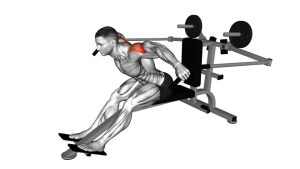
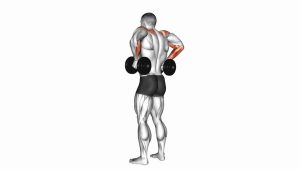
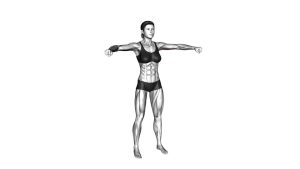
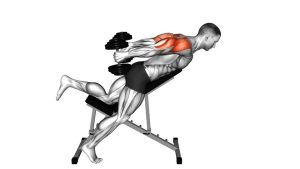
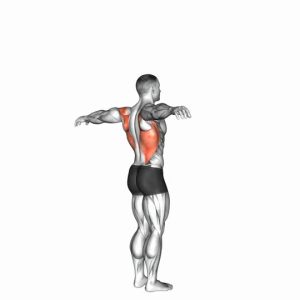
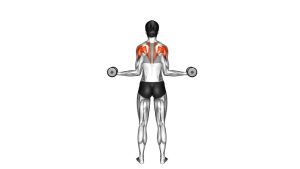
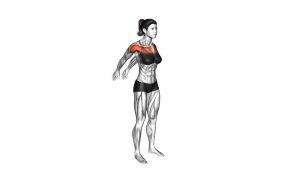
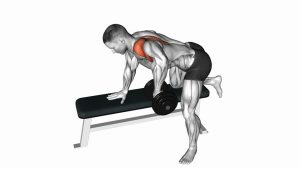
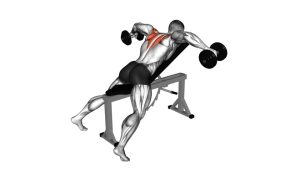
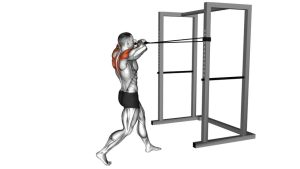
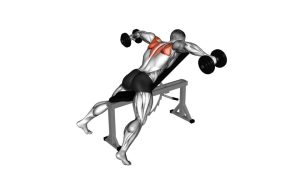
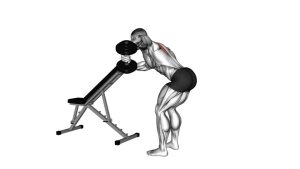
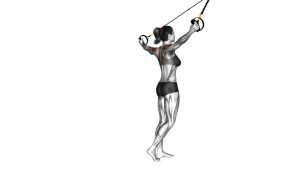
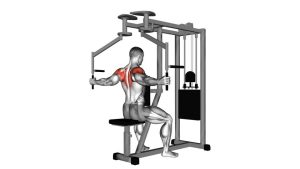
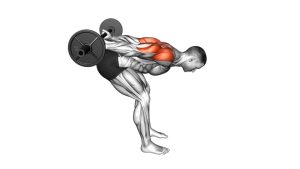
This exercise is especially useful for lifters who want more rear delt development without turning the movement into a row or trap-dominant shrug. The arms stay mostly straight, the chest stays slightly hinged forward, and the shoulders move through a controlled backward raise. You should feel the effort mostly in the rear shoulders and upper back, not in the lower back, neck, or wrists.
Quick Overview
| Body Part | Rear Shoulders |
|---|---|
| Primary Muscle | Rear deltoids (posterior deltoids) |
| Secondary Muscle | Rhomboids, middle trapezius, rotator cuff stabilizers, upper back musculature |
| Equipment | None, light dumbbells, or light resistance bands |
| Difficulty | Beginner to Intermediate |
Sets & Reps (By Goal)
- Activation / warm-up: 2–3 sets × 12–20 reps with very light resistance and smooth tempo
- Muscle building: 3–4 sets × 10–15 reps with full control and a brief peak contraction
- Posture-focused accessory work: 2–4 sets × 12–18 reps with strict form and no momentum
- Rehab-style shoulder control: 2–3 sets × 8–12 slow reps using a short, pain-free range
Progression rule: Add reps first, then increase resistance only when you can keep the elbows nearly fixed, the torso stable, and the shoulders free of shrugging.
Setup / Starting Position
- Stand tall: Start with feet about hip-width apart and knees slightly bent.
- Hinge forward: Push the hips back and lean the torso forward slightly while keeping the spine neutral.
- Set the arms: Let the arms hang slightly behind the body or near the hips with palms facing backward.
- Keep the chest open: Avoid rounding through the upper back or collapsing the shoulders forward.
- Brace lightly: Tighten the core enough to keep the torso still without making the movement stiff.
Tip: A mild forward lean usually helps the rear delts line up better with the movement and reduces the urge to swing.
Execution (Step-by-Step)
- Start under control: From the bent-over position, keep the neck neutral and shoulders relaxed.
- Raise the arms backward: Lift the arms behind you in a controlled arc, driven from the shoulder joint.
- Keep the elbows soft: Maintain a very slight bend, but do not turn the movement into a row.
- Pause briefly at the top: Squeeze the rear delts for 1 second without shrugging the traps.
- Lower slowly: Return the arms to the start position with steady tension and no dropping.
- Repeat smoothly: Keep the same tempo on every rep and avoid using body momentum.
Pro Tips & Common Mistakes
- Lead with the rear shoulders: Think about moving from the back of the shoulders instead of throwing the hands upward.
- Keep the motion clean: A smaller strict range is better than a bigger swinging range.
- Don’t shrug: Let the traps assist naturally, but do not elevate the shoulders toward the ears.
- Stay hinged: Avoid standing up during the rep, which shifts tension away from the target muscles.
- Use light resistance: Rear delt work usually responds better to control than to heavy loading.
- Keep wrists neutral: Don’t overextend the hands just to make the movement look bigger.
- Control the lowering phase: The eccentric portion helps reinforce shoulder stability and muscle tension.
FAQ
What muscles does the Backhand Raise work?
The Backhand Raise mainly targets the rear deltoids. It also involves the rhomboids, middle traps, and other upper-back stabilizers.
Is the Backhand Raise a shoulder or back exercise?
It is primarily a rear shoulder exercise, but the upper back assists throughout the movement. That makes it a useful bridge between shoulder isolation work and posture-focused upper-back training.
Should I use heavy weight for this exercise?
Usually no. This exercise works best with light resistance and strict technique. Going too heavy often turns it into a swing or shrug, which reduces rear delt involvement.
Can beginners do the Backhand Raise?
Yes. Beginners can start with bodyweight only or very light resistance and focus on posture, control, and a smooth backward raise.
Where should I feel it most?
You should mainly feel it in the back of the shoulders and to a lesser extent in the upper back. If you feel mostly neck tension or lower-back strain, adjust your position and reduce momentum.
Recommended Equipment (Optional)
- Resistance Bands Set — useful for adding light resistance and controlled rear-delt tension
- Light Neoprene Dumbbells — ideal for strict reps, high control, and beginner-friendly loading
- Shoulder Posture Corrector — optional awareness tool for improving upper-body positioning outside training
- Exercise / Yoga Mat — helpful for warm-ups, floor drills, and pairing this movement with posture work
- Adjustable Shoulder Support Brace — optional support tool for users who want extra shoulder comfort during light accessory work
Tip: The best results usually come from light resistance, high-quality reps, and consistency, not from loading this movement heavily.