Commando Pull-Up: Proper Form, Muscles Worked, Sets, Tips & FAQ
Learn how to do the Commando Pull-Up with proper form. Discover muscles worked, setup, step-by-step execution, sets and reps by goal, common mistakes, FAQs, and recommended equipment.
Commando Pull-Up
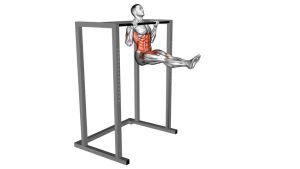
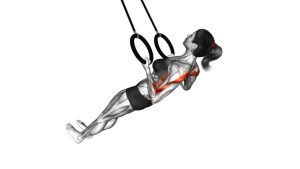
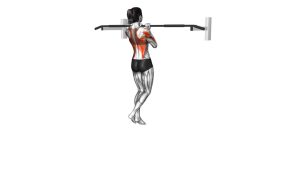
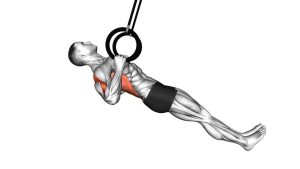
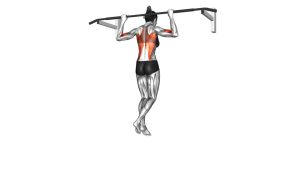
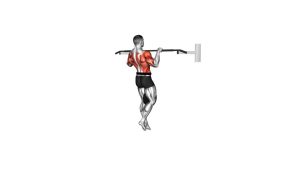
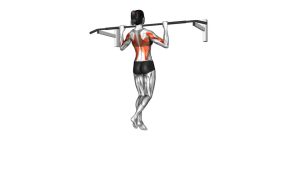
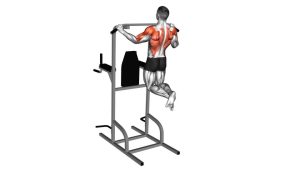
The Commando Pull-Up is best treated as a controlled strength exercise, not a fast momentum-based rep challenge. Because the torso shifts slightly around the bar, each repetition places a unique demand on your upper back, arms, and trunk stability. You should feel a hard contraction through the pulling side, both arms working together, and your core staying tight to keep the body from twisting excessively.
Quick Overview
| Body Part | Back |
|---|---|
| Primary Muscle | Latissimus dorsi, upper back |
| Secondary Muscle | Biceps, brachialis, forearms, rear delts, rhomboids, core |
| Equipment | Straight pull-up bar |
| Difficulty | Intermediate to Advanced |
Sets & Reps (By Goal)
- Strength focus: 3-5 sets x 3-6 reps per side, 90-150 sec rest
- Muscle building: 3-4 sets x 6-10 total reps, 60-90 sec rest
- Pull-up skill development: 2-4 sets x 3-5 clean reps per side, full control, 90 sec rest
- Advanced upper-back finisher: 2-3 sets x 6-8 total reps after standard pull-ups or rows
Progression rule: Add reps only when you can alternate sides evenly, reach the top without swinging, and lower under control. Quality matters more than volume on this variation.
Setup / Starting Position
- Use a straight pull-up bar: Reach overhead and grip the bar with both hands close together in a staggered position, with one hand slightly in front of the other.
- Hang with control: Let the body extend fully while keeping the shoulders active rather than completely collapsed.
- Brace the trunk: Tighten the abs and glutes to reduce swinging and keep the ribcage from flaring.
- Set the shoulders: Think “down and back” before you pull so the upper back engages first.
- Choose your first side: Decide which side of the bar your head will rise toward on the first rep.
Tip: Crossing the ankles lightly can help reduce unwanted leg movement, but the main goal is a steady, controlled hang.
Execution (Step-by-Step)
- Start from a dead hang: Fully extend your arms while keeping tension in the shoulders and core.
- Initiate with the back: Pull the shoulder blades down and slightly back before bending the elbows hard.
- Drive upward and to one side: Pull your chest toward the bar and guide your head to one side of it instead of going straight underneath.
- Reach the top with control: Bring the chin above bar level on that side while keeping the movement tight and compact.
- Lower slowly: Return to the bottom under control without dropping or twisting wildly.
- Alternate sides: On the next rep, pull up so your head rises to the opposite side of the bar.
Pro Tips & Common Mistakes
- Pull with the elbows: Drive them down hard to recruit the lats instead of yanking with only the arms.
- Keep reps even: Alternate sides consistently so one side does not dominate the movement pattern.
- Stay tight through the core: A braced torso helps you control the side-to-side path.
- Avoid kipping: Momentum makes the exercise easier but reduces back tension and control.
- Do not shrug upward: Keep the neck long and shoulders active instead of letting them rise toward the ears.
- Use full control on the descent: The lowering phase builds strength and helps protect the shoulders and elbows.
- Earn the variation: If standard pull-ups are still inconsistent, build a stronger base first.
FAQ
What muscles does the Commando Pull-Up work the most?
It primarily targets the lats and upper back, while the biceps, brachialis, forearms, rear delts, and core provide strong assistance. Grip strength also plays a major role.
Is the Commando Pull-Up harder than a standard pull-up?
For many lifters, yes. The close staggered grip and side-to-side path increase the coordination demand and make each rep feel less mechanically simple than a regular pull-up.
Should I alternate sides every rep?
Yes, that is the most common and balanced approach. Alternating sides helps keep the work more symmetrical and prevents one side from doing most of the lifting over time.
Can beginners do Commando Pull-Ups?
Most beginners should first build strength with assisted pull-ups, band-assisted pull-ups, inverted rows, and standard pull-up progressions. The Commando Pull-Up usually fits better once you already have solid pulling strength and control.
How do I make this exercise easier?
Use a resistance band for assistance, reduce total reps, and focus on clean singles or doubles. You can also practice the top half of the movement before attempting full sets.
Recommended Equipment (Optional)
- Doorway Pull-Up Bar — useful for home training if you do not have access to a gym bar
- Pull-Up Assist Resistance Bands — helps reduce bodyweight load while you learn the pattern
- Pull-Up Grips / Gymnastics Grips — protects the hands and improves comfort during high-volume pulling work
- Gym Chalk Ball — improves grip security when your hands get sweaty
- Lifting Straps — optional tool for accessory pulling work if grip becomes the limiting factor
Tip: For direct Commando Pull-Up practice, prioritize a stable bar and strong grip first. Use assistance bands if you need cleaner reps without excessive swinging.