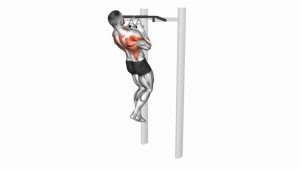
Butterfly Pull-Up: Proper Form, Muscles Worked, Sets, Tips & FAQ
Learn how to do the Butterfly Pull-Up with proper form. Discover muscles worked, setup, step-by-step execution, sets and reps by goal, common mistakes, FAQs, and recommended equipment.
Butterfly Pull-Up
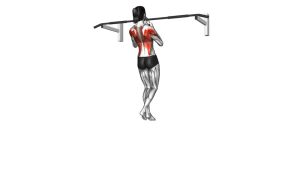
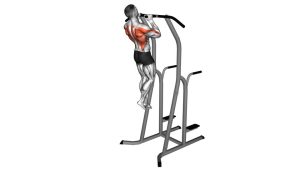
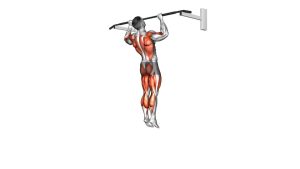
This exercise is best suited for athletes who already have solid control on strict pull-ups and basic kipping mechanics. The goal is not to muscle through each rep from a dead stop, but to create an efficient cycle where the body moves through an arch-to-hollow rhythm while the upper back and lats guide the pull. Smooth timing, consistent grip, and controlled shoulder positioning matter more than simply trying to yank yourself over the bar.
Quick Overview
| Body Part | Back |
|---|---|
| Primary Muscle | Latissimus dorsi |
| Secondary Muscle | Rhomboids, middle/lower traps, rear deltoids, biceps, forearms, core |
| Equipment | Pull-up bar; optional grips, chalk, and resistance bands for practice |
| Difficulty | Advanced — best for athletes with a strong pull-up and kipping base |
Sets & Reps (By Goal)
- Skill practice: 4–6 sets × 3–6 reps with full rest between sets
- Conditioning: 3–5 sets × 8–15 reps depending on rhythm and grip endurance
- Pull-up efficiency work: 5–8 short sets of 2–5 crisp reps focused on timing
- Workout use: Follow programmed reps, but stop a set early if the movement becomes sloppy
Progression rule: Build clean rhythm first, then add reps. Do not chase volume until every rep stays smooth, controlled, and repeatable.
Setup / Starting Position
- Grip the bar securely: Use a pronated grip slightly outside shoulder width unless your sport or structure calls for a different width.
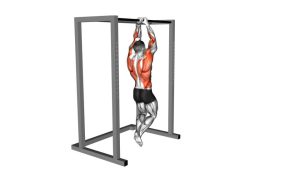
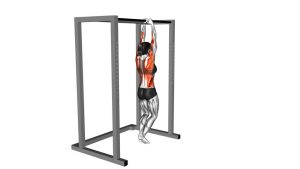
- Start in a controlled hang: Arms fully extended, core braced, legs together, and shoulders active rather than loose.
- Create your rhythm: Begin a small arch-to-hollow body swing, keeping the motion organized and not overly loose.
- Set your shoulder position: Think long neck, active lats, and stable shoulder blades before the first aggressive pull.
- Prepare for circular movement: The body should be ready to move around the bar in a fluid loop rather than straight up and straight down.
Tip: Many athletes learn the pattern more safely after first mastering strict pull-ups, beat swings, and standard kipping pull-ups.
Execution (Step-by-Step)
- Establish the swing: Move from a slight arch position into a hollow position with control, using your shoulders and torso to set the rhythm.
- Drive the pull: As your body passes through the strongest part of the swing, pull with the lats and arms while the hips and legs help maintain momentum.
- Clear the bar: Bring the chin above the bar in one smooth action without pausing or over-pulling.
- Move forward around the bar: Instead of dropping straight down, let the body travel forward and downward in a circular path.
- Reconnect the next rep: Return to the arch position, re-load the swing, and transition immediately into the next pull.
Pro Tips & Common Mistakes
- Lead with rhythm, not panic: The exercise becomes easier when the swing, pull, and transition are timed together.
- Keep the circle compact: Huge, wild swings waste energy and make it harder to link reps cleanly.
- Use the lats: Think about driving the elbows down and back instead of only tugging with the arms.
- Do not kick too early: Mistimed leg action disrupts the path and throws off the next rep.
- Stay active at the bottom: Hanging passively into each rep can stress the shoulders and break rhythm.
- Avoid learning this too soon: If you lack strict pulling strength or kipping control, build those first.
- Protect your hands: High-rep butterfly work can be rough on the palms, especially when grip shifts during fast transitions.
FAQ
What muscles does the Butterfly Pull-Up work the most?
The main driver is the latissimus dorsi, while the rhomboids, traps, rear delts, biceps, forearms, and core all help with pulling, shoulder control, grip, and body positioning.
Is the Butterfly Pull-Up better than a strict pull-up?
It is not better for every goal. A strict pull-up is usually better for raw strength, while the Butterfly Pull-Up is more useful for efficiency, rhythm, and high-rep workout performance.
Can beginners do Butterfly Pull-Ups?
Most beginners should not start here. It is smarter to first build strict pull-up strength, scapular control, hanging rhythm, and standard kipping mechanics before attempting butterfly reps.
Why do Butterfly Pull-Ups feel so technical?
Because the movement is not just a pull. It combines grip, shoulder action, body swing, hip timing, and a circular descent. Small timing errors can make the rep feel awkward very quickly.
How do I know when to stop a set?
Stop when your rhythm breaks down, your hands start slipping, or you can no longer keep the body path smooth and repeatable. High-quality reps are more valuable than forcing extra messy reps.
Recommended Equipment
- Pull-Up Bar — the main piece of equipment for practicing butterfly mechanics and high-rep pulling
- Pull-Up Assistance Bands — useful for reducing load while learning rhythm, timing, and bar turnover
- Gymnastics Grips — helps protect the hands during repeated bar work and high-volume training
- Liquid Chalk — improves grip security when sweat makes the bar harder to control
- Wrist Wraps — optional support for athletes who want extra wrist stability during bar sessions
Tip: Choose equipment that improves control and consistency. Better grip and safer progressions often matter more than adding extra difficulty too early.