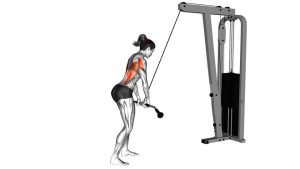
Cable Standing Close-Grip Row: Form, Muscles Worked, Sets, Tips & FAQ
Learn how to do the Cable Standing Close-Grip Row with proper form. Discover muscles worked, setup, execution steps, sets and reps by goal, common mistakes, FAQs, and recommended equipment.
Cable Standing Close-Grip Row
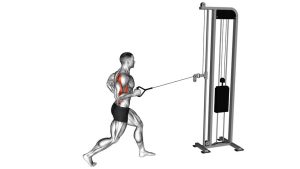
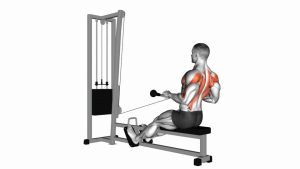
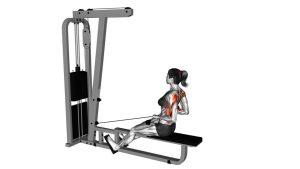
This row variation is excellent for building back thickness, improving posture, and developing better scapular control. Because the exercise is done standing, the core also has to stabilize the torso while the back produces force. When performed correctly, the movement should feel smooth and deliberate, with tension centered in the back rather than the lower back, neck, or arms.
Quick Overview
| Body Part | Back |
|---|---|
| Primary Muscle | Latissimus dorsi, rhomboids, middle trapezius |
| Secondary Muscle | Posterior deltoids, biceps, brachialis, forearms, core stabilizers |
| Equipment | Cable machine with close-grip row handle or V-handle attachment |
| Difficulty | Beginner to Intermediate |
Sets & Reps (By Goal)
- Muscle growth: 3–4 sets × 8–12 reps with controlled tempo and a strong squeeze at the end of each rep
- Strength foundation: 4–5 sets × 5–8 reps using heavier weight without torso swinging
- Technique and control: 2–3 sets × 10–15 reps with lighter weight and strict scapular movement
- Warm-up / activation: 2 sets × 12–15 reps using easy resistance to wake up the upper and middle back
Progression rule: Add reps first, then increase weight gradually once you can keep the chest open, elbows close, and the eccentric phase fully controlled.
Setup / Starting Position
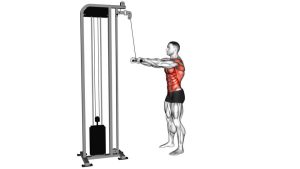
- Attach the handle: Use a close-grip row handle or V-handle on a cable machine set around mid-torso height or slightly lower.
- Take your stance: Stand facing the machine with feet about hip-width apart. You can use a staggered stance if it helps balance.
- Grip the handle: Hold the attachment with a neutral grip and step back until the cable is already under tension.
- Set your posture: Keep a proud chest, neutral spine, soft knees, and braced core. Let the shoulders reach forward slightly without rounding the whole back.
- Start with straight but not locked arms: The handle should be in front of you, and your torso should stay upright or only slightly leaned back.
Tip: A small athletic stance helps you stay stable and keeps the row focused on the back instead of turning into a whole-body pull.
Execution (Step-by-Step)
- Brace first: Tighten your core and keep the ribcage stacked over the hips.
- Initiate with the back: Begin by drawing the shoulders back slightly instead of yanking with the arms.
- Drive the elbows backward: Pull the handle toward the lower chest or upper abdomen while keeping the elbows close to your sides.
- Squeeze at peak contraction: As the handle reaches the torso, pinch the shoulder blades together and hold briefly.
- Return slowly: Extend the arms forward under control and allow the shoulder blades to move naturally into slight protraction.
- Repeat without momentum: Each rep should look smooth and identical from start to finish.
Pro Tips & Common Mistakes
- Lead with the elbows: This helps shift the work into the back instead of overusing the biceps.
- Keep the chest open: A lifted chest makes it easier to fully contract the rhomboids and middle traps.
- Do not swing the torso: Excessive leaning back reduces tension on the target muscles and turns the lift sloppy.
- Avoid shrugging up: Letting the shoulders rise too high can move emphasis away from the lats and middle back.
- Control the eccentric: The lowering phase builds technique and tension, so do not let the cable pull you forward too fast.
- Use a manageable load: Too much weight often causes shortened range of motion and poor scapular control.
- Do not flare the elbows wide: A close grip works best when the elbows stay relatively tucked.
FAQ
What muscles does the Cable Standing Close-Grip Row work most?
The main emphasis is on the lats, rhomboids, and middle traps. The biceps, rear delts, and forearms help during the pull, while the core stabilizes your standing position.
Is this exercise better for the lats or the middle back?
It trains both, but the exact emphasis depends on your setup. A close neutral grip with tucked elbows usually gives strong lat involvement while still hitting the rhomboids and middle traps hard.
Should I lean back during the row?
Only slightly, if at all. A small natural lean is fine, but a big backward swing usually means the weight is too heavy. Keep the movement controlled and let the back do the work.
Where should the handle finish?
For most lifters, the best finish point is around the lower chest to upper abdomen. The exact position can vary slightly based on cable height and arm length, but the goal is a strong squeeze without collapsing posture.
Can beginners use this exercise?
Yes. It is beginner-friendly as long as the weight is light enough to allow full control. Start with smooth reps, learn how to retract the shoulder blades properly, and build load over time.
Recommended Equipment
- Close-Grip Cable Attachment — ideal for neutral-grip rows and consistent elbow tracking
- V-Bar Cable Attachment — a classic option for close-grip cable rows and pulldown variations
- Resistance Bands Set — useful for back activation drills, warm-ups, and home-based pulling work
- Lifting Straps — helpful when grip fatigue limits back training on higher-volume pulling sessions
- Cable Attachment Set — a practical bundle if you want multiple handles for rows, pulldowns, curls, and triceps work
Tip: For this exercise, the most useful first purchase is usually a solid close-grip row handle or V-bar attachment. Those tools match the movement pattern best.