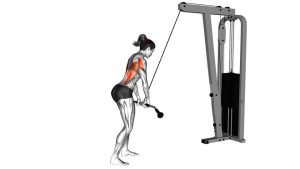
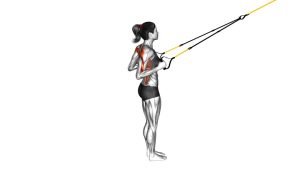
Standing Boat Row: Form, Benefits, Sets, Tips & FAQ
Learn the Standing Boat Row to strengthen your back, rear delts, and posture with controlled rowing form, sets, tips, mistakes, FAQs, and gear.
Standing Boat Row
This exercise is useful for beginners, home workouts, posture training, and warm-up routines. Because the movement uses a rowing pattern without heavy load, it helps you practice how to squeeze the shoulder blades, control the arms, and activate the back without relying on momentum.
Quick Overview
| Body Part | Back |
|---|---|
| Primary Muscle | Upper back, lats, rhomboids |
| Secondary Muscle | Rear deltoids, biceps, mid traps, core stabilizers |
| Equipment | No equipment required; optional resistance band for progression |
| Difficulty | Beginner |
Sets & Reps (By Goal)
- Technique practice: 2–3 sets × 10–12 reps with slow, controlled movement
- Posture activation: 2–4 sets × 12–15 reps with a 1–2 second squeeze
- Warm-up before back training: 1–3 sets × 10–15 reps at easy effort
- Muscle endurance: 3–4 sets × 15–20 reps with clean shoulder-blade control
Progression rule: First improve control and squeeze quality. Then progress by adding a light resistance band or increasing the hold at the end of each row.
Setup / Starting Position
- Stand tall: Place your feet about hip-width apart with a soft bend in the knees.
- Brace lightly: Keep your ribs stacked over your hips and engage your core without holding your breath.
- Extend the arms forward: Reach both arms in front of your body as if holding rowing handles.
- Set the shoulders: Keep your shoulders relaxed, down, and away from your ears.
- Maintain posture: Keep the neck neutral, chest open, and spine long before starting the pull.
Execution (Step-by-Step)
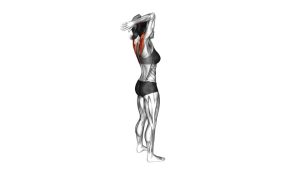
- Start with control: Begin with the arms extended forward and the torso stable.
- Pull the elbows back: Bend your elbows and drive them backward close to your sides.
- Squeeze the back: Bring the shoulder blades together without shrugging the shoulders upward.
- Pause briefly: Hold the end position for 1–2 seconds while keeping the chest lifted.
- Return slowly: Extend the arms forward again with control until you return to the starting position.
- Repeat smoothly: Keep every rep steady, quiet, and free from body swinging.
Pro Tips & Common Mistakes
- Lead with the elbows: Think about pulling your elbows behind you rather than pulling only with the hands.
- Do not shrug: Keep the shoulders down so the upper traps do not dominate the movement.
- Control the return: The forward phase matters because it teaches shoulder-blade control.
- Avoid rounding forward: Keep the chest open and spine neutral throughout the exercise.
- Use a small pause: A short squeeze at the back improves upper-back activation.
- Do not over-pull: Stop when the elbows pass slightly behind the torso; forcing extra range can irritate the shoulders.
FAQ
What muscles does the Standing Boat Row work?
The Standing Boat Row mainly works the upper back, lats, rhomboids, rear delts, and mid traps. The biceps assist the pulling motion, while the core helps keep the torso stable.
Is the Standing Boat Row good for beginners?
Yes. It is beginner-friendly because it teaches the basic rowing pattern without requiring heavy weights or complex equipment. It is also useful for posture awareness and back activation.
Can I use a resistance band for this exercise?
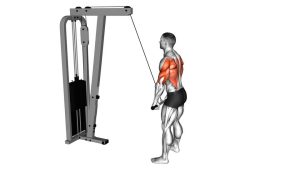
Yes. A resistance band is a great progression. Anchor the band in front of you, hold both handles, and perform the same rowing motion while keeping the elbows close and shoulders relaxed.
Where should I feel the movement?
You should feel the movement across the upper back, around the shoulder blades, and slightly through the lats and rear shoulders. You should not feel strain in the neck or lower back.
What is the most common mistake?
The most common mistake is shrugging the shoulders or using momentum. Keep the movement controlled, pull with the elbows, and squeeze the shoulder blades without lifting the shoulders.
Recommended Equipment
- Resistance Bands with Handles — ideal for turning the standing boat row into a loaded band row
- Door Anchor for Resistance Bands — helps create a secure rowing setup at home
- Exercise Mat — useful for warm-ups, mobility work, and floor-based back training
- Posture Corrector Brace — a light awareness tool for posture practice, not a replacement for strength work
- Adjustable Dumbbells — useful for progressing into bent-over rows and other back exercises
Tip: For this exercise, a light resistance band is usually the best first progression because it matches the rowing pattern while keeping the movement joint-friendly.