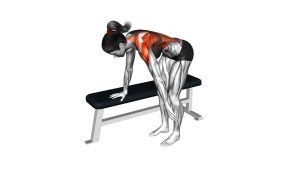
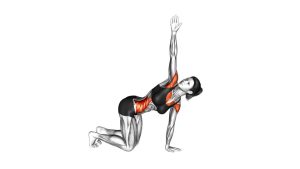
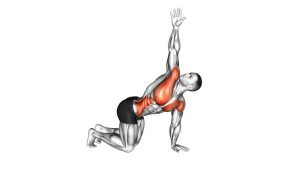
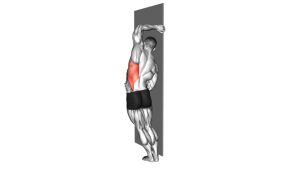
Roll Around the World (Lying on Floor): Form, Benefits, Sets & FAQ
Learn how to perform the Roll Around the World while lying on the floor to improve thoracic mobility, shoulder movement, and upper-back control. Includes form tips, sets by goal, common mistakes, FAQ, and recommended equipment.
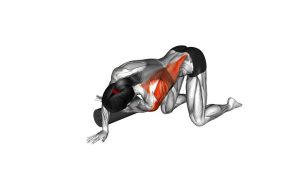
Roll Around the World (Lying on Floor)
This exercise works best as a mobility primer, recovery drill, or posture-support movement. You should feel a comfortable stretch through the chest, front of the shoulder, and upper back while the thoracic spine rotates naturally. Keep the movement smooth and easy. The quality of the circle matters more than range. If the motion becomes jerky or the lower back takes over, make the circle smaller and slow the tempo down.
Quick Overview
| Body Part | Upper Back |
|---|---|
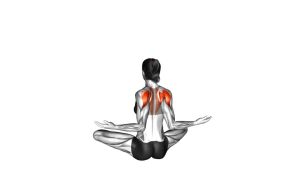
| Primary Muscle | Thoracic spinal stabilizers, rhomboids, mid traps |
| Secondary Muscle | Rear deltoids, rotator cuff, lats, chest |
| Equipment | None |
| Difficulty | Beginner |
Sets & Reps (By Goal)
- Warm-up before upper-body training: 1–2 sets × 5–8 reps per side with slow, deliberate circles
- Mobility improvement: 2–3 sets × 6–10 reps per side with controlled breathing
- Posture and recovery work: 2–3 sets × 8–12 reps per side at an easy effort
- Desk-break reset: 1–2 sets × 4–6 smooth reps per side without pushing end range
Progression rule: Increase range of motion only when you can keep the circle smooth, the shoulder relaxed, and the torso rotation controlled.
Setup / Starting Position
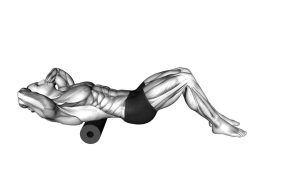
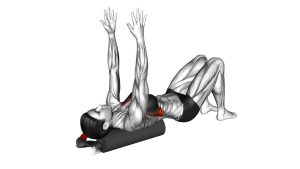
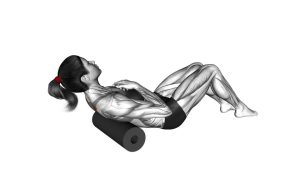
- Lie on your back: Settle into a comfortable supine position on the floor or an exercise mat.
- Bend your knees: Keep your feet flat on the floor to create stability and reduce unnecessary lower-body movement.
- Start relaxed: Let your head rest comfortably and keep your neck neutral.
- Position the working arm: Extend one arm so it can travel across the body and then around in a large circle.
- Brace lightly: Keep your core gently engaged so the movement comes mainly from the upper back and shoulder, not from excessive low-back twisting.
Tip: A mat can make the drill more comfortable and help you stay relaxed through the neck and shoulders.
Execution (Step-by-Step)
- Begin the circle: Move one arm slowly across the body to start the motion.
- Let the torso follow: As the arm continues, allow the upper back to rotate gently instead of forcing the movement from the shoulder alone.
- Trace a large arc: Bring the arm overhead and out to the side in a wide “around the world” path.
- Open the chest: Let the ribcage and thoracic spine roll naturally as the chest turns slightly open.
- Stay controlled at end range: Reach a comfortable open position without shrugging or yanking the shoulder backward.
- Complete the circle: Continue the arc until the arm returns smoothly to the starting position.
- Repeat evenly: Perform all reps on one side or alternate sides while maintaining the same slow rhythm.
Pro Tips & Common Mistakes
- Move slowly: Smooth circles create better mobility than rushed reps.
- Breathe naturally: Inhale as the chest opens and exhale as you return through the circle.
- Keep the shoulder down: Avoid shrugging toward the ear during the overhead path.
- Do not force the range: A pain-free circle is more useful than the biggest possible circle.
- Minimize lower-back compensation: The motion should come mainly from the thoracic spine and shoulder, not excessive lumbar twisting.
- Stay relaxed through the neck: Tension in the jaw or neck usually means you are trying too hard.
- Use it before pulling days: This drill pairs well with rows, pull-ups, face pulls, and posture-focused sessions.
FAQ
What is the main benefit of Roll Around the World on the floor?
Its main purpose is to improve thoracic rotation, open the chest, and encourage smoother shoulder movement. It is especially useful as a warm-up or mobility reset for people who spend long hours sitting.
Where should I feel this exercise?
Most people feel it in the upper back, rear shoulder, and chest-opening range. You may also notice a light stretch through the lats and front of the shoulder.
Is this a strength exercise or a mobility drill?
This is mainly a mobility drill. It is designed to improve movement quality, not to build heavy strength.
How often can I do it?
Because it is low impact, many people can perform it several times per week or even daily as part of a warm-up or recovery routine, as long as it stays comfortable and controlled.
Should my hips move a lot during the exercise?
A little body roll is normal, but the drill should not turn into a full-body twist. The focus stays on the upper back and shoulder circle.
Recommended Equipment (Optional)
- TriggerPoint GRID Foam Roller — useful before or after this drill for upper-back soft-tissue work
- Foam Roller Recovery Set — convenient bundle that often includes a roller, massage ball, and strap for mobility sessions
- Exercise Mat — adds comfort for floor-based mobility work and reduces pressure on the spine
- Peanut Massage Ball — helpful for loosening tight tissue around the upper back before mobility drills
- Resistance Bands Set — great for pairing this drill with light shoulder activation and posture work
Tip: Use these tools to support mobility work, not to force more range. Better movement usually comes from consistency, relaxed breathing, and controlled reps.