Kettlebell Incline Row: Proper Form, Muscles Worked, Sets, Tips & FAQ
Learn how to perform the Kettlebell Incline Row with proper form. Discover muscles worked, setup, execution steps, sets by goal, common mistakes, FAQs, and recommended equipment.
Kettlebell Incline Row
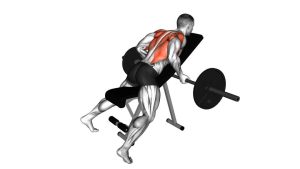
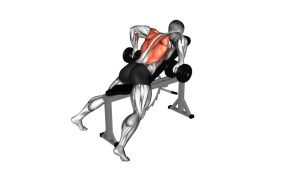
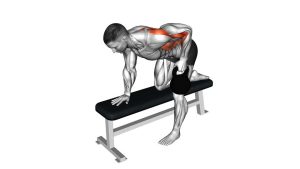
In this movement, the kettlebell starts hanging straight down from the shoulder while you lie face down on an incline bench. From there, you row by driving the elbow up and back toward the torso in a controlled arc. The bench support reduces body swing and momentum, so the back muscles do more of the work. When performed correctly, this exercise creates a strong squeeze through the upper back and lats without turning into a shrug or an arm-dominant pull.
Quick Overview
| Body Part | Back |
|---|---|
| Primary Muscle | Latissimus dorsi |
| Secondary Muscle | Rhomboids, middle trapezius, rear deltoids, biceps |
| Equipment | Kettlebell, incline bench |
| Difficulty | Beginner to Intermediate |
Sets & Reps (By Goal)
- Muscle growth: 3-4 sets × 8-12 reps per side
- Strength emphasis: 4-5 sets × 5-8 reps per side
- Technique and control: 2-4 sets × 10-15 reps per side
- Warm-up or activation: 2-3 sets × 12-15 light reps per side
Progression rule: Increase reps first while maintaining strict chest support and a clean elbow path. Add load only when you can control both the top squeeze and the lowering phase without twisting the torso.
Setup / Starting Position
- Set the bench: Adjust an incline bench to a moderate angle that allows your chest to stay fully supported.
- Lie face down: Position your chest firmly on the pad and plant your feet on the floor for balance.
- Grab the kettlebell: Hold the kettlebell in one hand with the arm hanging straight down under the shoulder.
- Square the torso: Keep your hips and chest stable against the bench without rotating toward the working side.
- Set the shoulder: Let the shoulder move naturally at the bottom, but avoid collapsing into a loose or sloppy start.
Tip: Start with a weight that lets you pause briefly at the top. If you cannot control the kettlebell path, it is too heavy.
Execution (Step-by-Step)
- Begin from a dead hang: Let the kettlebell hang directly below the shoulder with your chest still glued to the bench.
- Initiate the pull: Start the rep by drawing the shoulder blade back, then drive your elbow upward and slightly behind the torso.
- Row toward the torso: Pull the kettlebell toward your lower ribs or upper waist rather than straight up toward the shoulder.
- Squeeze at the top: Pause briefly when the elbow reaches peak height and the upper back is fully engaged.
- Lower with control: Reverse the motion slowly until the arm is fully extended again without dropping the weight.
Pro Tips & Common Mistakes
- Keep your chest down: Do not lift your torso off the bench to finish the rep.
- Drive the elbow, not the wrist: This improves lat engagement and keeps the row path cleaner.
- Avoid shrugging: If your shoulder rises toward your ear, the traps are taking over too much.
- Control the bottom stretch: Let the back lengthen, but do not lose tension completely.
- Do not twist the body: Rotation makes the rep easier but reduces the isolation benefit.
- Use a full but natural range: Stop short of forcing the elbow too high if it causes shoulder discomfort.
- Slow eccentrics work well: A controlled lowering phase improves muscle recruitment and technique.
FAQ
What muscles does the Kettlebell Incline Row work most?
The main target is the latissimus dorsi. It also trains the rhomboids, middle traps, rear delts, and biceps.
Is this better than a standing one-arm kettlebell row?
It can be better for strict back isolation because the bench support reduces momentum and lowers the demand on the lower back. That makes it especially useful for clean hypertrophy-focused reps.
Where should I pull the kettlebell?
Most lifters should pull toward the lower ribs or upper waist. That path usually helps keep tension on the lats and upper back instead of turning the movement into a shrug.
Can beginners use this exercise?
Yes. It is very beginner-friendly because the bench support makes it easier to learn good rowing mechanics and maintain a stable torso.
Should I go heavy on this exercise?
You can load it progressively, but this movement works best when form stays strict. If heavy weight causes torso rotation, shrugging, or shortened range of motion, reduce the load.
Recommended Equipment
- BowFlex SelectTech 840 Adjustable Kettlebell — adjustable loading option for home training and progressive overload
- NICEPEOPLE Adjustable Weight Bench — useful for setting up a stable incline position for chest-supported rows
- Gymreapers Lifting Wrist Straps — helpful if grip fatigue limits your back training before your target muscles do
- Resistance Band Set — great for warm-ups, activation drills, and extra upper-back volume
- Gaiam Yoga Mat — useful for floor-based warm-ups, mobility work, and general training comfort
Tip: For this exercise, the most important pieces are a stable incline bench and a kettlebell you can control cleanly through the entire rep.