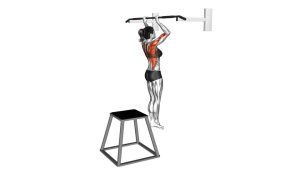
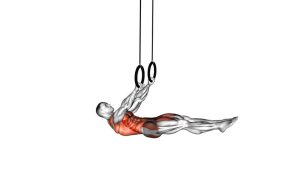
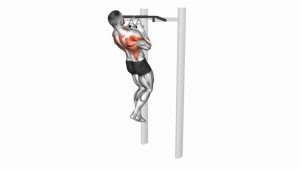
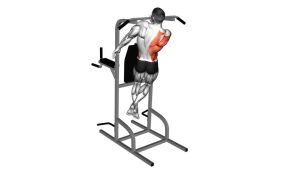
L-Sit Chin-Up: Proper Form, Sets, Muscles Worked, Tips & FAQ
Learn how to perform the L-Sit Chin-Up with proper form. Discover muscles worked, setup, execution steps, sets by goal, common mistakes, FAQs, and recommended equipment.
L-Sit Chin-Up
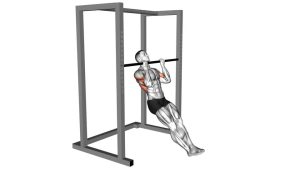
This exercise rewards total-body tension, clean pulling mechanics, and controlled tempo. Compared with a standard chin-up, the L-sit position increases the demand on the midsection and reduces the ability to use momentum. Done well, it develops upper-body pulling strength, trunk stiffness, and body control at the same time.
Quick Overview
| Body Part | Back |
|---|---|
| Primary Muscle | Latissimus dorsi |
| Secondary Muscle | Biceps, rhomboids, middle/lower traps, forearms, rectus abdominis, hip flexors |
| Equipment | Pull-up bar |
| Difficulty | Advanced |
Sets & Reps (By Goal)
- Strength focus: 3-5 sets × 3-6 reps, 90-150 sec rest
- Skill and control: 3-4 sets × 2-5 reps with slower tempo, 75-120 sec rest
- Advanced bodyweight progression: 3-4 sets × 5-8 reps, only if form stays strict
- Core-strength accessory: 2-3 sets × 3-5 reps after main pulling work
Progression note: First improve strict chin-up strength and L-sit hold quality. Then extend the leg position, reduce swing, and increase reps gradually. Do not add volume before you can keep the legs up and the pull smooth from start to finish.
Setup / Starting Position
- Grip the bar: Use a shoulder-width supinated grip with palms facing you.
- Hang tall: Start from a dead hang with arms fully extended and shoulders active, not loose.
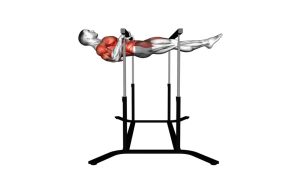
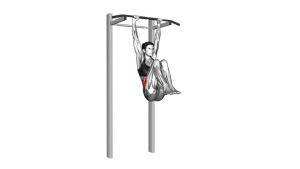
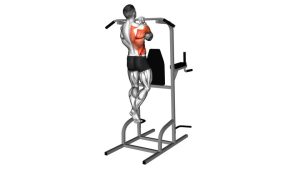
- Raise the legs: Lift both legs straight in front until they are roughly parallel to the floor, forming an L shape.
- Brace the trunk: Tighten the abs, keep the ribs controlled, and avoid excessive low-back arching.
- Set the shoulders: Think about pulling the shoulders down away from the ears before starting the rep.
Tip: If the full L-sit is too demanding, build up with bent-knee chin-ups, hanging knee raises, and separate L-sit holds first.
Execution (Step-by-Step)
- Establish the L-sit: Lift the legs straight out in front and hold them steady before you begin pulling.
- Initiate with the back: Depress and retract the shoulder blades slightly to create a strong pulling base.
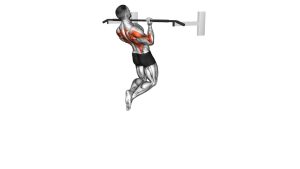
- Pull upward: Bend the elbows and drive them down toward your sides as your chest rises toward the bar.
- Keep the legs fixed: Maintain the L-sit throughout the rep without letting the feet drop or the knees bend.
- Reach the top: Pull until your chin clears the bar while keeping the torso controlled and the neck neutral.
- Lower with control: Descend slowly to full arm extension without swinging or losing the leg position.
- Reset and repeat: Pause briefly in the bottom position, re-brace, and perform the next rep with the same tension.
Pro Tips & Common Mistakes
- Lead with the elbows: Think of pulling the elbows down rather than yanking with the hands.
- Keep the L-sit honest: Straight legs and active quads make the exercise much more effective.
- Don’t swing: Momentum reduces tension on the lats and core, and turns the rep sloppy.
- Avoid half reps: Start from a full hang and finish with the chin clearly over the bar.
- Don’t shrug the shoulders: Keep the neck long and shoulders packed to protect the joints.
- Control the descent: The eccentric portion builds strength and reinforces body position.
- Use regressions when needed: Bent-knee L-sit chin-ups, regular chin-ups, and hanging leg raises are smart stepping stones.
FAQ
What muscles does the L-sit chin-up work most?
The primary target is the latissimus dorsi. It also heavily involves the biceps, upper back, forearms, abs, and hip flexors because the legs must stay elevated during the entire pull.
Is the L-sit chin-up harder than a regular chin-up?
Yes. The L-sit position increases core demand, reduces momentum, and makes it harder to stay efficient through the pulling pattern. Most lifters need strong regular chin-ups before attempting this version.
Can beginners do L-sit chin-ups?
Most beginners should start with standard chin-ups, assisted chin-ups, hanging knee raises, and L-sit progressions first. The full movement is best suited for intermediate to advanced trainees.
Should I keep my legs perfectly straight?
Yes, ideally. Straight legs increase the core challenge and preserve the true L-sit position. If that is too difficult, use a bent-knee version while building strength.
What is a good progression toward this exercise?
A solid path is: dead hangs, scapular pulls, strict chin-ups, hanging knee raises, straight-leg raises, L-sit holds, and then bent-knee L-sit chin-ups before the full straight-leg version.
Recommended Equipment (Optional)
- Doorway Pull-Up Bar — practical home setup for chin-ups, pull-ups, and hanging core work
- Freestanding Power Tower — stable option for bodyweight pulling, knee raises, dips, and calisthenics training
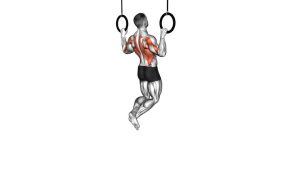
- Gymnastics Rings — excellent for building pulling strength, scapular control, and advanced bodyweight skills
- Resistance Bands Set — useful for assisted chin-up progressions and additional upper-back training
- Gym Chalk or Liquid Chalk — helps improve grip security during strict hanging exercises
Choose equipment that supports strict form and safe hanging positions. Better setup quality usually leads to better body control and cleaner reps.