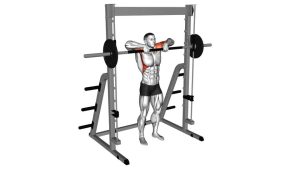
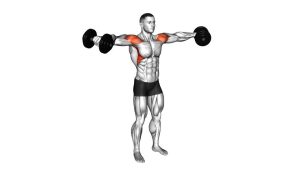
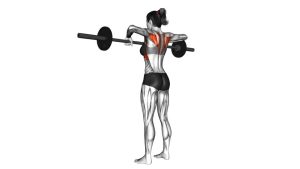
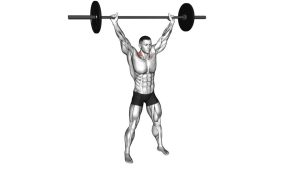
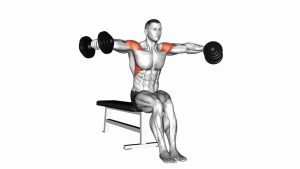
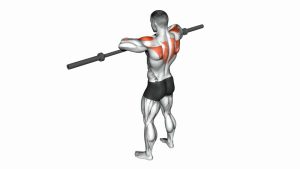
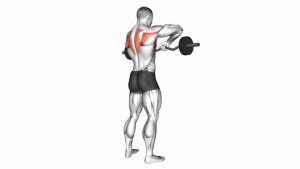
Barbell Wide-Grip Upright Row: Proper Form, Muscles Worked, Sets, Tips & FAQ
Learn how to perform the Barbell Wide-Grip Upright Row with proper form to target the side delts, upper traps, and upper back. Includes setup, step-by-step execution, sets and reps by goal, common mistakes, FAQs, and recommended equipment.
Barbell Wide-Grip Upright Row
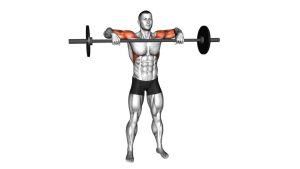
This variation works best when you focus on controlled form instead of chasing excessive range of motion. The goal is to raise the elbows out and up while keeping the wrists lower than the elbows and the torso steady. You should feel the movement mostly in the side shoulders and upper traps, with the upper back helping stabilize the lift. Keep the motion smooth, avoid jerking the bar upward, and stop the rep before shoulder position becomes awkward or pinchy.
Quick Overview
| Body Part | Shoulders |
|---|---|
| Primary Muscle | Lateral deltoids |
| Secondary Muscle | Upper trapezius, rear deltoids, rhomboids, biceps (assisting) |
| Equipment | Barbell and weight plates |
| Difficulty | Intermediate |
Sets & Reps (By Goal)
- Muscle growth: 3–4 sets × 8–12 reps with 60–90 seconds of rest
- Shoulder accessory work: 2–4 sets × 10–15 reps with strict form and moderate weight
- Upper-trap and delt pump: 2–3 sets × 12–15 reps with controlled tempo and short rest
- Strength-support accessory: 3 sets × 6–8 reps with a conservative load and perfect mechanics
Progression rule: Add reps before adding weight. Increase the load only when you can keep the elbows leading, the torso still, and the shoulders comfortable across every rep.
Setup / Starting Position
- Stand tall: Place your feet about hip- to shoulder-width apart and keep your chest up.
- Use a wide grip: Hold the barbell wider than shoulder width with the bar resting against the front of your thighs.
- Brace lightly: Tighten your core just enough to keep the torso stable without leaning back.
- Relax the shoulders down: Avoid shrugging before the rep starts.
- Start neutral: Keep your wrists straight, elbows slightly soft, and eyes forward.
Tip: A grip that is too narrow can feel harsher on the wrists and shoulders. The wide-grip version usually allows a cleaner elbow path for this variation.
Execution (Step-by-Step)
- Begin the pull: Lift the bar straight up along the body by driving your elbows outward and upward.
- Keep the bar close: Let it travel near the torso instead of drifting away from you.
- Lead with the elbows: Your elbows should stay higher than your wrists at the top of the movement.
- Stop at a comfortable height: Raise the bar to about lower chest or upper-abdomen level, or to the highest pain-free position you can control.
- Pause briefly: Squeeze the shoulders and upper traps for a moment without shrugging excessively.
- Lower slowly: Bring the bar back down under control to the starting position without swinging.
- Reset and repeat: Keep the torso tall and the tempo smooth for every rep.
Pro Tips & Common Mistakes
- Lead with the elbows, not the hands: Think about spreading and lifting the elbows rather than yanking the bar.
- Keep the rep controlled: Avoid using leg drive or torso swing to create momentum.
- Do not pull unnecessarily high: More height is not always better, especially if shoulder comfort drops.
- Use a wide enough grip: This helps many lifters keep better shoulder mechanics and feel more side-delt involvement.
- Keep the bar path close: Letting the bar drift forward can reduce control and increase joint stress.
- Train in a pain-free range: Individual shoulder anatomy varies, so the best top position is the one you can own comfortably.
- Pair it smartly: This exercise fits well after presses, lateral raises, or other shoulder hypertrophy work.
FAQ
What muscles does the barbell wide-grip upright row work most?
It mainly targets the lateral deltoids, with strong assistance from the upper traps. The rear delts, rhomboids, and biceps also contribute to the movement.
Why use a wide grip instead of a narrow grip?
A wider grip often makes the exercise feel more shoulder-focused and may be more comfortable for some lifters. It can also reduce the feeling of wrist crowding compared with a closer grip.
How high should I lift the bar?
Lift only to a comfortable, controlled height. For many people, that means around the lower chest or upper-abdomen area. Do not force the bar higher if shoulder comfort or form starts to break down.
Is this exercise good for building wider shoulders?
Yes, it can be useful for shoulder width because it trains the side delts. It works especially well as an accessory movement in a shoulder or upper-body hypertrophy routine.
Who should be cautious with upright rows?
Anyone with a history of shoulder impingement, painful overhead motion, or wrist discomfort should be careful. If the exercise feels pinchy even with lighter weight and a reduced range, choose a different shoulder exercise.
Recommended Equipment
- Olympic Barbell — the main tool for performing wide-grip upright rows with stable loading and proper hand spacing
- Barbell Collars / Clamps — helps keep plates secure and prevents shifting during repeated pulling reps
- Olympic Weight Plates — lets you adjust resistance gradually for hypertrophy-focused shoulder training
- Lifting Straps — useful if grip fatigue limits your shoulder work before the target muscles are fully challenged
- Squat Rack / Barbell Storage Setup — convenient for safe bar setup, loading, and overall home-gym organization
Tip: Choose equipment that supports clean reps and joint comfort. For upright rows, stable loading and a secure grip matter more than using unnecessarily heavy weight.