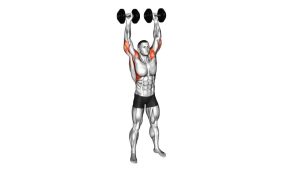
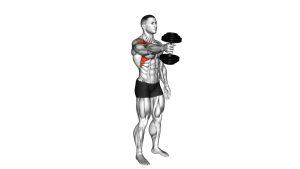
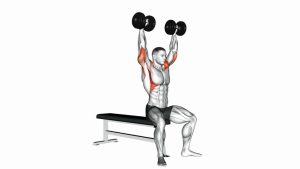
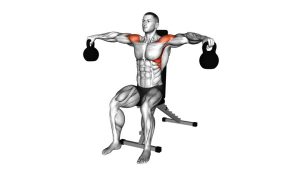
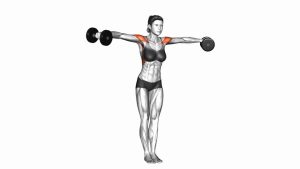
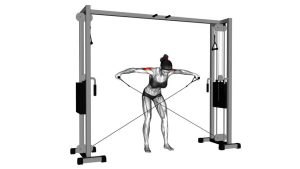
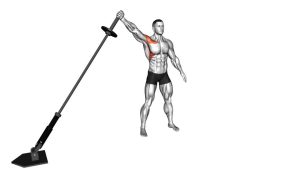
Dumbbell One-Arm Lateral Raise: Proper Form, Sets, Tips & FAQ
Learn how to perform the Dumbbell One-Arm Lateral Raise with proper form to build stronger, wider shoulders. Includes setup, execution, sets and reps by goal, common mistakes, FAQs, and recommended equipment.
Dumbbell One-Arm Lateral Raise
This exercise works best with a moderate weight, a slight bend in the elbow, and a smooth arc up to shoulder height. It is especially effective for lifters who want better shoulder width, more balanced delt development, and stronger mind-muscle connection on each side.
Quick Overview
| Body Part | Shoulders |
|---|---|
| Primary Muscle | Lateral deltoid (middle deltoid) |
| Secondary Muscle | Supraspinatus, anterior deltoid, upper traps (stabilizing), core |
| Equipment | 1 dumbbell |
| Difficulty | Beginner to Intermediate |
Sets & Reps (By Goal)
- Muscle growth: 3–4 sets × 10–15 reps per arm, 45–75 sec rest
- Shoulder definition / pump: 2–4 sets × 12–20 reps per arm, 30–60 sec rest
- Technique practice: 2–3 sets × 8–12 reps per arm with light weight, slow tempo
- Balanced unilateral work: 3 sets × 10–12 reps per arm, start with the weaker side
Progression rule: Increase reps first, then load. Keep every rep smooth and shoulder-driven before moving up in weight.
Setup / Starting Position
- Stand tall: Keep your chest up, ribs stacked, and core lightly braced.
- Hold one dumbbell at your side: Use a neutral grip with the palm facing inward.
- Set the working arm: Keep a small bend in the elbow and let the dumbbell hang just outside the thigh.
- Relax the shoulder: Avoid shrugging before the rep starts.
- Stabilize the body: Keep the non-working side quiet and avoid leaning or twisting.
Tip: You can lightly hold onto a stable object with your free hand if you want extra balance and cleaner reps.
Execution (Step-by-Step)
- Initiate the raise: Lift the dumbbell out to the side in a controlled arc.
- Lead with the elbow: Keep the elbow slightly higher than the hand without turning it into a row.
- Raise to shoulder height: Stop when the upper arm is about parallel to the floor.
- Pause briefly: Squeeze the side delt for a moment at the top without shrugging.
- Lower slowly: Return the dumbbell to the starting position under control.
- Repeat evenly: Complete all reps on one side or alternate sides based on your program.
Pro Tips & Common Mistakes
- Use lighter weight than you think: Side delts respond well to strict reps and controlled volume.
- Do not swing: Momentum shifts the work away from the target muscle.
- Avoid shrugging: Letting the traps dominate reduces direct lateral delt tension.
- Stop around shoulder height: Going too high often turns the rep into a trap-driven movement.
- Keep the wrist neutral: Do not excessively twist or dump the hand upward.
- Train both sides evenly: The one-arm variation is excellent for fixing strength and coordination imbalances.
FAQ
What muscle does the dumbbell one-arm lateral raise work the most?
The main target is the lateral deltoid, which helps create shoulder width and roundness.
Should I raise the dumbbell above shoulder height?
Usually no. Stopping around shoulder height keeps tension where you want it and reduces unnecessary trap dominance.
Is it better to do one arm at a time or both arms together?
One arm at a time can improve focus, stability, and side-to-side balance. It is also easier to identify and correct weak-side compensation.
Why do I feel this more in my traps than my shoulders?
That usually happens when the weight is too heavy, the shoulders shrug upward, or the rep is being swung. Reduce the load and lead with controlled shoulder abduction.
Can beginners use this exercise?
Yes. It is beginner-friendly as long as the weight stays light enough to maintain strict form.
Recommended Equipment
- Adjustable Dumbbell — versatile option for progressive overload without needing multiple fixed weights
- Lightweight Dumbbell Pair — ideal for strict shoulder isolation work, higher reps, and beginners
- Wrist Wraps — useful if wrist discomfort limits your shoulder training comfort
- Weightlifting Gloves — can improve grip comfort during high-volume dumbbell sessions
- Mini Fractional Weight Plates — helpful for very small load jumps when progressing isolation work
Tip: For lateral raises, lighter and more controlled usually works better than going too heavy too soon.