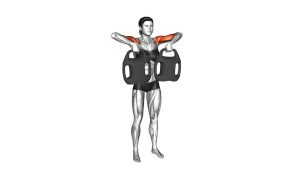
Seated Kettlebell Lateral Raise: Proper Form, Sets, Tips & FAQ
Learn how to do the Seated Kettlebell Lateral Raise with proper form to build side delts, improve shoulder control, and reduce momentum. Includes setup, execution, sets by goal, common mistakes, FAQs, and recommended equipment.
Seated Kettlebell Lateral Raise
This exercise is most effective when done with strict form and a controlled tempo. You should feel the side delts doing the work, not the traps, lower back, or wrists. Because the kettlebell hangs below the handle, the exercise often feels more challenging than a dumbbell lateral raise even with relatively light loads. Focus on smooth reps, balanced positioning, and stopping before momentum takes over.
Quick Overview
| Body Part | Shoulders |
|---|---|
| Primary Muscle | Lateral deltoid (side delts) |
| Secondary Muscle | Anterior deltoid, supraspinatus, upper traps (stabilizing), core |
| Equipment | Kettlebells and a flat bench or sturdy seat |
| Difficulty | Intermediate |
Sets & Reps (By Goal)
- Muscle growth: 3–4 sets × 10–15 reps with 45–75 seconds rest
- Shoulder control and strict isolation: 2–4 sets × 8–12 reps with a slow lowering phase
- Light finisher / pump work: 2–3 sets × 15–20 reps with lighter kettlebells and short rest
- Technique practice: 2–3 sets × 8–10 reps using very light weight and perfect form
Progression rule: Increase reps first, then load. Only move up in weight when you can reach shoulder height without shrugging, leaning back, or swinging.
Setup / Starting Position
- Sit tall on a bench: Place your feet flat on the floor and sit upright near the middle or front edge of the bench.
- Hold a kettlebell in each hand: Let the arms hang at your sides with a neutral grip and a soft bend in the elbows.
- Brace lightly through the torso: Keep the chest up, ribs stacked, and lower back neutral without leaning excessively.
- Set the shoulders: Keep them down and away from the ears before starting the raise.
- Start under control: The bells should be still at the bottom with no swinging before each rep begins.
Tip: Sitting helps remove leg drive and body English, making it easier to isolate the side delts.
Execution (Step-by-Step)
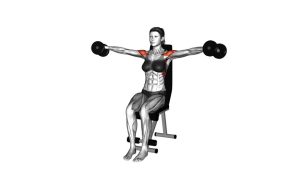
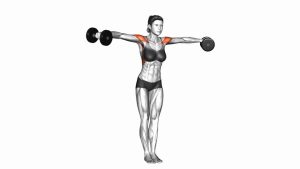
- Initiate with the shoulders: Raise both arms out to the sides in a wide arc while keeping a slight elbow bend.
- Lead with the elbows: Think about lifting the elbows outward rather than flipping the wrists upward.
- Stop near shoulder height: Bring the arms up until they are about parallel to the floor.
- Pause briefly: Hold the top position for a moment without shrugging or twisting the torso.
- Lower slowly: Return the kettlebells along the same path under control until they reach the starting position.
- Reset and repeat: Eliminate any swing at the bottom before beginning the next rep.
Pro Tips & Common Mistakes
- Use lighter weight than expected: Kettlebells often feel tougher than dumbbells in lateral raise patterns.
- Keep the movement strict: The seated position should reduce cheating, not encourage faster swinging.
- Do not shrug: Let the side delts lead the motion while the neck stays relaxed.
- Avoid going too high: Raising above shoulder level usually increases trap involvement.
- Control the eccentric: Lowering slowly improves tension and technique quality.
- Keep wrists neutral: Don’t excessively bend or curl the wrists to “help” the movement.
- Don’t slam the bells at the bottom: Reset each rep with control.
FAQ
What muscles does the seated kettlebell lateral raise work?
It primarily targets the lateral deltoids, which are responsible for building shoulder width. Secondary support comes from the front delts, upper traps, and stabilizing muscles around the shoulder joint and core.
Why use kettlebells instead of dumbbells for lateral raises?
Kettlebells change the feel of the exercise because the load hangs below the handle. This creates a slightly different resistance profile and increases the need for stability and control during each rep.
Should I raise the kettlebells above shoulder height?
Usually no. Stopping around shoulder height keeps the focus on the side delts and reduces unnecessary trap dominance.
Is this exercise good for beginners?
It can be, but many beginners do better first with very light dumbbells. The kettlebell version requires more control because of the offset load.
How do I know if the weight is too heavy?
If you have to swing the kettlebells, lean back, bend the elbows excessively, or shrug on most reps, the load is too heavy for clean execution.
Recommended Equipment
- Cast Iron Kettlebells — the main tool for performing seated kettlebell lateral raises
- Adjustable Weight Bench — provides a stable seat for strict seated shoulder work
- Gym Lifting Gloves — can improve grip comfort during higher-rep kettlebell sets
- Workout Mirror — useful for checking shoulder height, symmetry, and shrugging during reps
- Resistance Bands Set — great for shoulder warm-ups, activation drills, and extra delt volume
Tip: Choose kettlebells that let you move with clean form. For shoulder isolation work, better control usually beats heavier load.