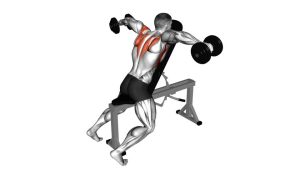
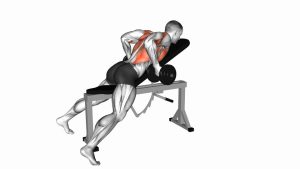
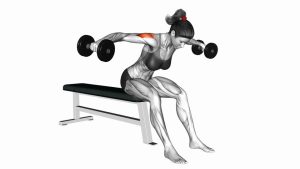
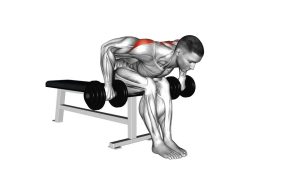
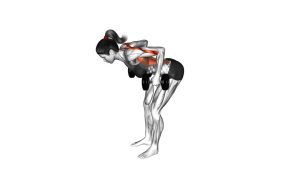
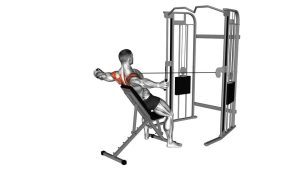
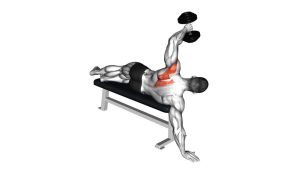
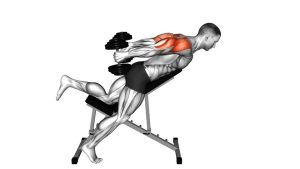
Dumbbell Rear Delt Row: Proper Form, Sets, Tips & FAQ
Learn how to do the Dumbbell Rear Delt Row with proper form to build stronger rear shoulders and upper back. Includes setup, execution, sets by goal, common mistakes, FAQs, and recommended equipment.
Dumbbell Rear Delt Row
This exercise works best when the movement stays strict and deliberate. Bench support reduces unnecessary body motion, making it easier to isolate the target muscles and keep tension where it belongs. A clean rep should feel strong in the back of the shoulder and upper back, not in the lower back, neck, or biceps. The goal is muscular control, not maximum load.
Quick Overview
| Body Part | Rear Shoulders |
|---|---|
| Primary Muscle | Rear deltoids (posterior delts) |
| Secondary Muscle | Rhomboids, middle trapezius, teres minor, infraspinatus, biceps |
| Equipment | Dumbbell and flat bench |
| Difficulty | Beginner to Intermediate |
Sets & Reps (By Goal)
- Muscle growth: 3–4 sets × 10–15 reps per side with controlled tempo and 60–90 seconds rest
- Shoulder isolation / mind-muscle connection: 2–4 sets × 12–18 reps per side using lighter weight and cleaner form
- Upper-back assistance work: 3–4 sets × 8–12 reps per side after primary pulling exercises
- Posture-focused accessory work: 2–3 sets × 12–15 reps per side with a pause at the top
Progression rule: Add reps before adding load. When all sets feel smooth and the rear delts stay under tension without torso rotation, increase the dumbbell slightly.
Setup / Starting Position
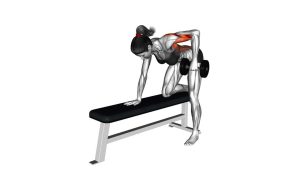
- Place one knee and the same-side hand on a flat bench: The opposite foot stays planted firmly on the floor for balance.
- Hinge into position: Keep your torso close to parallel with the floor while maintaining a neutral spine from head to hips.
- Grab the dumbbell with the free hand: Let it hang straight down under the shoulder with the palm facing inward.
- Set the shoulder: Keep the neck relaxed and avoid letting the working shoulder roll forward aggressively.
- Prepare your elbow path: Think about rowing out and back, not tight to your ribcage like a standard lat row.
Tip: A stable bench setup makes it easier to keep momentum low and rear delt tension high.
Execution (Step-by-Step)
- Brace your body: Keep your spine neutral, chest open, and core lightly engaged before the rep begins.
- Pull the dumbbell upward with a flared elbow: Drive the elbow out to the side rather than keeping it tucked close.
- Lift until the upper arm approaches shoulder level: Stop when the rear delt and upper back are fully engaged without twisting the torso.
- Pause briefly at the top: Squeeze the rear shoulder and upper back for a moment while keeping the neck relaxed.
- Lower under control: Return the dumbbell slowly to the start position and allow the arm to extend fully before the next rep.
Pro Tips & Common Mistakes
- Lead with the elbow: Think about moving the elbow wide and back instead of curling the weight with the arm.
- Use moderate weight: Rear delts respond better to precision than to sloppy heavy reps.
- Keep the torso quiet: Twisting or opening the chest too much reduces isolation and turns the exercise into a cheat row.
- Do not shrug: Letting the upper trap take over can reduce tension on the rear delt.
- Control the eccentric: The lowering phase is valuable for shoulder development and better joint control.
- Avoid excessive range: Pull only as high as you can without losing posture or changing the movement pattern.
- Pair it wisely: This exercise works well after rows, pulldowns, or shoulder sessions that need more rear delt volume.
FAQ
What is the main difference between a rear delt row and a regular dumbbell row?
The main difference is the elbow path. In a regular row, the elbow usually stays close to the torso to target the lats more heavily. In a rear delt row, the elbow flares outward, which shifts more of the work to the rear delts and upper back.
Where should I feel the Dumbbell Rear Delt Row?
You should feel it mostly in the back of the shoulder, along with some tension in the rhomboids and middle traps. If you mainly feel your lats or biceps, adjust the elbow path and reduce the weight.
Should I go heavy on this exercise?
Usually, moderate weight works better. The rear delts are smaller muscles, so strict form and controlled reps are more effective than swinging a heavy dumbbell.
Can beginners do this exercise?
Yes. The bench-supported setup gives beginners extra stability and makes the movement easier to learn. Start with a light dumbbell and focus on clean elbow tracking.
How can I make this movement target the rear delts more effectively?
Keep your elbow slightly flared, avoid torso rotation, pause briefly at the top, and use a slow lowering phase. Those adjustments usually improve rear delt involvement immediately.
Recommended Equipment
- Adjustable Dumbbells — ideal for progressing load gradually without needing a full rack of weights
- Flat Weight Bench — provides stable support for strict one-arm rowing variations
- Lifting Straps — helpful if grip fatigue limits your upper-back and rear-delt training
- Weightlifting Gloves — can improve dumbbell comfort and reduce hand irritation during higher-volume sets
- Mini Resistance Bands — useful for warm-ups, rear-delt activation drills, and shoulder prep before lifting
Tip: Choose equipment that helps you stay consistent and controlled. Better setup usually leads to better shoulder isolation.