Dumbbell Rear Fly: Proper Form, Sets, Tips & FAQ
Learn how to do the Dumbbell Rear Fly with proper form to target the rear delts, improve shoulder balance, and build upper-back support. Includes setup, execution, sets by goal, mistakes, FAQ, and recommended equipment.
Dumbbell Rear Fly
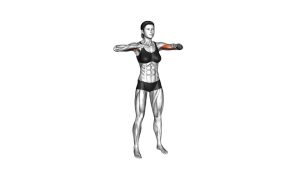
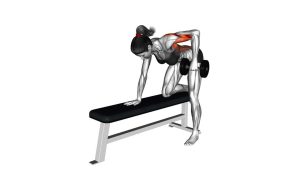
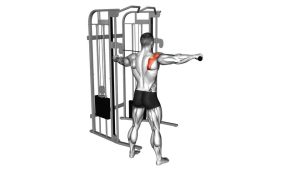
This exercise works best when the weight stays under control from start to finish. You should feel the rear shoulders doing most of the work, with support from the upper back. The goal is not to move the heaviest dumbbells possible, but to keep the arc clean, elbows softly bent, and shoulders away from the ears. When performed correctly, the Dumbbell Rear Fly is excellent for building more balanced shoulders and improving upper-body posture.
Quick Overview
| Body Part | Rear Shoulders |
|---|---|
| Primary Muscle | Rear deltoids (posterior delts) |
| Secondary Muscle | Rhomboids, middle trapezius, rotator cuff stabilizers |
| Equipment | Dumbbells, flat bench (optional for seated variation) |
| Difficulty | Beginner to Intermediate |
Sets & Reps (By Goal)
- Muscle building: 3–4 sets × 10–15 reps with controlled tempo and 45–75 sec rest
- Shoulder balance / accessory work: 2–4 sets × 12–20 reps with light-to-moderate weight
- Technique practice: 2–3 sets × 8–12 reps using very strict form and slower lowering
- Posture-focused training: 2–3 sets × 15–20 reps with clean movement and minimal momentum
Progression rule: Increase reps first, then add weight only when you can keep the torso fixed, the shoulders relaxed, and the dumbbells moving in a smooth wide arc.
Setup / Starting Position
- Choose your position: Sit on the edge of a flat bench or stand with feet about hip-width apart.
- Hinge forward: Bend at the hips until your torso is close to parallel to the floor.
- Hold the dumbbells neutrally: Let the weights hang below the shoulders with palms facing inward.
- Keep a soft elbow bend: Maintain a slight bend that stays nearly fixed throughout the set.
- Brace your trunk: Keep the spine neutral, chest slightly open, and neck relaxed.
Tip: A seated version often makes it easier to reduce momentum and keep the movement strict.
Execution (Step-by-Step)
- Start from the bottom: Let the dumbbells hang directly below the shoulders while keeping your torso still.
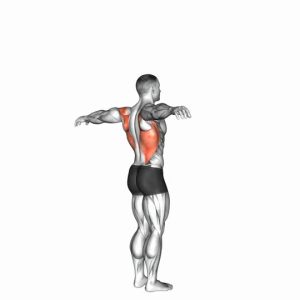
- Raise the arms outward: Sweep both arms out to the sides in a wide arc, leading with the elbows.
- Stop around shoulder level: Lift until your upper arms are about in line with the shoulders or slightly below.
- Squeeze briefly: Pause for a moment at the top without shrugging the shoulders upward.
- Lower slowly: Return the dumbbells under control to the starting position without swinging.
Pro Tips & Common Mistakes
- Use lighter weight than you think: Rear delts respond better to control than ego lifting.
- Keep the chest stable: Excess torso movement turns the set into a momentum-based swing.
- Lead with the elbows: This helps keep tension on the rear delts instead of the arms.
- Avoid shrugging: If the traps dominate, reduce the load and reset your shoulder position.
- Don’t row the dumbbells: The arms should travel out to the sides, not pull close to the ribs.
- Control the lowering phase: The eccentric is one of the best parts of the movement for quality shoulder training.
FAQ
What muscles does the Dumbbell Rear Fly work most?
The main target is the rear deltoid. The movement also recruits the rhomboids, middle traps, and other small stabilizers of the shoulder.
Should I do the Dumbbell Rear Fly seated or standing?
Both work well. The seated variation often makes it easier to stay strict and reduce body English, while the standing version can feel more natural if you have good hip-hinge control.
Why do I feel this more in my traps than my rear delts?
That usually happens when the weight is too heavy, the shoulders shrug upward, or the motion turns into a row. Reduce the load, keep the neck relaxed, and focus on lifting the arms out to the sides.
How heavy should the dumbbells be?
Use a weight you can control for the full set without swinging. Most lifters get better results from lighter dumbbells and cleaner reps than from heavy weights with poor form.
Where should I place this exercise in a workout?
It works well after pressing movements, inside a shoulder workout, or near the end of an upper-body session as a strict rear-delt accessory exercise.
Recommended Equipment
- Adjustable Dumbbells — practical for progressive overload and easy weight changes at home
- Adjustable Weight Bench — useful for seated support and other shoulder-training variations
- Resistance Bands Set — great for rear-delt warm-ups, pull-aparts, and extra shoulder-health work
- Lifting Straps — optional if grip fatigue limits your higher-rep dumbbell shoulder work
- Posture Corrector Brace — optional awareness tool for shoulder positioning, not a replacement for training
Tip: The best equipment for this exercise is still a manageable pair of dumbbells and enough discipline to keep every rep strict.