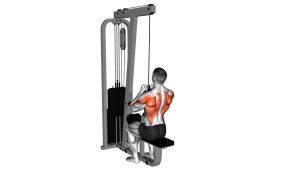
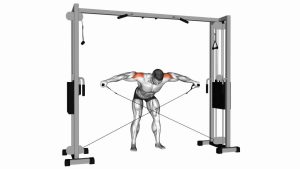
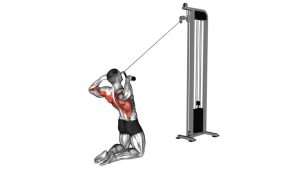
Cable Rear Delt Row (Parallel Bar): Form, Muscles Worked, Sets & Tips
Learn how to do the Cable Rear Delt Row with a parallel bar for stronger rear shoulders and upper back. Includes setup, step-by-step form, sets by goal, common mistakes, FAQs, and recommended equipment.
Cable Rear Delt Row (Parallel Bar)
This exercise works best with moderate weight and strict form. The goal is not to turn it into a heavy low row. Instead, use a smooth range of motion that allows the rear delts and upper back to stay under tension from start to finish. If the lats, lower back, or traps start taking over, reduce the load and focus on a higher elbow path with a brief squeeze at the back.
Quick Overview
| Body Part | Rear Shoulders |
|---|---|
| Primary Muscle | Rear deltoids (posterior delts) |
| Secondary Muscle | Rhomboids, middle trapezius, teres minor, infraspinatus, biceps |
| Equipment | Cable row station with a parallel bar / neutral-grip handle |
| Difficulty | Beginner to Intermediate |
Sets & Reps (By Goal)
- Muscle growth: 3–4 sets × 10–15 reps with controlled tempo and a brief squeeze
- Rear delt isolation / shoulder balance: 2–4 sets × 12–18 reps with light-to-moderate load
- Upper-back accessory work: 3–4 sets × 8–12 reps after main rows or pulldowns
- Posture-focused pump work: 2–3 sets × 15–20 reps with strict form and short rest
Progression rule: Add reps before adding load. Once you can keep the elbows high, avoid torso swing, and pause cleanly at the contraction for all prescribed reps, increase the weight slightly.
Setup / Starting Position
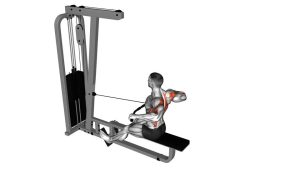
- Attach the handle: Use a parallel bar or neutral-grip row attachment on a seated cable row station.
- Sit tall: Place your feet firmly on the platform and sit with a neutral spine.
- Set your chest: Keep the chest lifted and shoulders down without rounding forward.
- Grab the handle evenly: Hold the attachment with both hands using a neutral grip.
- Start with arms extended: Reach forward under control until you feel tension, but do not collapse your posture.
- Prepare the elbow path: Think about driving the elbows out and back rather than pulling low toward the waist.
Tip: A slightly flared elbow path is what makes this variation more rear-delt dominant than a standard seated cable row.
Execution (Step-by-Step)
- Brace your torso: Stay upright with your core lightly engaged and your chest open.
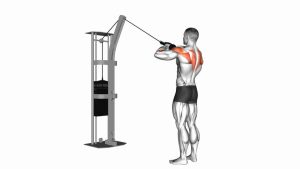
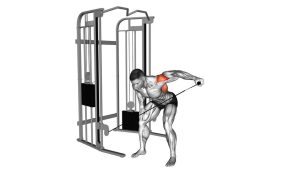
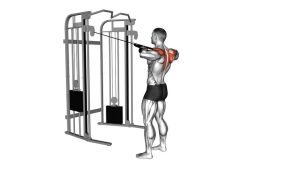
- Initiate the row: Pull the handle back while guiding your elbows out to the sides.
- Aim higher than a normal row: Bring the handle toward the mid-to-upper torso rather than low into the stomach.
- Squeeze at the back: At peak contraction, focus on the rear delts and upper back instead of shrugging.
- Pause briefly: Hold the contracted position for about 1 second without bouncing.
- Return slowly: Extend the arms under control and let the shoulder blades move naturally without losing posture.
- Repeat smoothly: Keep every rep controlled and consistent, with no leaning back to force the weight.
Pro Tips & Common Mistakes
- Keep elbows flared, not tucked: This is the main cue that shifts emphasis to the rear delts.
- Use moderate weight: Too much load usually turns the movement into a sloppy full-back row.
- Do not yank the cable: Momentum reduces tension where you want it most.
- Stay tall through the torso: Excessive leaning back makes the exercise less precise.
- Do not shrug at the top: Keep the traps from overpowering the rear delts.
- Control the eccentric: The lowering phase helps build shoulder control and better rear-delt tension.
- Match with pressing work: This is a strong accessory exercise to balance chest and front-delt dominant programs.
FAQ
What muscles does the Cable Rear Delt Row work most?
The main target is the rear deltoid. The exercise also involves the rhomboids, middle traps, and small shoulder stabilizers, with the biceps assisting during the pull.
How is this different from a normal seated cable row?
A normal seated row often uses a lower elbow path and hits more lats and general back musculature. This variation uses a higher, wider elbow path to place more emphasis on the rear shoulders.
Should I pull to my stomach or upper torso?
For most lifters, pulling toward the mid-to-upper torso works best. Pulling too low usually shifts the exercise away from the rear delts.
Is this a shoulder exercise or a back exercise?
It sits between both, but it is usually programmed as a rear delt / upper-back accessory exercise. Its biggest value is improving posterior shoulder development and shoulder balance.
What rep range works best for rear delt rows?
Most people do well with 10 to 18 reps using strict form. Rear delts usually respond better to control, tension, and clean volume than to very heavy low-rep work.
Recommended Equipment
- Single D-Handle Cable Attachment — useful for unilateral rear-delt rows, cable fly variations, and shoulder-friendly pulling options
- Close-Grip Row Handle — a sturdy neutral-grip option for cable rows and upper-back work
- Cable Row Attachment — helpful if you want different grip widths and angles for back and rear-delt training
- Resistance Band Set — a practical alternative for rear-delt flys, pull-aparts, and shoulder warm-ups when cables are unavailable
- Lifting Wrist Straps — useful when grip fatigue limits your pulling sets before your rear delts and upper back are fully trained
Tip: Choose attachments that let your wrists stay comfortable and your elbow path stay natural. Better joint positioning usually leads to better rear-delt targeting.