Kettlebell Alternating Press: Proper Form, Sets, Tips & FAQ
Learn how to do the Kettlebell Alternating Press with proper form. Discover muscles worked, setup, execution steps, sets and reps by goal, common mistakes, FAQs, and recommended equipment.
Kettlebell Alternating Press
This variation is excellent for lifters who want more than just raw pressing strength. In addition to training the deltoids and triceps, it develops shoulder stability, rack position endurance, and anti-rotation core control. The alternating pattern also helps you focus on one side at a time without losing total-body tension.
Quick Overview
| Body Part | Shoulders |
|---|---|
| Primary Muscle | Deltoids (especially front and side delts) |
| Secondary Muscle | Triceps, upper chest, upper traps, serratus anterior, core stabilizers |
| Equipment | Two kettlebells |
| Difficulty | Intermediate |
Sets & Reps (By Goal)
- Strength: 4-5 sets × 4-6 reps per side with 90-150 seconds rest
- Muscle growth: 3-4 sets × 8-12 reps per side with 60-90 seconds rest
- Shoulder stability and control: 2-4 sets × 6-10 reps per side with slow tempo and strict form
- Conditioning / endurance: 2-3 sets × 12-15 reps per side using moderate weight and controlled pace
Progression tip: First improve control, lockout quality, and rack stability before increasing kettlebell weight. A smooth pressing path matters more than forcing heavier reps with torso lean.
Setup / Starting Position
- Stand tall with your feet about shoulder-width apart and your weight evenly distributed.
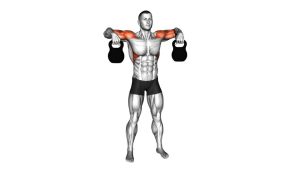
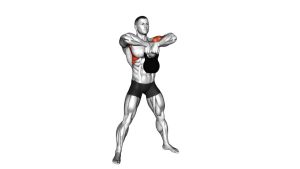
- Clean both kettlebells to the rack position so they rest close to the shoulders with elbows slightly forward.
- Brace your core and keep your ribs stacked over your hips to avoid lower-back overextension.
- Set your wrists neutral and keep your shoulders packed without shrugging excessively.
- Keep your gaze forward and prepare to press one side while the other kettlebell stays stable in the rack.
Tip: Before starting the first rep, make sure both kettlebells feel balanced and secure. A sloppy rack position usually leads to a sloppy press.
Execution (Step-by-Step)
- Start from the double rack position with your core tight and your torso upright.
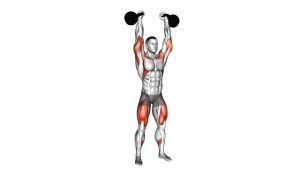
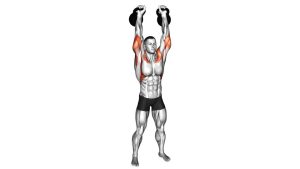
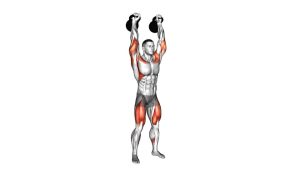
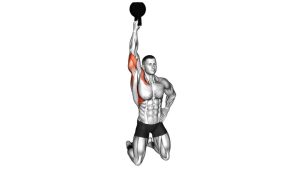
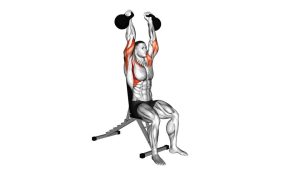
- Press one kettlebell overhead in a vertical path until the elbow is fully extended and the bell is stacked over the shoulder.
- Keep the non-working arm still in the rack position without letting it drift outward or drop.
- Lower the working kettlebell under control back to the rack position.
- Press the opposite arm while maintaining full-body tension and resisting torso rotation.
- Continue alternating sides until you complete the prescribed reps on each arm.
Pro Tips & Common Mistakes
- Press in a straight line: The kettlebell should travel vertically, not drift far in front of you.
- Keep the resting arm active: The non-pressing kettlebell should stay tight in the rack rather than hanging loosely.
- Do not overarch the lower back: Excessive rib flare usually means the weight is too heavy or the core is not braced.
- Avoid rushing the lowering phase: Controlled descents improve shoulder stability and technique.
- Do not turn it into a push press: Unless intended, avoid using leg drive to cheat the rep.
- Stay square: Do not twist through the torso while one side presses overhead.
- Use a manageable load: Better form with moderate weight beats unstable reps with bells that are too heavy.
FAQ
What muscles does the kettlebell alternating press work?
It mainly targets the deltoids, especially the front shoulders, while also training the triceps, upper chest, and core stabilizers. Because one side stays loaded in the rack, the exercise also challenges anti-rotation strength.
Is this better than pressing both kettlebells at the same time?
Not necessarily better in every case, but it is different. Alternating reps increase time under tension, improve unilateral control, and make your core work harder to keep the torso steady.
Should I alternate every rep or finish one side first?
Alternating every rep is the classic version and helps maintain balance between sides. Finishing one side first can also work, but it changes the rhythm and fatigue pattern.
Can beginners do this exercise?
Beginners can learn it, but they should start with light kettlebells and first master the rack position and strict single-arm overhead press. If overhead control is poor, build technique before using heavier loads.
What is the biggest mistake with this movement?
The most common problem is leaning back too much and turning the rep into a low-back compensation. Keep the core braced, ribs down, and press through a stable overhead path.
Recommended Equipment (Optional)
- Adjustable Kettlebell — ideal for progressing load without buying multiple kettlebells
- Cast Iron Kettlebell — a durable option for strict pressing, carries, and general strength training
- Wrist Wraps — helpful for lifters who want extra wrist support during overhead pressing
- Gym Chalk — improves grip security, especially during longer sets or sweaty sessions
- Exercise Mat — useful for warm-ups, mobility drills, and accessory work before pressing
Choose equipment that supports safe technique and consistent training. For this exercise, load selection and grip quality matter more than fancy accessories.