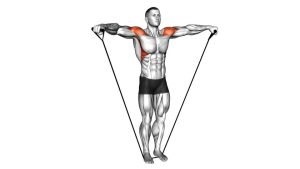
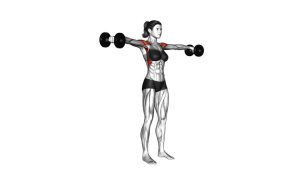
Band Lateral Raise: Proper Form, Sets, Tips & FAQ
Learn how to do the Band Lateral Raise with proper form to build side delts and improve shoulder control. Includes setup, execution, sets by goal, common mistakes, FAQs, and recommended equipment.
Band Lateral Raise
This exercise works best when you move with a steady tempo and avoid using momentum. The band should stay under tension from start to finish, while your torso remains tall and quiet. A slight bend in the elbows is ideal, but the arm position should stay consistent throughout each rep. When done well, you should feel the effort mainly in the outer shoulders rather than in the traps, wrists, or lower back.
Quick Overview
| Body Part | Side Shoulders |
|---|---|
| Primary Muscle | Lateral deltoids |
| Secondary Muscle | Supraspinatus, upper traps, anterior deltoids, core stabilizers |
| Equipment | Resistance band with handles or tubing band |
| Difficulty | Beginner to Intermediate |
Sets & Reps (By Goal)
- Muscle growth: 3-4 sets × 10-15 reps with 45-75 seconds rest
- Shoulder endurance: 2-4 sets × 15-20 reps with 30-45 seconds rest
- Warm-up / activation: 2-3 sets × 12-15 light reps with slow control
- Technique practice: 2-3 sets × 8-12 reps focusing on clean movement and relaxed traps
Progression rule: First improve control, then add reps, then increase band tension. Do not progress by swinging or lifting above shoulder height.
Setup / Starting Position
- Anchor the band: Stand with both feet on the resistance band so it is centered and secure under your stance.
- Grip the handles: Hold one handle in each hand with your arms down by your sides.
- Set your posture: Stand tall with your chest up, ribs stacked, and core lightly braced.
- Soften the elbows: Keep a slight bend in the elbows and maintain that angle throughout the set.
- Relax the neck: Let the shoulders stay down and away from the ears before starting the first rep.
Tip: Step wider on the band if you need more resistance, or use a lighter band if you cannot raise with clean form.
Execution (Step-by-Step)
- Start from the sides: Begin with the hands near your outer thighs and the band already under light tension.
- Raise outward: Lift both arms out to the sides in a wide arc, keeping the elbows slightly bent.
- Lead with the elbows: Think about lifting the elbows, not flinging the hands upward.
- Stop at shoulder level: Bring the arms up until they are about parallel to the floor.
- Pause briefly: Hold the top for a moment without shrugging your shoulders.
- Lower with control: Return to the starting position slowly and keep tension on the band the entire way down.
- Repeat smoothly: Continue for the planned reps without bouncing, leaning, or rushing.
Pro Tips & Common Mistakes
- Keep the movement controlled: Avoid swinging the body or using momentum to get the band higher.
- Do not shrug: Letting the shoulders creep toward the ears shifts tension away from the side delts.
- Stop around shoulder height: Going much higher often turns the movement into more trap-dominant lifting.
- Maintain a soft elbow bend: Locked elbows can make the raise feel harsher on the joints.
- Use the right band tension: Too much resistance usually causes cheating before the target muscles are fully trained.
- Control the lowering phase: The eccentric portion helps keep tension on the delts and improves overall technique.
- Brace lightly: A stable core helps you isolate the shoulders instead of leaning backward.
FAQ
What muscles does the band lateral raise work the most?
The main target is the lateral deltoid, which is the side portion of the shoulder. Supporting muscles include the supraspinatus, upper traps, and stabilizers that help control the movement.
Is a band lateral raise good for shoulder growth?
Yes. It can be very effective for shoulder hypertrophy when you use controlled reps, enough total volume, and a band that creates meaningful tension without forcing sloppy form.
Should I raise my arms above shoulder level?
In most cases, no. Stopping around shoulder height keeps the tension where you want it and helps prevent the movement from turning into a shrug-heavy pattern.
Why do I feel this more in my traps than in my side delts?
That usually happens when the band is too heavy, the shoulders shrug upward, or the arms travel too high. Use lighter resistance, keep the neck relaxed, and think about reaching outward rather than upward.
Can beginners use this exercise?
Absolutely. It is a solid beginner-friendly shoulder isolation exercise because bands are portable, adjustable, and easier on the joints than many heavier free-weight variations.
Recommended Equipment
- HOXWC Resistance Bands with Handles — useful for shoulder raises, rows, presses, and general home workouts
- Balego Resistance Tubing with Handles — a simple tubing option with handles that works well for controlled lateral raise training
- Slim Panda Door Anchor — expands your band exercise options for rows, face pulls, presses, and rehab-style shoulder work
- Retrospec Solana Yoga Mat — adds comfort and grip for home training sessions, warm-ups, and floor work
- Interlocking Foam Home Gym Mat Set — helps create a more stable and protective workout surface for band training at home
Tip: For this exercise, a medium-resistance band is usually enough. Choose tension that lets you raise cleanly to shoulder height without shrugging or twisting.