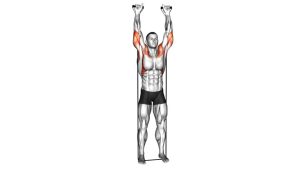
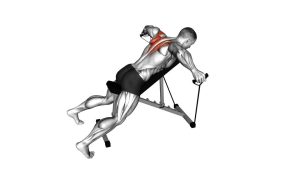
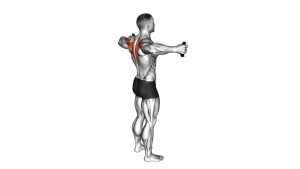
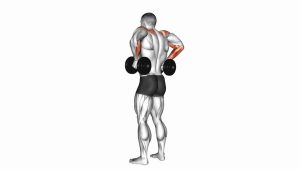
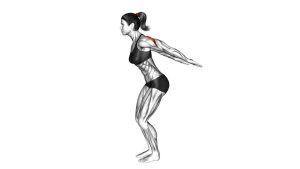
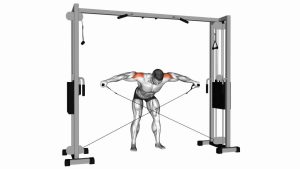
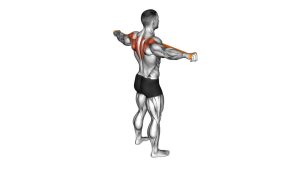
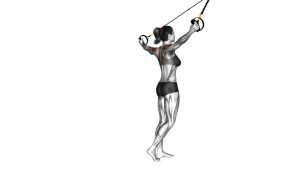
Band Reverse Fly: Proper Form, Sets, Tips & FAQ
Learn how to do the Band Reverse Fly with proper form to target the rear delts, improve shoulder balance, and strengthen the upper back. Includes setup, execution, sets by goal, mistakes, FAQs, and recommended equipment.
Band Reverse Fly
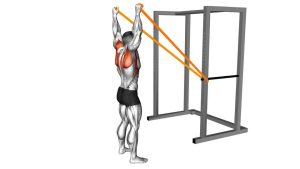
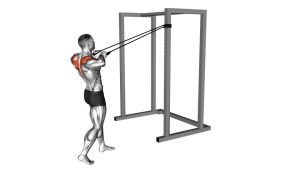
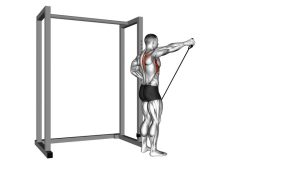
This exercise works best when performed with smooth control and a moderate range of motion. You should feel the rear shoulders and upper back doing most of the work, not the traps taking over. Keep the elbows softly bent, maintain a neutral spine, and avoid using momentum to finish the rep.
Quick Overview
| Body Part | Rear Shoulders |
|---|---|
| Primary Muscle | Rear deltoids (posterior delts) |
| Secondary Muscle | Rhomboids, middle trapezius, rotator cuff stabilizers |
| Equipment | Resistance band with handles or loop band, optional door anchor |
| Difficulty | Beginner to Intermediate |
Sets & Reps (By Goal)
- Muscle building: 3–4 sets × 10–15 reps with controlled tempo
- Shoulder warm-up / activation: 2–3 sets × 12–20 reps using lighter tension
- Posture and upper-back endurance: 2–4 sets × 15–20 reps
- Finisher work: 2–3 sets × 12–18 reps with short rest periods
Progression rule: First increase control and rep quality, then add reps, and only move to a stronger band when you can keep the shoulders down and the elbows tracking smoothly.
Setup / Starting Position
- Anchor the band: Attach the band around a stable point at about chest height, or hold the band securely if using a non-anchored variation.
- Take your stance: Stand tall with feet about shoulder-width apart and knees softly bent.
- Grab the handles: Hold one handle in each hand with the arms extended forward at shoulder level.
- Set posture: Keep your chest lifted, core braced, and neck neutral.
- Create tension: Step back until the band has light tension at the start without pulling you out of position.
Tip: A slight elbow bend is ideal. Locking the arms too hard can create unnecessary joint stress, while too much elbow bend turns the exercise into more of a row.
Execution (Step-by-Step)
- Start strong: Begin with the arms extended in front of you, shoulders down, and chest tall.
- Pull outward: Move both arms out to the sides in a wide arc while keeping a slight bend in the elbows.
- Squeeze the upper back: As the arms open, bring the shoulder blades together without shrugging.
- Reach peak position: Stop when your arms are roughly in line with your shoulders and you feel a strong rear-delt contraction.
- Return slowly: Reverse the motion under control until the hands come back to the start position.
- Repeat smoothly: Keep each rep controlled and avoid letting the band snap you forward.
Pro Tips & Common Mistakes
- Lead with the elbows: This helps keep tension on the rear delts instead of the arms doing all the work.
- Keep shoulders down: Avoid shrugging as the band gets tighter.
- Use a moderate range: Stop when you feel the rear delts working hard without forcing the shoulder joint.
- Control the eccentric: The lowering phase is just as important as the pull.
- Do not swing: Momentum reduces muscle tension and usually shifts work away from the target area.
- Avoid over-bending the elbows: Too much bend changes the exercise into more of a pulling movement for the back.
- Keep the ribcage stable: Do not lean back or flare the ribs to fake extra range.
FAQ
What muscles does the Band Reverse Fly work the most?
The exercise mainly targets the rear deltoids. It also trains the rhomboids, middle traps, and smaller shoulder stabilizers that help control the shoulder blades and upper back.
Is the Band Reverse Fly good for posture?
Yes. It can help strengthen the muscles that pull the shoulders back and support a more balanced upper-body position, especially when paired with good daily posture habits and other upper-back work.
Should I go heavy on Band Reverse Flys?
Usually, moderate resistance works best. If the band is too strong, the traps take over, the shoulders shrug, and the rep loses the smooth rear-delt emphasis you want.
How is this different from a band row?
In a reverse fly, the arms travel outward in a wider arc and the rear delts do more of the work. In a row, the elbows stay closer to the body and the lats and mid-back usually contribute more.
Can beginners use this exercise?
Absolutely. Beginners should start with a lighter band and focus on smooth reps, shoulder control, and clean posture before increasing tension.
Recommended Equipment (Optional)
- Resistance Bands Set with Handles and Door Anchor — the most practical choice for band reverse flys at home
- Heavy-Duty Door Anchor for Resistance Bands — helps you set the band at chest height for a cleaner movement path
- Loop Resistance Bands Set — useful if you prefer simple band setups and multiple resistance levels
- Workout Gloves for Resistance Band Training — can improve grip comfort during higher-rep shoulder sessions
- Exercise Mat — optional, but useful for creating a stable home workout area
Tip: For this exercise, a quality band set and a secure door anchor are the two most useful upgrades.