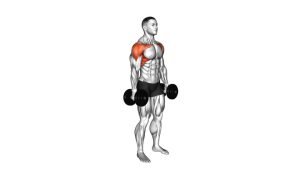
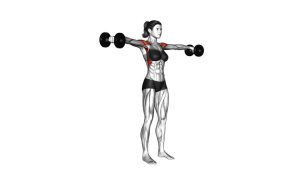
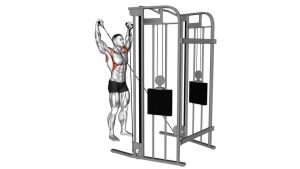
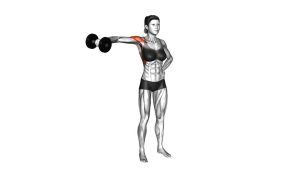
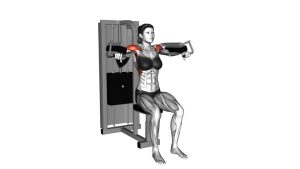
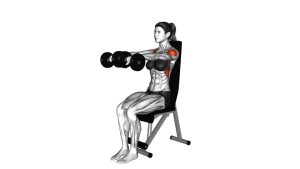
Cable One-Arm Lateral Raise: Form, Muscles Worked, Sets, Tips & FAQ
Learn how to do the Cable One-Arm Lateral Raise with proper form to build stronger, rounder shoulders. Includes muscles worked, setup, execution steps, sets and reps by goal, common mistakes, FAQs, and recommended equipment.
Cable One-Arm Lateral Raise
This exercise works best when performed with smooth tempo, a moderate load, and strict control. The goal is not to swing the weight up, but to create focused tension in the side delt while keeping the upper trap from taking over. A slightly bent elbow, stable torso, and controlled lowering phase will make the movement more effective and joint-friendly.
Quick Overview
| Body Part | Shoulders |
|---|---|
| Primary Muscle | Lateral deltoid |
| Secondary Muscle | Anterior deltoid, supraspinatus, upper traps (minimal if form is correct), core stabilizers |
| Equipment | Low cable pulley with single handle attachment |
| Difficulty | Beginner to Intermediate |
Sets & Reps (By Goal)
- Muscle growth: 3-4 sets × 10-15 reps per side, 45-75 sec rest
- Shoulder definition / accessory work: 2-4 sets × 12-20 reps per side, 30-60 sec rest
- Strength-focused isolation: 3-4 sets × 8-10 reps per side, 60-90 sec rest
- Warm-up / activation: 2-3 sets × 12-15 light reps per side, slow tempo
Progression rule: Increase reps first, then increase load gradually. Only go heavier if you can keep the torso still, maintain a clean arm path, and control the lowering phase.
Setup / Starting Position
- Set the pulley low: Position the cable at the lowest setting and attach a single handle.
- Stand side-on to the machine: The working arm should hold the handle so the cable travels diagonally across the body.
- Adopt a stable stance: Keep feet about shoulder-width apart with knees softly bent.
- Start with the arm in front of the body: Let the hand begin near the opposite thigh with a slight bend in the elbow.
- Brace the torso: Keep the chest tall, ribs stacked, shoulders down, and neck relaxed.
Tip: Starting from a cross-body position helps keep more tension on the lateral delt at the bottom than many dumbbell variations.
Execution (Step-by-Step)
- Set your posture: Stand tall with the core lightly braced and the non-working arm relaxed or holding the machine for balance.
- Initiate with the shoulder: Begin the rep by moving the upper arm out to the side, not by yanking with the hand.
- Lead with the elbow: Raise the arm in a smooth arc until the elbow reaches about shoulder height.
- Pause briefly: Stop at the top for a moment without shrugging the shoulder upward.
- Lower under control: Bring the handle back down slowly to the starting position while maintaining tension.
- Repeat evenly: Perform all reps on one side, then switch arms and match the same quality of movement.
Pro Tips & Common Mistakes
- Lead with the elbow: Think about moving the elbow away from the body rather than lifting the hand.
- Keep a soft elbow bend: Too much bend turns it into a different movement; locking out creates unnecessary tension at the elbow.
- Don’t shrug: Keep the shoulder blade controlled and avoid letting the upper traps dominate.
- Stay strict: Don’t lean, swing, or twist the torso to cheat the weight up.
- Stop around shoulder height: Going much higher often shifts more work into the traps.
- Control the eccentric: The lowering phase is a major part of the muscle-building stimulus.
- Use moderate loads: Side delts usually respond better to clean reps and tension than heavy, sloppy swings.
FAQ
What muscle does the cable one-arm lateral raise work the most?
The main target is the lateral deltoid, which helps create shoulder width and a more rounded upper-body look.
Is this better than dumbbell lateral raises?
It can be better for some people because the cable provides more continuous tension, especially near the bottom of the movement. Both variations are effective, but cables are excellent for strict isolation work.
How high should I raise my arm?
Raise the arm until it reaches roughly shoulder height. Going much higher often increases trap involvement without improving side-delt tension.
Should I use heavy weight on this exercise?
Usually no. This movement tends to work best with moderate or light-to-moderate loads and precise control rather than momentum.
Can beginners do cable one-arm lateral raises?
Yes. Beginners can use this variation to learn shoulder isolation, provided they start light and focus on clean movement rather than ego lifting.
Recommended Equipment
- Single Cable Machine Handles — ideal for one-arm cable shoulder work and other unilateral pulling or raising movements
- Home Gym Pulley System — useful if you want to perform cable lateral raise variations at home
- Resistance Band Set — a practical alternative for shoulder raises, warm-ups, and lateral delt activation
- Cable Attachment Set — expands your training options with multiple grips and handles for shoulder and upper-body work
- Cable Machine / Functional Trainer — the most versatile setup for progressive shoulder isolation and full-body cable training
Tip: For this exercise, prioritize smooth pulley action, comfortable grip handles, and a setup that lets you work one arm at a time with stable body positioning.