Dumbbell Poliquin Lateral Raise: Proper Form, Sets, Tips & FAQ
Learn how to perform the Dumbbell Poliquin Lateral Raise with proper form to target the side delts. Includes setup, step-by-step execution, sets and reps by goal, common mistakes, FAQs, and recommended equipment.
Dumbbell Poliquin Lateral Raise
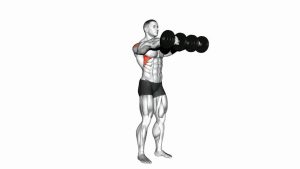
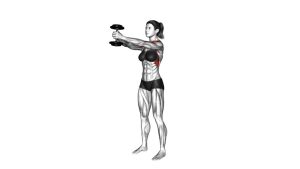
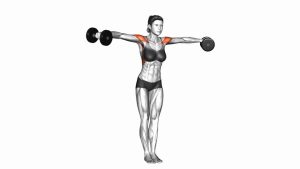
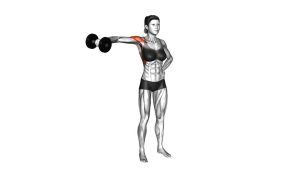
This movement works best when performed with light to moderate dumbbells and a strong focus on technique. You should feel the exercise mostly in the side shoulders, not in the traps, lower back, or wrists. The lift should be smooth on the way up, controlled at the top, and slow on the way down. If you need to swing the torso or shrug the shoulders to raise the dumbbells, the load is too heavy.
Quick Overview
| Body Part | Shoulders |
|---|---|
| Primary Muscle | Lateral deltoid |
| Secondary Muscle | Anterior deltoid, supraspinatus, upper traps (minimized when done correctly) |
| Equipment | Dumbbells |
| Difficulty | Intermediate |
Sets & Reps (By Goal)
- Shoulder hypertrophy: 3–4 sets × 10–15 reps with 45–75 seconds rest
- Strict isolation / mind-muscle connection: 2–4 sets × 12–20 reps with light weight and controlled tempo
- Shoulder finisher: 2–3 sets × 15–20 reps with short rest and no swinging
- Technique practice: 2–3 sets × 8–12 reps with very light dumbbells and slow execution
Progression rule: Increase reps first, then load in small increments. Keep the movement strict and shoulder-driven before making it heavier.
Setup / Starting Position
- Stand tall: Hold a dumbbell in each hand with your feet about hip-width apart and your core braced.
- Set the arms slightly forward: Let the dumbbells hang just in front of the thighs rather than directly against the sides of the body.
- Keep a soft elbow bend: Maintain a slight bend in the elbows and keep that angle consistent throughout the rep.
- Relax the shoulders: Pull the shoulders down and away from the ears to reduce trap involvement.
- Start with control: Chest up, neck neutral, and wrists aligned with the forearms before beginning the raise.
Tip: Use lighter dumbbells than you would in a standard lateral raise. This variation rewards precision more than load.
Execution (Step-by-Step)
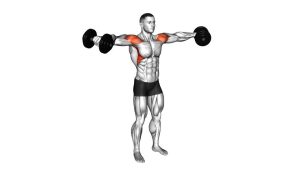
- Initiate with the elbows: Raise the dumbbells outward and slightly forward, thinking about driving the elbows up rather than lifting with the hands.
- Follow a smooth arc: Keep the arms in the scapular plane and lift until the dumbbells reach about shoulder height or slightly below.
- Control the wrist angle: At the top, the pinky side may be slightly higher than the thumb, but avoid aggressively twisting into discomfort.
- Pause briefly: Hold the top position for 1 second while keeping the shoulders down and the torso still.
- Lower slowly: Bring the dumbbells back down under control without dropping them or losing tension at the bottom.
Pro Tips & Common Mistakes
- Lead with the elbows: This helps keep the emphasis on the side delts instead of the hands and traps.
- Use lighter weight than usual: Heavy dumbbells often turn this into a swinging lateral raise instead of a strict isolation movement.
- Do not shrug: If the shoulders creep toward the ears, the upper traps begin taking over.
- Avoid swinging the torso: Keep your ribs down and core engaged so the shoulders do the work.
- Don’t raise too high: Going far above shoulder height often reduces quality and adds unnecessary strain.
- Control the eccentric: The lowering phase is a major part of the hypertrophy benefit, so never let the dumbbells drop freely.
- Keep wrist position natural: A slight angle is fine, but excessive rotation can irritate the shoulders for some lifters.
FAQ
What makes the Dumbbell Poliquin Lateral Raise different from a regular lateral raise?
This variation is usually performed with stricter control, a slightly forward arm path, and more emphasis on constant tension. It is meant to maximize lateral delt recruitment while reducing momentum and unnecessary trap involvement.
Where should I feel this exercise the most?
You should feel it primarily in the lateral deltoids, or side shoulders. If you mostly feel your traps, neck, or lower back, your technique or load likely needs adjustment.
Should I use heavy dumbbells for this movement?
No. This exercise works best with light to moderate dumbbells that allow strict form, smooth tempo, and a controlled lowering phase. Going too heavy usually reduces delt isolation.
Is a slight pinky-up position required?
A slight pinky-up angle can help some lifters feel the side delts more, but it should be subtle and pain-free. Do not force an exaggerated rotation if it bothers your shoulders.
Can beginners do the Dumbbell Poliquin Lateral Raise?
Yes, but beginners should start with very light weights and prioritize form over intensity. It is more technical than a basic lateral raise, so clean execution matters.
Recommended Equipment (Optional)
- Adjustable Dumbbells — ideal for progressive overload and home shoulder training without needing a full rack
- Light Neoprene Dumbbell Set — useful for strict high-rep lateral raise work where precision matters more than heavy loading
- Weightlifting Gloves — can improve grip comfort during longer shoulder-isolation sessions
- Resistance Bands Set — excellent for warm-ups, shoulder activation, and adding extra delt work outside dumbbell training
- Foam Roller — helpful for upper-back and shoulder-area mobility work before pressing or isolation sessions
Tip: For this exercise, small dumbbell jumps matter. Being able to train with lighter increments often helps maintain better form and shoulder tension.