Cable Lateral Raise : Form, Sets, Tips & FAQ
Learn how to perform the Cable Lateral Raise with proper form to build stronger, rounder shoulders. Includes setup, step-by-step execution, sets and reps by goal, common mistakes, FAQs, and recommended Amazon equipment.
Cable Lateral Raise
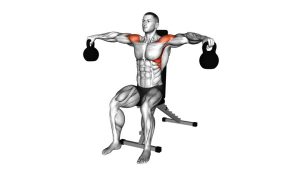
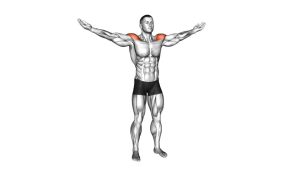
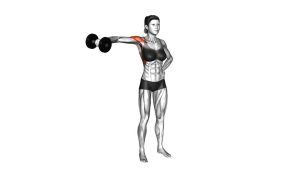
This movement works best with moderate load, smooth tempo, and strict control. You should feel the side delts doing most of the work, while the traps stay supportive rather than dominant. The goal is not to heave the weight upward, but to create clean shoulder abduction with steady posture and a stable torso.
Quick Overview
| Body Part | Shoulders |
|---|---|
| Primary Muscle | Lateral deltoids (side delts) |
| Secondary Muscle | Anterior deltoids, supraspinatus, upper traps (stabilizing), core |
| Equipment | Cable machine with single handles |
| Difficulty | Beginner to Intermediate |
Sets & Reps (By Goal)
- Muscle growth: 3-4 sets × 10-15 reps, 45-75 sec rest
- Shoulder definition / accessory work: 2-4 sets × 12-20 reps, 30-60 sec rest
- Technique practice: 2-3 sets × 8-12 reps, lighter load, slow tempo
- Finisher / pump work: 2-3 sets × 15-20 reps with strict form
Progression rule: Add reps before adding load. Only increase resistance when you can lift to shoulder height without leaning, shrugging, or swinging.
Setup / Starting Position
- Set the pulleys low: Position the cable machine so the handles start near thigh level.
- Choose your handle setup: You can perform the raise one arm at a time or with both arms together using low pulleys.
- Stand tall: Keep your chest up, ribs stacked, and core braced.
- Grip the handles lightly: Maintain a neutral wrist and avoid over-squeezing.
- Start with arms low: Hands begin near the outer thighs or slightly in front of the body, with a soft bend in the elbows.
Tip: A slightly staggered stance can improve balance and reduce torso sway.
Execution (Step-by-Step)
- Brace and set the shoulders: Keep the torso still and the shoulders down and away from the ears.
- Raise the arms outward: Lift the handles out to the sides in a controlled arc, leading with the elbows.
- Stop around shoulder height: Bring the upper arms roughly parallel to the floor without over-lifting.
- Pause briefly: Hold the top for a moment to reinforce tension in the side delts.
- Lower slowly: Return to the starting position under control, keeping tension on the cables.
Pro Tips & Common Mistakes
- Lead with the elbows: This helps keep the tension where you want it—on the side delts.
- Keep a soft elbow bend: Locking the arms can stress the joints and reduce smooth mechanics.
- Do not shrug: Keep the traps quiet and the shoulders depressed as you lift.
- Avoid swinging: Momentum turns this into a full-body movement instead of a shoulder isolation drill.
- Do not lift too high: Stopping around shoulder level usually keeps the movement cleaner and more comfortable.
- Control the lowering phase: The eccentric portion helps build tension and improves shoulder discipline.
FAQ
What muscles does the cable lateral raise target most?
The main target is the lateral deltoid, which gives the shoulders a wider, rounder appearance. Secondary muscles help stabilize the movement, but the side delts should do most of the work.
Is the cable lateral raise better than dumbbell lateral raises?
Neither is automatically better in all cases, but cables often provide more constant tension, especially near the bottom of the rep. That can make them excellent for hypertrophy and control.
Should I go above shoulder height?
Usually, no. Raising to about shoulder level is enough for most lifters. Going much higher can shift tension away from the target muscles and may irritate the shoulder in some people.
Can beginners do cable lateral raises?
Yes. Beginners can use light resistance and focus on smooth mechanics. It is often easier to learn with modest weight and slower tempo rather than trying to lift heavy.
How often should I train this exercise?
Most people can include it 1-3 times per week depending on total shoulder volume, recovery, and overall training split.
Recommended Equipment (Optional)
- Single D Handle Cable Attachment — ideal for one-arm or dual-handle cable raises
- Resistance Bands Set with Handles — useful when you want a travel-friendly shoulder alternative
- Wall Mount Cable Station — a home-gym option for cable shoulder work
- Wrist Weights — a light-load accessory for shoulder burnouts and conditioning work
- Shoulder Resistance Bands — good for warm-ups, prehab, and extra delt volume
Tip: Choose tools that let you keep clean shoulder mechanics. If a product encourages jerky reps or joint irritation, swap it for a lighter or smoother option.