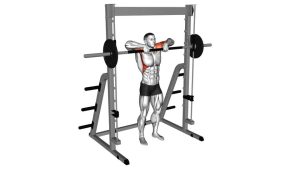
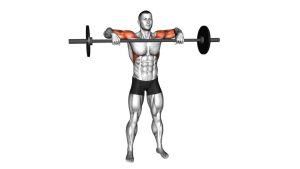
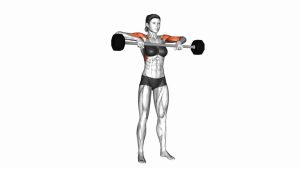
Barbell Wide-Grip Upright Row : Form, Muscles Worked, Sets & Tips
Learn how to perform the Barbell Wide-Grip Upright Row with proper form. Discover muscles worked, setup, execution steps, sets and reps by goal, common mistakes, FAQs, and recommended equipment.
Barbell Wide-Grip Upright Row
This variation works best with a moderate load, a clean vertical bar path, and strict control. The elbows should lead the lift, the wrists should stay neutral, and the torso should remain tall without using momentum. Done well, this exercise can help build rounder shoulders and stronger upper traps while reinforcing controlled upper-body pulling mechanics.
Quick Overview
| Body Part | Shoulders |
|---|---|
| Primary Muscle | Lateral deltoids |
| Secondary Muscle | Upper trapezius, rear deltoids, biceps, forearms |
| Equipment | Barbell |
| Difficulty | Beginner to Intermediate |
Sets & Reps (By Goal)
- Muscle growth: 3–4 sets × 8–15 reps, 60–90 seconds rest
- Technique practice: 2–3 sets × 10–12 reps with light weight, 45–60 seconds rest
- Upper-body strength support: 3–5 sets × 6–8 reps, 90–120 seconds rest
- Shoulder finisher: 2–3 sets × 12–20 reps with strict form, 30–45 seconds rest
Progression tip: Add weight only when you can keep the bar path smooth, the elbows leading, and the shoulders comfortable throughout every rep.
Setup / Starting Position
- Stand tall: Place your feet about hip- to shoulder-width apart and brace your core.
- Use a wide grip: Hold the barbell wider than shoulder width so your elbows naturally flare outward.
- Start low: Let the bar rest near the upper thighs with arms extended and shoulders relaxed.
- Set posture: Keep your chest up, neck neutral, and gaze forward.
- Stay balanced: Distribute your weight evenly through both feet and avoid leaning backward.
A wider grip typically shifts more emphasis toward the shoulders and reduces the cramped feeling some people get with a close grip.
Execution (Step-by-Step)
- Initiate with the elbows: Begin pulling the bar upward by driving your elbows out and up.
- Keep the bar close: Let the bar travel vertically along the front of your torso.
- Lift under control: Raise the bar to about lower chest or upper chest level, or slightly below shoulder height if that feels best.
- Pause briefly: Squeeze the shoulders and upper traps without shrugging aggressively.
- Lower slowly: Return the bar to the start position under control without dropping it.
- Repeat cleanly: Maintain the same posture and range of motion on each rep.
Pro Tips & Common Mistakes
- Use a shoulder-friendly range: You do not need to pull the bar extremely high to make the exercise effective.
- Lead with the elbows: This helps keep the focus on the delts instead of turning the lift into a wrist-dominant pull.
- Keep the torso still: Avoid bouncing with the hips or leaning back to move the weight.
- Do not grip too narrow: A close grip can make the movement feel less comfortable for many lifters.
- Avoid excessive shrugging: Some trap involvement is normal, but the shoulders should stay controlled rather than jammed upward.
- Control the negative: Lowering the bar slowly improves tension and keeps the rep quality high.
- Choose load carefully: Heavy cheating reps usually reduce shoulder tension and increase joint stress.
FAQ
What muscles does the barbell wide-grip upright row work?
It mainly targets the lateral deltoids, with help from the upper traps, rear delts, biceps, and forearms.
Why use a wide grip instead of a narrow grip?
A wide grip often feels more comfortable on the shoulders, encourages the elbows to flare outward, and can place more emphasis on the side delts.
How high should I pull the bar?
Pull only as high as you can without shoulder pinching or losing posture. For many lifters, stopping around lower chest to upper chest height works well.
Is this exercise good for shoulder growth?
Yes. When done with strict form and moderate weight, it can be a useful hypertrophy exercise for building the side delts and upper traps.
Should beginners do upright rows?
Beginners can use this variation if it feels comfortable. Start light, focus on smooth technique, and avoid forcing range of motion.
Recommended Equipment
- Olympic Barbell Collars — helps keep plates secure during upright rows and other standing barbell lifts
- Weightlifting Straps — useful if grip fatigue limits shoulder-focused sets
- Resistance Bands for Shoulder Warm-Ups — great for band pull-aparts, external rotations, and pre-lift shoulder prep
- Exercise Mat — useful for warm-up drills, mobility work, and floor-based accessory movements
- Barbell Pad — optional for comfort during other barbell shoulder and lower-body exercises in the same training setup
Tip: For this exercise, the most practical add-ons are secure collars, basic warm-up bands, and grip-support tools.