Sitting Jack on a Padded Stool: Form, Muscles Worked, Sets & Tips
Learn how to do the Sitting Jack on a Padded Stool with proper form. Discover muscles worked, setup, step-by-step execution, sets by goal, common mistakes, FAQs, and helpful equipment.
Sitting Jack on a Padded Stool
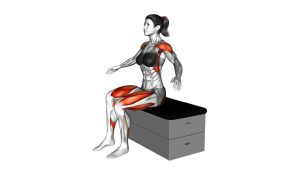
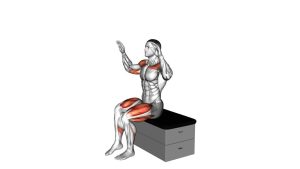
This exercise works well as a warm-up, beginner cardio option, or upper-body activation drill. Because you are seated, the movement is easier to control than a standard jumping jack, which makes it useful for beginners, older adults, and anyone who wants a more joint-friendly option. The main goal is coordinated motion: arms travel up and out while the legs open, then both return together under control.
Quick Overview
| Body Part | Shoulders |
|---|---|
| Primary Muscle | Deltoids (especially front and side delts) |
| Secondary Muscle | Hip abductors, upper chest, core stabilizers, quadriceps |
| Equipment | Padded stool, bench, or stable seat |
| Difficulty | Beginner (low-impact and coordination-friendly) |
Sets & Reps (By Goal)
- Warm-up / shoulder activation: 2–3 sets × 10–15 reps
- Light cardio / movement flow: 2–4 sets × 20–30 seconds
- Beginner conditioning: 2–3 sets × 12–20 reps
- Mobility & coordination practice: 1–3 sets × 8–12 smooth reps
Progression rule: First improve rhythm, posture, and range of motion. Then add reps, longer work intervals, or a slightly faster pace while keeping the movement controlled.
Setup / Starting Position
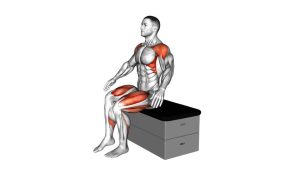
- Sit tall on a stable padded stool: Position yourself securely with enough room for the legs to open comfortably.
- Place the feet flat: Start with the feet together or close together and knees bent around 90 degrees.
- Let the arms hang naturally: Keep the hands by your sides with shoulders relaxed.
- Brace lightly through the torso: Keep the chest open, ribs stacked, and spine upright.
- Set your gaze forward: Avoid slouching, leaning back, or dropping the head as you move.
Tip: Sit near the middle of the pad so you stay balanced throughout the full open-and-close motion.
Execution (Step-by-Step)
- Start in the closed position: Sit upright with the arms down and legs together.
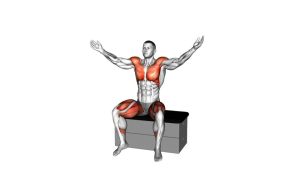
- Open the movement: Raise both arms out to the sides and upward in a wide arc while simultaneously spreading the legs apart.
- Reach the top smoothly: Bring the arms near overhead or as high as comfortable while the legs open wide without losing posture.
- Pause briefly if needed: Stay tall through the torso and keep the shoulders from shrugging excessively.
- Return to the start: Lower the arms back to your sides while bringing the legs back together in one controlled motion.
- Repeat rhythmically: Keep the reps even, coordinated, and light rather than fast and sloppy.
Pro Tips & Common Mistakes
- Sit tall the whole time: Don’t collapse the chest or round the upper back.
- Move arms and legs together: This exercise is partly about timing and coordination.
- Keep it low impact: Open and close with control instead of bouncing on the stool.
- Don’t shrug hard at the top: Let the shoulders raise naturally without jamming them toward the ears.
- Use a manageable range: If overhead motion feels limited, lift only as high as you can without discomfort.
- Stay centered on the seat: Avoid shifting too far forward or backward during the reps.
- Control the return: Don’t let the arms drop or the knees snap inward too quickly.
FAQ
What muscles does the Sitting Jack on a Padded Stool work?
The main focus is the deltoids, especially the front and side shoulders. The movement also involves the hip abductors, core stabilizers, and a small amount of assistance from the upper chest and legs.
Is this a cardio exercise or a shoulder exercise?
It can be both. At a slower pace it works well as a shoulder mobility and activation drill. At a steady repeated pace it becomes a light cardio movement.
Who is this exercise good for?
It is a good option for beginners, people who want a low-impact alternative to jumping jacks, and anyone looking for a seated warm-up or conditioning movement.
Can I do this without a padded stool?
Yes. A stable bench, box, or sturdy chair can work as long as it allows safe seated movement and does not slide. The pad simply adds comfort during longer sessions.
Should my arms go fully overhead?
Only if you can do so comfortably. Use the range of motion that lets you keep good posture and smooth control without pain or excessive shrugging.
Recommended Equipment
- Aerobic Step Platform — a stable raised surface that can work well for seated low-impact exercise variations
- Foam Padded Plyometric Box — offers a firm but cushioned seat for drills like seated jacks
- Resistance Loop Bands — useful for pairing with extra shoulder and hip activation work
- Light Neoprene Dumbbells — helpful if you later want to progress seated shoulder raises or presses
- Non-Slip Exercise Mat — helps keep the training area safer and more stable under the stool or bench
Choose stable, non-slip equipment first. Comfort matters, but safety and balance matter more for seated movement patterns.