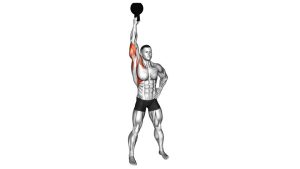
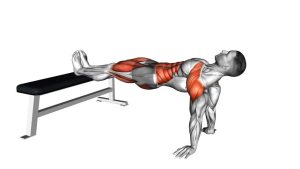
Seated Lateral Raise with Step-Out on a Padded Stool: Form, Sets, Tips & FAQ
Learn the Seated Lateral Raise with Step-Out on a Padded Stool to build side delts, improve shoulder control, and add lower-body stability. Includes setup, execution, sets by goal, mistakes, FAQs, and recommended equipment.
Seated Lateral Raise with Step-Out on a Padded Stool
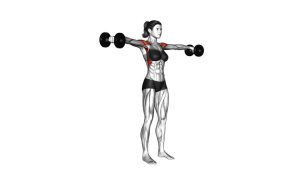
This variation works best with light resistance, clean tempo, and precise form. The seated position reduces momentum, which makes it easier to keep tension on the lateral deltoids. The added step-out introduces a coordination challenge that encourages better trunk control and hip stability without turning the exercise into a heavy full-body movement.
Quick Overview
| Body Part | Shoulders |
|---|---|
| Primary Muscle | Lateral deltoids (side delts) |
| Secondary Muscle | Anterior deltoids, supraspinatus, upper traps (minimal if form is good), glute medius and hip stabilizers |
| Equipment | Padded stool or aerobic step, optional light dumbbells |
| Difficulty | Beginner to Intermediate (best with light resistance and controlled coordination) |
Sets & Reps (By Goal)
- Shoulder activation / warm-up: 2–3 sets × 10–15 reps, light load, 30–45 sec rest
- Muscle control / shaping: 3–4 sets × 10–15 reps, 45–75 sec rest
- Coordination + posture work: 2–3 sets × 8–12 smooth reps, controlled pace, 30–60 sec rest
- Light endurance finisher: 2–3 sets × 15–20 reps with very light resistance
Progression rule: First improve control, pause quality, and range consistency. Only then increase resistance slightly. If the shoulders shrug or the torso starts swinging, the load is too heavy.
Setup / Starting Position
- Sit tall on the padded stool: Keep both sit bones grounded and the chest gently lifted.
- Place the feet firmly: Start with a stable seated base and knees bent comfortably.
- Hold light dumbbells or use empty hands: Let the arms hang naturally at the sides with a soft bend in the elbows.
- Set the shoulders: Keep them down and relaxed—avoid shrugging before the lift even begins.
- Brace lightly through the core: Stay upright without leaning back or collapsing through the lower back.
Tip: If you are learning the pattern, master the arm raise first, then add the step-out once the shoulder motion stays smooth.
Execution (Step-by-Step)
- Start from the seated base: Arms down, spine tall, shoulders relaxed, eyes forward.
- Raise the arms out to the sides: Lift in a wide arc until the hands or elbows reach about shoulder height.
- Keep a slight elbow bend: Maintain the same arm shape throughout the raise—do not turn it into a press.
- Add the step-out smoothly: As the arms lift, subtly step one or both feet outward depending on the version shown, keeping the torso steady.
- Pause briefly at the top: Feel the side delts working while the neck stays relaxed.
- Lower under control: Bring the arms back down slowly and return the feet to the starting position without bouncing.
- Repeat rhythmically: Every rep should look almost identical—same height, same control, same seated posture.
Pro Tips & Common Mistakes
- Lead with the elbows: This often helps keep tension on the side delts instead of the hands and traps.
- Raise to shoulder level: Going much higher often shifts tension away from the lateral delts.
- Keep the neck relaxed: No shrugging or tensing around the ears.
- Use light resistance: This exercise is about clean mechanics, not swinging heavy weight.
- Control the lowering phase: The descent matters just as much as the lift.
- Do not lean back: Torso movement usually means you are compensating.
- Make the step-out subtle: It should support coordination, not turn the rep into a rushed lower-body drill.
- Keep both sides even: Match the height and tempo of each arm for balanced shoulder development.
FAQ
Where should I feel this exercise the most?
You should mainly feel it in the side delts. You may also notice some work in the upper shoulder stabilizers and hips because of the seated step-out pattern, but the main target is the lateral deltoid.
Should I use heavy dumbbells for this movement?
Usually no. This variation works best with light to moderate resistance so you can keep the arms controlled, the shoulders down, and the torso stable.
Why add the step-out instead of doing a normal seated lateral raise?
The step-out adds a coordination and stability element. It can make the movement more engaging while encouraging control through the hips, trunk, and seated posture.
How high should I raise my arms?
Aim for about shoulder height. Going much higher can shift more work into the traps and reduce the quality of the lateral raise pattern.
Who should be cautious with this exercise?
Anyone with current shoulder impingement symptoms, acute shoulder pain, or poor seated balance should keep the load very light or modify the movement until it feels controlled and pain-free.
Recommended Equipment (Optional)
- Light Dumbbells — ideal for clean lateral raise mechanics and higher-control shoulder work
- Neoprene Dumbbells — comfortable grip and practical for lower-load isolation training
- Resistance Band Set — useful for warm-ups, shoulder activation, and pairing with posture work
- Balance Pad — adds comfort and can support stability-focused seated or rehab-style training
- Aerobic Step Platform / Padded Workout Step — works well as a seated platform for controlled exercise variations
Tip: Keep the setup simple. For most people, a stable seat and a pair of light dumbbells are enough to get excellent results from this exercise.