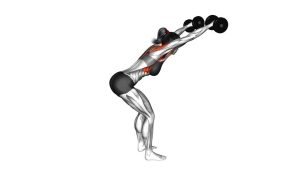
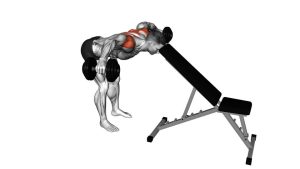
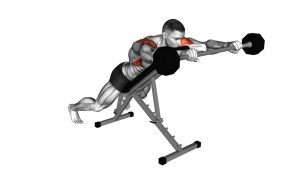
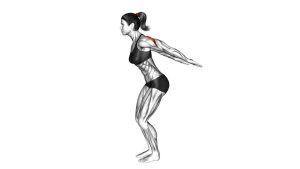
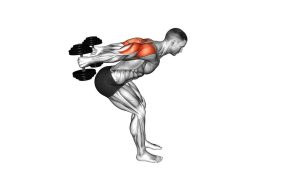
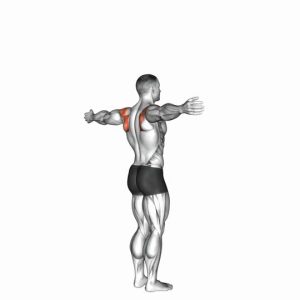
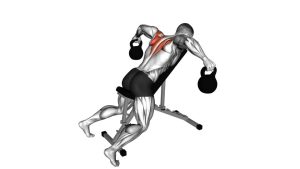
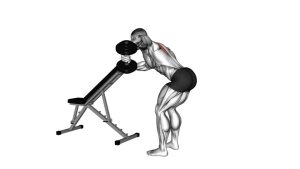
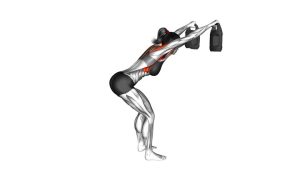
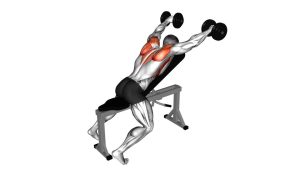
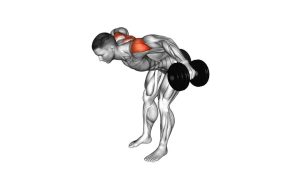
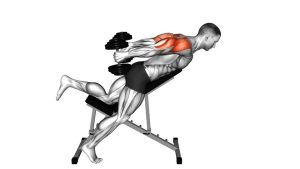
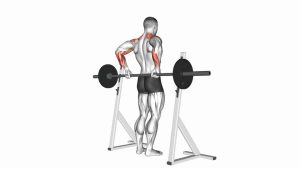
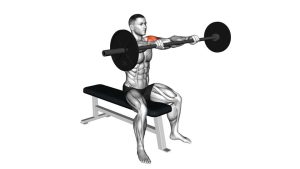
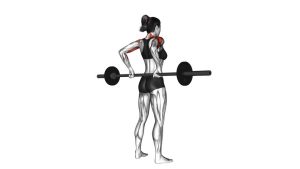
Barbell Bent-Over Reverse Raise (Skier): Form, Muscles Worked, Sets & Tips
Learn how to do the Barbell Bent-Over Reverse Raise (Skier) with proper form. Discover muscles worked, setup, step-by-step execution, sets by goal, common mistakes, FAQs, and recommended equipment.
Barbell Bent-Over Reverse Raise (Skier)
This exercise works best with a light-to-moderate barbell load and a strict torso position. You should feel the movement mainly in the rear shoulders, with assistance from the rhomboids and middle traps. The lift should look smooth and deliberate, not explosive or swing-driven. If you have to jerk the torso or shrug hard to finish the rep, the weight is too heavy.
Quick Overview
| Body Part | Shoulders |
|---|---|
| Primary Muscle | Rear deltoids (posterior delts) |
| Secondary Muscle | Rhomboids, middle trapezius, lower traps, upper back stabilizers, core |
| Equipment | Barbell |
| Difficulty | Intermediate (best with good hip hinge control and lighter loading) |
Sets & Reps (By Goal)
- Rear delt hypertrophy: 3–4 sets × 10–15 reps, 45–75 sec rest
- Upper-back control / shoulder balance: 2–4 sets × 12–20 reps, smooth tempo, 45–60 sec rest
- Warm-up or activation work: 2–3 sets × 12–15 reps with a very light bar, 30–45 sec rest
- Technique practice: 2–3 sets × 8–10 slow reps, focus on clean range and posture
Progression rule: Add reps before adding load. This movement responds better to cleaner mechanics and better rear-delt tension than to heavy barbell loading.
Setup / Starting Position
- Stand tall with the barbell in both hands: Use a shoulder-width or slightly wider overhand grip.
- Hinge at the hips: Push your hips back until your torso is bent forward roughly 30–60 degrees, depending on comfort and mobility.
- Unlock the knees: Keep a soft knee bend for balance and lower-back support.
- Set the torso: Brace the core, flatten the back, and keep the chest open without overextending the neck.
- Let the arms hang naturally: The bar should start below the shoulders, near the knees or upper shins depending on torso angle.
Tip: Think of this as a hinge plus shoulder raise, not as a row. Your torso stays fixed while the shoulders do the work.
Execution (Step-by-Step)
- Lock in the hinge: Before the first rep, set your back flat and keep your ribs braced so the torso doesn’t bounce.
- Initiate from the shoulders: Raise the bar backward and slightly outward in a skier-style path rather than pulling it into the body.
- Keep the elbows softly bent: Maintain a small bend throughout the rep so the tension stays on the rear delts.
- Lift until the rear delts are fully engaged: The bar usually travels behind the line of the torso, but the exact height depends on your shoulder control and mobility.
- Pause briefly at the top: Squeeze the rear shoulders and upper back without shrugging toward the ears.
- Lower under control: Return the bar slowly to the start without letting it drop or swinging through the bottom.
- Repeat with steady rhythm: Each rep should look identical, with no torso snapping or momentum.
Pro Tips & Common Mistakes
- Use a lighter bar than you think: Rear delts fatigue quickly, and too much load turns the exercise into momentum work.
- Keep the neck neutral: Don’t crane the head upward to finish the rep.
- Don’t row it: If the elbows tuck and the bar travels toward the waist like a bent-over row, you lose the intended emphasis.
- Avoid torso swing: The hinge position should stay stable from first rep to last rep.
- Control the lowering phase: The eccentric is where a lot of the rear-delt stimulus happens.
- Don’t shrug hard at the top: Excess trap dominance can reduce the rear-delt focus.
- Keep reps smooth: A clean, repeatable arc is more valuable than extra range forced with momentum.
FAQ
What muscles does the Barbell Bent-Over Reverse Raise (Skier) work most?
The main target is the rear deltoid. The rhomboids, middle traps, and other upper-back stabilizers assist to control the shoulder blades and help maintain the bar path.
Is this exercise better for shoulders or upper back?
It is primarily a rear-shoulder exercise with upper-back support. If you use too much weight, it starts behaving more like a back exercise because the torso and rowing muscles take over.
Should I use a full-size Olympic barbell?
Usually, a lighter bar, technique bar, or very lightly loaded setup works better. This exercise is hard to isolate with a heavy standard Olympic bar unless you are already very strong and technically consistent.
What is the difference between this and a bent-over row?
A bent-over row pulls the load toward the torso to emphasize the back. This exercise raises the load backward and slightly outward to emphasize the rear delts and shoulder control.
Can beginners do this exercise?
Beginners can learn it, but many do better starting with dumbbells, cables, or resistance bands before progressing to a barbell version. The barbell demands more control and better positioning.
Recommended Equipment
- Lightweight Training Bar / 5 lb Barbell — ideal for learning the motion without turning it into a heavy row
- Light Fixed Weight Bar — useful when you want a simple, manageable load for strict rear-delt work
- Barbell Collars / Clips — helps keep plates secure during controlled shoulder-focused sets
- Lifting Straps — helpful if grip fatigue limits your set before your rear delts do
- Shoulder Rehab / Resistance Bands — excellent for warm-ups, activation drills, and lighter rear-delt accessory work
Tip: For this movement, the best “upgrade” is usually better control, not a much heavier bar. Choose equipment that helps you keep the motion strict and repeatable.