Dumbbell Incline Y Raise: Proper Form, Muscles Worked, Sets, Tips & FAQ
Learn how to do the Dumbbell Incline Y Raise with proper form to target the rear delts, traps, and upper back. Includes setup, step-by-step execution, sets and reps by goal, mistakes to avoid, FAQs, and recommended equipment.
Dumbbell Incline Y Raise
This movement works best with light weight, clean mechanics, and a slow tempo. It is not a momentum-based delt raise. Instead, it is a precision exercise that helps improve shoulder function, upper-back development, posture, and overhead control. When performed correctly, you should feel the work across the rear shoulders and upper back, not in the lower back or neck.
Quick Overview
| Body Part | Shoulders |
|---|---|
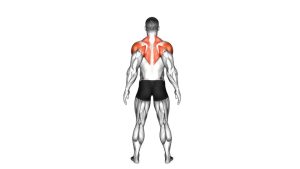
| Primary Muscle | Rear deltoids, lower trapezius, middle trapezius |
| Secondary Muscle | Upper trapezius, rhomboids, rotator cuff stabilizers, serratus anterior |
| Equipment | Incline bench and light dumbbells |
| Difficulty | Beginner to Intermediate (easy to learn, hard to perform perfectly) |
Sets & Reps (By Goal)
- Technique / activation: 2–3 sets × 10–15 reps with very light dumbbells and slow control
- Muscle building: 3–4 sets × 10–15 reps with strict form and 45–75 sec rest
- Shoulder health / posture work: 2–4 sets × 12–20 reps with smooth tempo and moderate fatigue
- Warm-up primer: 1–2 sets × 8–12 reps before rows, pull-ups, or overhead pressing
Progression rule: Increase reps first, then load in very small jumps. If your arms stop following a clean Y path, the weight is too heavy.
Setup / Starting Position
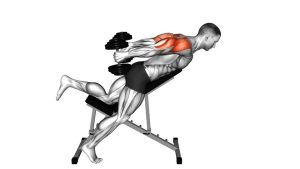
- Set the bench: Adjust an incline bench to roughly 30–45 degrees.
- Lie chest-down: Place your chest firmly on the bench with your feet planted on the floor for balance.
- Hold light dumbbells: Let your arms hang straight down with a neutral or slightly thumbs-up hand position.
- Keep the neck neutral: Look down naturally without jutting the chin forward.
- Brace lightly: Keep the ribs stable and avoid arching the lower back off the bench.
Tip: This exercise usually feels best with lighter weights than most people expect. Precision matters more than load.
Execution (Step-by-Step)
- Start from a dead hang: Let the dumbbells hang under the shoulders while keeping tension through the upper back.
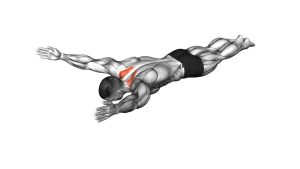
- Raise in a Y pattern: Lift the arms upward and outward at roughly a 30–45 degree angle from the torso.
- Lead with control: Think about moving through the shoulder blades and rear delts instead of swinging from the hands.
- Pause near the top: Stop when the arms form a clear Y shape and your shoulders stay packed and controlled.
- Lower slowly: Return the dumbbells under control to the start without dropping them or relaxing completely.
Pro Tips & Common Mistakes
- Use lighter dumbbells than usual: This is a control exercise, not a heavy cheat raise.
- Keep the chest connected to the bench: Don’t lift the torso to force extra range.
- Raise on a diagonal: Too far forward becomes a front raise; too wide becomes more of a reverse fly.
- Keep a soft elbow bend: Locking out too hard can make the movement feel awkward and jointy.
- Don’t shrug aggressively: The upper traps will assist, but the movement should still feel organized and controlled.
- Control the lowering phase: The eccentric portion helps reinforce shoulder stability and better mechanics.
- Use it after pressing or pulling: It works well as an accessory for shoulder balance and upper-back detail.
FAQ
What muscles does the Dumbbell Incline Y Raise work most?
It primarily targets the rear delts and the middle/lower trapezius, while also training the smaller stabilizers that help control shoulder blade movement.
Should I use heavy or light dumbbells?
Most lifters should use light dumbbells. This exercise loses value quickly when the load is too heavy and form breaks down.
What is the difference between a Y raise and a reverse fly?
A Y raise travels on a more upward diagonal path and emphasizes scapular control and trap involvement, while a reverse fly is usually performed wider and places more direct emphasis on the rear delts.
Can beginners do this exercise?
Yes. It is beginner-friendly as long as the weight stays light and the focus stays on control, posture, and clean repetition quality.
Where should I feel it?
You should mainly feel it across the rear shoulders, upper back, and around the shoulder blades. You should not feel strain in the lower back or painful pinching in the front of the shoulder.
Recommended Equipment
- Adjustable Incline Weight Bench — the key setup tool for stable chest-supported Y raises
- Lightweight Neoprene Dumbbells — ideal for beginners, shoulder activation work, and high-control reps
- Adjustable Dumbbells — useful when you want one compact set for multiple shoulder and upper-back exercises
- Magnetic Micro Weights / Fractional Add-Ons — great for progressing this exercise in very small weight jumps
- Resistance Bands Set — helpful for pairing with shoulder warm-ups, pull-aparts, and posture-focused accessory work
Tip: For this exercise, a high-quality bench and light, easy-to-control dumbbells matter more than heavy loading.