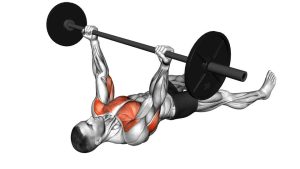
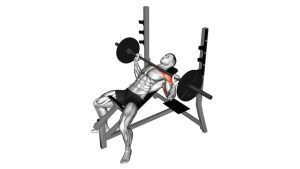
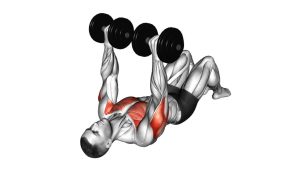
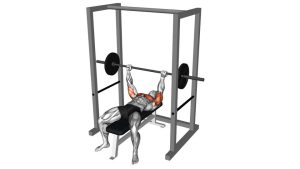
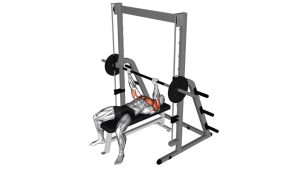
Barbell Banded Bench Press: Form, Muscles Worked, Sets, Tips & FAQ
Learn how to do the Barbell Banded Bench Press with proper form. Discover muscles worked, setup, execution steps, sets and reps by goal, common mistakes, FAQs, and recommended equipment.
Barbell Banded Bench Press
This exercise is especially useful for lifters who want to improve pressing force through the top half of the bench press. The bands challenge you more as they stretch, so the movement rewards tight setup, consistent bar path, and aggressive but controlled intent on the way up. It fits well into strength blocks, powerlifting accessory work, and explosive upper-body training.
Quick Overview
| Body Part | Chest |
|---|---|
| Primary Muscle | Pectoralis major |
| Secondary Muscle | Triceps brachii, anterior deltoids |
| Equipment | Flat bench, barbell, weight plates, power rack, resistance bands |
| Difficulty | Intermediate to advanced |
Sets & Reps (By Goal)
- Strength: 4–6 sets × 3–5 reps with 2–3 minutes rest
- Power / Speed Work: 5–8 sets × 2–3 reps using submaximal bar weight with fast intent, 60–90 seconds rest
- Hypertrophy: 3–4 sets × 6–8 reps with 90–120 seconds rest
- Bench Press Accessory Work: 3–5 sets × 4–6 reps after primary bench work
Programming note: Start with modest band tension and focus on bar control. Increase band tension or loading only after you can maintain a stable setup and a smooth pressing path.
Setup / Starting Position
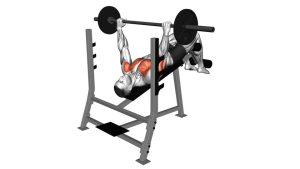
- Set the bench inside a rack: Position a flat bench under the bar so your eyes line up just under the barbell when lying down.
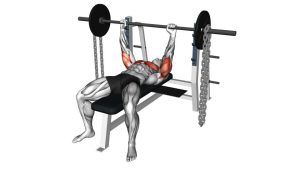
- Anchor the bands: Attach one resistance band to each side of the barbell and secure the opposite ends to the bottom of the rack or dedicated anchor points.
- Load the bar evenly: Add plates as needed and confirm both sides match in weight and band tension.
- Take your bench position: Lie on the bench with feet planted firmly on the floor, upper back tight, and shoulder blades pulled back and down.
- Grip the bar: Use a pronated grip slightly wider than shoulder width, with wrists stacked over forearms.
- Unrack with control: Straighten the arms and bring the bar over the chest without losing upper-back tightness.
Tip: The cleaner your setup, the better this movement feels. Do not rush the band setup phase.
Execution (Step-by-Step)
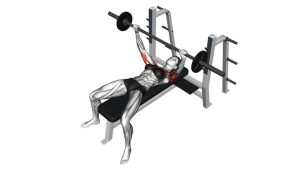
- Start at lockout: Hold the bar directly above the mid-chest with arms extended and shoulders packed.
- Lower under control: Bend the elbows and bring the bar down toward the mid- to lower-chest area while keeping the chest up.
- Pause briefly if needed: Stay tight at the bottom without bouncing the bar or letting the shoulders roll forward.
- Drive the bar upward: Press forcefully through the chest and triceps while maintaining leg drive and upper-back stability.
- Finish strong: Continue pressing through the increasing band tension until the elbows are fully extended at the top.
- Repeat with the same bar path: Keep each rep smooth, controlled, and symmetrical from side to side.
Pro Tips & Common Mistakes
- Keep the upper back tight: Retracted shoulder blades create a stronger and safer pressing base.
- Use even band setup: Mismatched tension can shift the bar path and throw off your mechanics.
- Press with intent: This variation works best when you accelerate the bar instead of grinding every rep slowly.
- Do not overload too early: Too much plate weight plus too much band tension can turn clean reps into unstable reps.
- Avoid bouncing the bar: Touch the chest under control and keep tension through the entire rep.
- Watch elbow position: Excessive flare can stress the shoulders and weaken the press.
- Keep wrists stacked: Bent-back wrists reduce force transfer and can make the lockout feel sloppy.
FAQ
What is the main benefit of the Barbell Banded Bench Press?
Its biggest advantage is variable resistance. The bands make the exercise harder toward lockout, which can help improve bar speed, pressing power, and top-end strength.
Is this better than a regular barbell bench press?
It is not automatically better, but it is a valuable variation. A regular bench press is still the main foundation, while the banded version is useful for specific strength and power goals.
How much band tension should I use?
Start conservatively. Use enough tension to feel a stronger lockout challenge without losing control, bar path, or symmetry between sides.
Can beginners do this exercise?
Most beginners should master the standard bench press first. The banded version is better suited for lifters who already have reliable bench press technique.
Where should I feel this movement most?
You should mainly feel it in the chest, with strong assistance from the triceps and front delts, especially as you drive through the top half of the lift.
Recommended Equipment
- Flat Weight Bench — a stable bench is essential for safe pressing mechanics and consistent upper-back positioning
- Heavy-Duty Resistance Loop Bands — the key tool for adding accommodating resistance to the barbell bench press
- Olympic Barbell Collars — helps keep the plates secure when pressing explosively with band tension
- Weightlifting Wrist Wraps — useful for extra wrist support when handling heavier top-end resistance
- Power Rack Band Pegs / Anchors — helps create a cleaner and more repeatable band setup if your rack supports them
Tip: Prioritize setup quality over aggressive loading. In banded pressing, secure equipment and balanced resistance matter as much as raw strength.