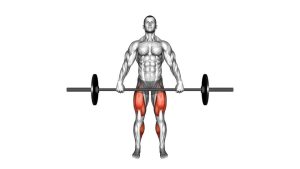
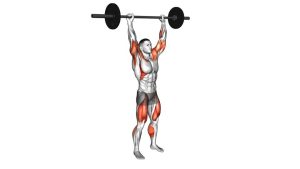
Barbell Thruster: Full-Body Power, Squat-to-Press Form & Tips
Learn the Barbell Thruster for full-body strength, leg drive, shoulder power, conditioning, proper form, common mistakes, sets, reps, and equipment.
Barbell Thruster
This exercise works best when the squat and press connect smoothly. The bar should stay close, the torso should remain upright, and the press should begin after the legs create upward momentum. A proper thruster should not feel like a separate front squat followed by a strict shoulder press. It should feel like one explosive full-body movement.
Quick Overview
| Body Part | Legs |
|---|---|
| Primary Muscle | Quadriceps, glutes, shoulders |
| Secondary Muscle | Triceps, core, upper back, hamstrings, calves |
| Equipment | Barbell, weight plates, squat rack optional |
| Difficulty | Intermediate |
Sets & Reps (By Goal)
- Strength and power: 3–5 sets × 3–6 reps, using controlled heavy loading and full rest.
- Muscle endurance: 3–4 sets × 8–12 reps, using moderate weight and steady tempo.
- Conditioning: 4–6 rounds × 8–15 reps, using lighter weight with clean form.
- Technique practice: 3–5 sets × 3–5 reps, using an empty barbell or very light load.
Progression rule: Increase weight only when every rep stays smooth from the bottom of the squat to the overhead lockout. Never add load if the bar drifts forward, the elbows drop, or the lower back overarches.
Setup / Starting Position
- Set the bar in a front rack: Place the bar across the front shoulders, not in the hands only.
- Grip just outside shoulder width: Keep the hands secure, but avoid squeezing so hard that the elbows drop.
- Lift the elbows: Point the elbows forward enough to keep the bar stable on the shoulders.
- Set your stance: Stand about shoulder-width apart with toes slightly turned out.
- Brace your core: Keep ribs down, chest tall, and spine neutral before starting the squat.
- Look forward: Keep the head neutral and avoid looking down during the descent.
Tip: If your wrists feel stressed, improve front rack mobility or use a slightly wider grip. The bar should be supported mainly by the shoulders, not by bent wrists.
Execution (Step-by-Step)
- Start in the front rack: Stand tall with the bar resting across the shoulders and elbows forward.
- Descend into a front squat: Bend the knees and hips together while keeping the torso upright.
- Reach proper depth: Lower until the thighs are around parallel or slightly below, depending on mobility.
- Drive up powerfully: Push through the mid-foot and heel as the hips and knees extend.
- Transfer power into the bar: As the legs finish extending, use the upward momentum to begin the press.
- Press overhead: Extend the arms until the bar is locked out directly over the shoulders.
- Finish tall: Keep the core tight, glutes engaged, and bar stacked over the mid-foot.
- Return with control: Lower the bar back to the front rack before starting the next rep.
Pro Tips & Common Mistakes
- Keep elbows high in the squat: Dropping the elbows can make the bar roll forward and pull the torso down.
- Use leg drive before pressing: The legs should create the main upward force before the shoulders finish the lift.
- Keep the bar path vertical: Avoid pressing the bar forward. It should finish over the shoulders, hips, and mid-foot.
- Do not relax at the bottom: Stay braced so you can drive out of the squat with power.
- Avoid overextending the lower back: Squeeze the glutes and keep the ribs controlled at lockout.
- Do not rush heavy reps: Speed is useful, but only when the bar path and posture stay clean.
- Breathe with control: Brace before the descent, exhale near the top, and reset before the next rep.
FAQ
What muscles does the Barbell Thruster work?
The Barbell Thruster works the quadriceps, glutes, shoulders, triceps, core, upper back, hamstrings, and calves. It is a full-body compound exercise because it combines lower-body drive with an overhead pressing finish.
Is the Barbell Thruster more of a leg exercise or shoulder exercise?
It trains both, but the legs should create most of the power. The shoulders and triceps finish the press after the squat drive sends the bar upward.
What is the difference between a thruster and a push press?
A push press uses a short dip and drive, while a thruster uses a full front squat before the overhead press. The thruster has a larger range of motion and greater leg involvement.
Should beginners do Barbell Thrusters?
Beginners should first learn the front squat and overhead press separately. Once both patterns are controlled, they can practice light thrusters with an empty barbell.
Why do my shoulders fatigue quickly during thrusters?
This often happens when the press starts too early or the legs are not driving hard enough. Focus on standing up powerfully from the squat before pressing the bar overhead.
How heavy should I go on Barbell Thrusters?
Use a weight that allows smooth reps, stable overhead lockout, and a vertical bar path. For conditioning, lighter loads are better. For power, use heavier loads with fewer reps and more rest.
Recommended Equipment
- Olympic Barbell — the main tool for performing barbell thrusters with proper loading.
- Bumper Plates — useful for safer weightlifting-style training and controlled loading.
- Squat Rack — helps start the bar from a comfortable front rack height.
- Weightlifting Wrist Wraps — provide wrist support during front rack and overhead pressing work.
- Weightlifting Shoes — help improve squat depth, stability, and upright torso position.
Equipment note: Start with the barbell alone if you are learning the movement. Add plates only after your squat depth, front rack, bar path, and overhead lockout are consistent.