Dumbbell Seated Military Press In-Out Leg Raise: Core & Shoulder Exercise
Build shoulders, abs, and hip flexor control with the dumbbell seated military press in-out leg raise. Learn form, sets, tips, mistakes, and gear.
Dumbbell Seated Military Press In-Out Leg Raise on Floor
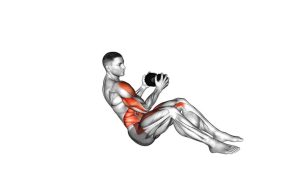
This movement works best when every repetition stays controlled. First, the body balances in a leaned-back seated position. Then, the dumbbells press overhead while the knees tuck in toward the chest. Finally, the dumbbells lower as the legs extend forward again. As a result, the exercise trains pressing strength, core compression, and body control in one smooth pattern.
Quick Overview
| Body Part | Shoulders |
|---|---|
| Primary Muscle | Deltoids, especially anterior and lateral deltoids |
| Secondary Muscle | Rectus abdominis, hip flexors, triceps, obliques, and deep core stabilizers |
| Equipment | Two dumbbells and an exercise mat |
| Difficulty | Advanced because it combines overhead pressing, core balance, and leg control |
Sets & Reps (By Goal)
- Core and shoulder endurance: 2–3 sets × 8–12 controlled reps with light dumbbells.
- Strength and control: 3–4 sets × 6–8 reps with moderate dumbbells and slower tempo.
- Coordination practice: 2–3 sets × 5–6 reps, focusing on clean timing instead of speed.
- Finisher option: 1–2 sets × 10–15 reps using very light dumbbells and strict balance.
Progression rule: Increase control first, then reps, and only then dumbbell weight. Because the core position is unstable, heavy loading should never come before clean movement quality.
Setup / Starting Position
- Sit on the floor: Begin seated with your legs extended forward and your torso slightly leaned back.
- Hold two dumbbells: Bring the dumbbells to shoulder height with your elbows bent and your palms facing generally forward or slightly inward.
- Lift the legs: Raise both legs off the floor so your feet hover. Keep the legs together and controlled.
- Brace the core: Tighten your abs before the first press so your lower back does not collapse.
- Set your gaze: Look forward and keep the chest lifted enough to maintain balance.
Start with the lightest dumbbells that allow you to press overhead while your legs stay off the floor. If balance fails, practice the leg raise and shoulder press separately first.
Execution (Step-by-Step)
- Begin in the V-sit position: Keep your torso leaned back, legs extended forward, and dumbbells held at shoulder level.
- Press and tuck together: Press both dumbbells overhead while bending your knees toward your chest.
- Reach the top position: Finish with the arms extended overhead and the knees tucked in close, while staying balanced on your glutes.
- Control the pause: Briefly hold the top position without shrugging your shoulders or dropping your feet.
- Lower and extend: Bring the dumbbells back to shoulder level as your legs extend forward again.
- Reset with control: Return to the starting hover position before beginning the next repetition.
Pro Tips & Common Mistakes
- Use light dumbbells: This is not a max-strength military press. The core position makes the exercise harder than it looks.
- Keep the feet hovering: Try not to let your heels touch the floor between reps unless you need a brief reset.
- Avoid swinging: Move the knees in and out with control, not momentum.
- Do not overarch the back: Brace your abs as the dumbbells go overhead so your ribs do not flare excessively.
- Press vertically: Keep the dumbbells traveling above the shoulders rather than drifting far forward.
- Control the lowering phase: Lowering too quickly can pull you out of balance and reduce core tension.
- Match the timing: Tuck the knees as you press up, then extend the legs as you lower the dumbbells.
FAQ
What muscles does the dumbbell seated military press in-out leg raise work?
It mainly works the shoulders, especially the front and side delts. However, because the legs stay elevated, it also strongly trains the abs, hip flexors, triceps, and stabilizing muscles around the trunk.
Is this exercise beginner-friendly?
No. This exercise is better for intermediate to advanced trainees because it requires overhead pressing strength, core control, and seated balance at the same time. Beginners should first master seated dumbbell presses, V-sit holds, and in-out leg raises separately.
Should my feet touch the floor during the movement?
Ideally, your feet stay slightly elevated throughout the repetition. However, if your form breaks down, you can briefly tap the heels down between reps until your core strength improves.
How heavy should the dumbbells be?
Choose light to moderate dumbbells. Since the exercise also challenges balance and core stability, a weight that feels easy for a normal seated press may feel much harder during this variation.
Why do I lose balance during the press?
Balance usually breaks when the dumbbells are too heavy, the legs swing too fast, or the core relaxes as the arms move overhead. Therefore, slow the tempo, use lighter dumbbells, and keep your abs braced from start to finish.
Recommended Equipment
- Adjustable Dumbbells — useful for choosing a precise weight that matches your shoulder and core control.
- Hex Dumbbell Set — stable, floor-friendly dumbbells for controlled pressing exercises.
- Thick Exercise Mat — adds comfort under the glutes and lower back during seated floor training.
- Core Sliders — helpful for building core control with related knee-tuck and leg-extension drills.
- Ab Training Mat — provides extra support for floor-based core exercises and warm-up drills.
Tip: Choose equipment that helps you keep the movement smooth. For this exercise, control matters more than using heavy dumbbells.