Kettlebell Step-Up: Proper Form, Muscles Worked, Sets & Tips
Master the kettlebell step-up for stronger quads and glutes. Learn proper form, bench setup, sets by goal, common mistakes, and controlled step-downs.
Kettlebell Step-Up
The Kettlebell Step-Up builds lower-body strength through a practical movement pattern similar to climbing stairs. Unlike a traditional squat, each leg must independently produce force and stabilize the body. Consequently, the exercise challenges the quadriceps, glutes, and smaller hip muscles while developing coordination under an external load.
Additionally, carrying kettlebells at your sides increases the resistance without requiring a barbell across your shoulders. However, proper technique remains more important than the amount of weight lifted. A controlled ascent, secure foot placement, and deliberate descent help maintain balance and improve exercise quality.
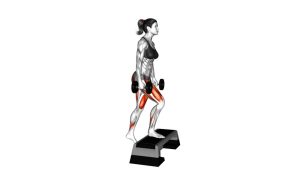
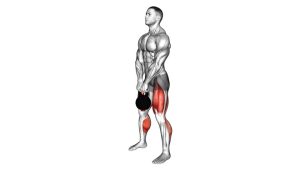
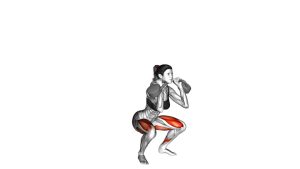
In the demonstrated variation, the athlete steps onto the bench, brings the trailing foot onto the platform, stands upright, and then returns both feet to the floor. Therefore, the exercise should be performed as a complete weighted step-up and step-down, rather than a continuous knee-drive movement.
Quick Overview
| Body Part | Legs |
|---|---|
| Primary Muscle | Quadriceps (vastus lateralis, vastus medialis, vastus intermedius, and rectus femoris) and gluteus maximus |
| Secondary Muscle | Hamstrings, gluteus medius, gluteus minimus, adductors, calves, and core stabilizers |
| Equipment | Two kettlebells and a stable elevated bench, step platform, or plyometric box |
| Difficulty | Intermediate (requires lower-body strength, single-leg balance, coordination, and controlled handling of external resistance) |
Sets & Reps (By Goal)
Your ideal kettlebell step-up volume depends on your training goal, current strength, and experience. Therefore, select a kettlebell weight that allows consistent technique throughout every repetition. Additionally, rest sufficiently between sets to maintain balance and controlled foot placement.
- Lower-body strength: Perform 3–5 sets of 5–8 reps per leg. Rest 90–150 seconds between sets. Use challenging but manageable kettlebells. However, avoid increasing weight if balance or knee alignment begins to deteriorate.
- Muscle hypertrophy: Complete 3–4 sets of 8–12 reps per leg. Rest 60–120 seconds between sets. Furthermore, use a controlled lowering phase and maintain continuous muscular tension throughout the working set.
- Glute development: Perform 3–4 sets of 8–12 reps per leg. Rest 60–90 seconds between sets. Focus on driving through the entire elevated foot and extending the working hip. Additionally, avoid excessive momentum from the trailing leg.
- Balance and coordination: Complete 2–3 sets of 6–10 reps per leg. Use relatively light kettlebells and pause briefly at the top. As a result, you can concentrate on stable foot placement, hip control, and an upright finishing position.
- Muscular endurance and conditioning: Perform 2–4 sets of 12–15 reps per leg with light kettlebells. Rest 45–75 seconds between sets. However, stop each set before fatigue causes rushed steps or unstable landings.
How to Progress the Kettlebell Step-Up
Beginners should first master bodyweight step-ups on a low, stable platform. Once movement quality becomes consistent, introduce light kettlebells. Subsequently, increase repetitions before adding substantial resistance.
For additional muscular control, gradually slow the lowering phase to approximately two or three seconds. However, avoid increasing platform height simply to make the exercise harder. A step that is too high may cause excessive forward leaning, unstable knee movement, or excessive assistance from the trailing leg.
Progression rule: Prioritize stable technique, full-foot contact, controlled descent, and balanced performance on both legs. Increase kettlebell resistance only when every repetition remains consistent.
Setup / Starting Position
- Select a stable platform: Position a sturdy bench, step, or plyometric box on a flat surface. Ensure that it cannot slide, tip, or move under your combined body weight and kettlebell load.
- Choose your kettlebells: Select two manageable kettlebells of equal weight. Initially, use a lighter load until you can complete the movement without excessive swinging or balance adjustments.
- Stand facing the bench: Position yourself close enough to step up comfortably. Keep your feet approximately hip-width apart, with both feet resting flat on the floor.
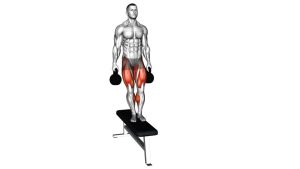
- Hold the kettlebells at your sides: Grip one kettlebell in each hand with your arms extended. Keep your wrists approximately neutral and allow the weights to hang naturally beside your thighs.
- Establish an upright posture: Lift your chest naturally, maintain a neutral spine, and gently brace your abdominal muscles. Meanwhile, keep your shoulders relaxed rather than shrugging toward your ears.
- Place the leading foot on the bench: Lift one knee and position the entire foot securely on the elevated surface. Ensure that your heel and forefoot are supported before beginning the ascent.
- Align the working leg: Keep your knee pointing approximately in the same direction as your toes. Additionally, maintain stable hip positioning and distribute pressure across the elevated foot.
Choosing the Correct Bench Height
Platform height strongly influences the difficulty of a kettlebell step-up. A higher bench generally requires greater hip and knee flexion before the lifting phase begins. Consequently, it may increase the strength and mobility demands placed on the working leg.
For most beginners, a lower step provides a more manageable starting position. Additionally, the elevated foot should remain secure without requiring excessive trunk bending or unstable weight shifting.
If your pelvis tilts excessively, your knee collapses inward, or you must jump from the floor, reduce the platform height. Therefore, select a surface that allows a smooth ascent and controlled descent with both kettlebells.
Setup tip: Start with a bodyweight practice repetition before holding kettlebells. This helps confirm that the bench height, distance, and foot placement are appropriate.
Execution (Step-by-Step)
- Establish your starting position: Stand upright in front of the bench with one kettlebell in each hand. Keep your shoulders relaxed and your abdominal muscles gently braced.
- Lift the leading foot: Raise one knee forward and place your entire foot on the elevated platform. Before lifting your body, confirm that the foot is stable and correctly positioned.
- Transfer weight onto the elevated leg: Shift your body weight toward the working foot while maintaining a controlled torso position. Consequently, the elevated leg becomes the primary source of upward force.
- Drive upward through the working leg: Push through the heel and midfoot while extending the leading knee and hip. Meanwhile, keep the kettlebells hanging vertically beside your body without swinging them forward.
- Bring the trailing foot onto the bench: As your body rises, lift the opposite foot from the floor and place it on the platform. Avoid using a powerful jump from the trailing leg to complete the movement.
- Stand tall at the top: Extend your hips and knees until you achieve a stable upright position with both feet supported. Additionally, keep your abdomen engaged and avoid leaning excessively backward.
- Initiate the backward step-down: Carefully move one foot backward toward the floor. As the foot descends, bend the supporting knee and hip to control your body’s downward movement.
- Lower the first foot to the floor: Place the descending foot gently on the ground without dropping your body. Meanwhile, keep the other foot securely positioned on the bench until you are ready to complete the descent.
- Return the remaining foot: Step the elevated foot down and regain a balanced standing position. Subsequently, reset your posture before beginning another repetition.
- Repeat with controlled technique: Continue for the prescribed number of repetitions. You may complete all repetitions with one leading leg before switching, or alternate legs if your program requires it.
Breathing and Movement Tempo
Begin by taking a comfortable breath and bracing your core before each repetition. As you drive upward, exhale naturally without losing trunk stability. Then, inhale during the controlled lowering phase.
A useful training tempo involves approximately one to two seconds for the upward movement and two to three seconds for the descent. However, these timings are guidelines rather than strict requirements. Prioritize smooth movement and consistent balance.
Throughout the repetition, the kettlebells should remain close to your sides. Additionally, your shoulders should stay relaxed while your lower body generates the lifting force.
Pro Tips & Common Mistakes
- Keep the kettlebells steady: Allow the weights to hang naturally beside your thighs. Avoid swinging them forward or backward to generate momentum during the ascent.
- Push primarily through the elevated leg: Focus on extending the working knee and hip. Consequently, the quadriceps and glutes perform most of the upward movement.
- Maintain full-foot contact: Place your entire foot securely on the platform. Otherwise, excessive pressure on the toes may reduce stability.
- Control your knee position: Keep the supporting knee tracking approximately in line with your toes. Additionally, avoid allowing the knee to collapse inward as you rise.
- Use an appropriate platform height: A bench that is too high can increase compensation and make the exercise difficult to control. Therefore, begin with a manageable height.
- Avoid jumping from the trailing foot: Do not launch yourself upward using the leg on the floor. Instead, concentrate on producing force through the elevated leg.
- Maintain a stable torso: Keep your spine neutral and your core engaged. A small forward inclination is natural; however, excessive bending may indicate insufficient control or excessive load.
- Complete the top position: Stand upright with both feet securely supported before stepping down. Additionally, avoid forcefully locking your knees or leaning backward.
- Lower slowly and deliberately: Control the downward movement through the supporting leg. As a result, the quadriceps and glutes work during both the ascent and descent.
- Train both legs evenly: Perform comparable repetitions on each side. Furthermore, begin with your less confident leg when maintaining equal performance is a training priority.
Common Technique Errors to Avoid
One common mistake is choosing kettlebells that are too heavy. Consequently, the athlete may rush the ascent, lean excessively forward, or rely on momentum rather than controlled leg extension.
Another mistake is dropping quickly from the platform. Although the upward phase receives most of the attention, the lowering phase also contributes to muscular development and movement control. Therefore, descend deliberately instead of allowing gravity to pull you downward.
Finally, avoid sacrificing balance to complete additional repetitions. If your knee tracking, foot placement, or trunk position deteriorates, reduce the load or end the set. Consistent technique matters more than performing extra reps.
FAQ
Muscles Worked and Exercise Benefits
What muscles does the Kettlebell Step-Up work?
The Kettlebell Step-Up primarily strengthens the quadriceps and gluteus maximus. These muscles extend the knee and hip during the upward movement. Additionally, the hamstrings, calves, gluteus medius, and core stabilizers contribute to balance and joint control. Because each leg must support substantial body weight, the movement also challenges unilateral lower-body stability.
Are Kettlebell Step-Ups good for building glutes?
Yes. Kettlebell step-ups can effectively strengthen the gluteus maximus because the working hip extends as you rise. Furthermore, the gluteus medius helps stabilize the pelvis during the single-leg loading phase. For best results, use a manageable platform height and progressively increase resistance while maintaining controlled technique.
Do Kettlebell Step-Ups work the quadriceps?
Yes. The quadriceps contribute significantly to the movement by extending the working knee during the ascent. Additionally, they help control knee bending during the lowering phase. Therefore, kettlebell step-ups can complement squats, lunges, and other quadriceps-focused exercises within a balanced lower-body program.
Proper Form and Equipment
How heavy should the kettlebells be?
Start with weights that allow stable, controlled repetitions on both legs. Ideally, you should complete the planned set without swinging the kettlebells or losing knee alignment. Once your movement becomes consistent, gradually increase the resistance. However, reduce the load whenever balance or technique begins to deteriorate.
Should I use one or two kettlebells?
The variation demonstrated in the video uses two kettlebells, with one held in each hand. This creates a balanced external load while allowing the arms to remain at the sides. Alternatively, a single kettlebell can provide a different loading challenge. However, using two kettlebells best matches the demonstrated exercise.
How high should the bench be for step-ups?
Select a height that allows your entire foot to rest securely on the platform. Additionally, you should be able to lift your body without jumping, excessive trunk bending, or unstable knee movement. Beginners usually benefit from a lower step. As strength and mobility improve, a higher platform may become appropriate.
Training Frequency and Safety
Are Kettlebell Step-Ups suitable for beginners?
Beginners can learn the movement, but weighted step-ups require sufficient balance and coordination. Therefore, start with bodyweight repetitions on a low platform. Next, introduce light kettlebells while maintaining consistent control. Once technique becomes reliable, gradually progress the resistance according to your training goals.
How often should I perform Kettlebell Step-Ups?
Many exercisers can include kettlebell step-ups in their lower-body program one to three times per week, depending on training intensity and overall workout volume. However, recovery needs vary. Allow sufficient recovery between demanding sessions, especially when combining step-ups with squats, lunges, or deadlifts.
Why do I lose balance during Kettlebell Step-Ups?
Balance problems may result from excessive kettlebell weight, a high platform, poor foot placement, or rushing the movement. Additionally, weak hip stabilizers can make single-leg support more difficult. To improve control, reduce the weight, use a lower platform, and practice slow bodyweight repetitions before adding resistance.
Should I alternate legs or complete one side first?
Both methods can work. Completing all repetitions with one leading leg may help maintain concentration on that side. Alternatively, alternating the leading leg distributes repetitions throughout the set. Regardless of your approach, perform an equal number of controlled repetitions on both legs whenever possible.
Can Kettlebell Step-Ups cause knee pain?
Step-ups place mechanical demands on the knee joint, especially when using additional resistance or a high platform. However, discomfort should not be ignored. If knee pain develops, stop the exercise and reassess your loading and technique. Persistent pain, swelling, or instability should be evaluated by a qualified healthcare professional.
Recommended Equipment
- Cast Iron Kettlebell Set — provides the external resistance needed for weighted step-ups. Choose two matching kettlebells with comfortable handles and manageable weight.
- Non-Slip Plyometric Box — offers a dedicated elevated platform for step-ups and other lower-body exercises. Select a stable model with suitable height and load capacity.
- Adjustable Aerobic Step Platform — provides adjustable stepping heights for beginners and controlled training progressions. Verify its weight capacity before performing loaded step-ups.
- Cross-Training Shoes — provide supportive footwear with reliable traction for stepping movements. A secure fit helps maintain consistent foot positioning.
- Rubber Gym Flooring Mat — helps protect the training floor and provides a suitable surface for kettlebell workouts. Ensure the platform remains stable on the chosen flooring.
Choosing Safe Equipment for Weighted Step-Ups
Equipment stability is especially important when performing weighted step-ups. Therefore, prioritize a secure platform before increasing kettlebell resistance. The platform should remain stationary during both the upward and downward phases.
Additionally, select kettlebells with comfortable handles that allow a firm, relaxed grip. Avoid weights that force excessive shoulder tension or uncontrolled swinging.
Equipment tip: A stable platform, suitable kettlebell weight, and secure footwear are more important than using heavy resistance. Furthermore, always confirm the platform’s load capacity before starting your workout.