Kettlebell Front Squat: Form, Sets, Muscles Worked & Tips
Learn the kettlebell front squat for stronger quads, glutes, core stability, and better squat mechanics with step-by-step form tips.
Kettlebell Front Squat
This exercise is excellent for building strong legs while also teaching full-body tension. Because the load sits in front of the chest, your core must work hard to prevent the torso from folding forward. It is useful for beginners learning squat depth, athletes improving lower-body strength, and home trainees who want a powerful leg movement with minimal equipment.
Quick Overview
| Body Part | Legs |
|---|---|
| Primary Muscle | Quadriceps |
| Secondary Muscle | Glutes, hamstrings, calves, core, upper back |
| Equipment | Kettlebell |
| Difficulty | Beginner to Intermediate |
Sets & Reps (By Goal)
- Strength: 4–5 sets × 4–6 reps using a heavier kettlebell and full rest between sets.
- Muscle growth: 3–4 sets × 8–12 reps with controlled tempo and deep range of motion.
- Technique practice: 2–3 sets × 8–10 reps with a light kettlebell and slow descent.
- Conditioning: 3–5 rounds × 12–20 reps with moderate weight and short rest periods.
- Beginner foundation: 2–3 sets × 6–8 reps focusing on balance, bracing, and clean knee tracking.
Progression rule: Add reps first, then increase kettlebell weight only when every rep stays controlled, your heels remain grounded, and your torso does not collapse forward.
Setup / Starting Position
- Choose your kettlebell: Start with a weight you can control without rounding your back or losing balance.
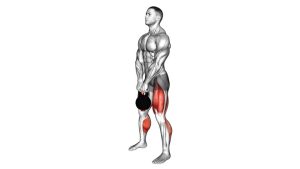
- Stand tall: Place your feet about shoulder-width apart with toes slightly turned out.
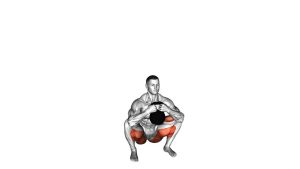
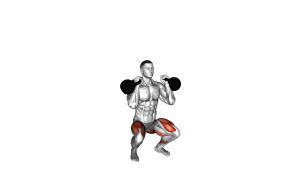
- Hold the kettlebell close: Keep it at chest height in a goblet or front-rack style position.
- Brace your core: Tighten your midsection as if preparing to absorb light pressure.
- Set your posture: Keep your chest lifted, shoulders relaxed, elbows close, and eyes forward.
Tip: The kettlebell should stay close to your body. If it drifts forward, the exercise becomes harder on your lower back and less effective for clean squat mechanics.
Execution (Step-by-Step)
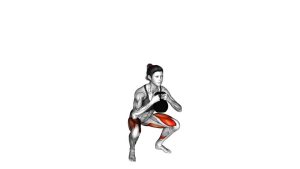
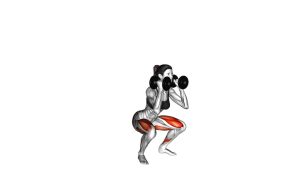
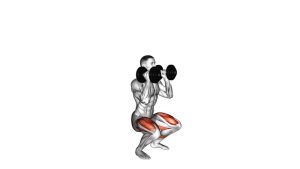
- Begin the descent: Bend your knees and hips at the same time while keeping the kettlebell close to your chest.
- Control your depth: Lower your hips between your heels while keeping the chest tall and spine neutral.
- Track the knees: Let the knees travel forward naturally, but keep them aligned with your toes.
- Reach the bottom: Pause briefly when your thighs are near parallel or slightly below, based on your mobility.
- Drive upward: Push through your mid-foot and heels to stand back up.
- Finish tall: Fully extend your hips and knees without leaning backward or relaxing your brace.
Pro Tips & Common Mistakes
- Keep the kettlebell close: A close load improves balance and reduces lower-back stress.
- Do not let the knees cave in: Push the knees in the same direction as the toes during both descent and ascent.
- Use full-foot pressure: Keep weight balanced across the heel, big toe, and little toe.
- Avoid collapsing forward: Keep your chest lifted and your upper back active throughout the rep.
- Do not rush the bottom: Control the descent instead of bouncing out of the lowest position.
- Brace before every rep: Strong breathing and core tension make the movement safer and more powerful.
- Choose depth wisely: Squat as deep as you can while keeping your spine neutral and heels down.
FAQ
What muscles does the kettlebell front squat work?
The kettlebell front squat mainly works the quadriceps. It also trains the glutes, hamstrings, calves, core, and upper back because the front-loaded position requires strong posture and stability.
Is the kettlebell front squat good for beginners?
Yes. It is beginner-friendly when performed with a light kettlebell and controlled range of motion. The front load often helps beginners stay more upright and learn proper squat depth.
How low should I squat?
Squat as low as you can while keeping your heels down, knees aligned, and spine neutral. For many lifters, this means reaching parallel or slightly below parallel.
Why do I feel my lower back during kettlebell front squats?
You may be letting the kettlebell drift forward, losing your brace, or leaning too much from the torso. Use a lighter kettlebell, keep the weight close, and focus on staying tall through the chest.
Can kettlebell front squats build muscle?
Yes. When performed with enough resistance, clean depth, and progressive overload, kettlebell front squats can help build the quads, glutes, and overall lower-body strength.
Recommended Equipment
- Cast Iron Kettlebell — a durable basic kettlebell for strength training and lower-body workouts.
- Adjustable Kettlebell — useful for progressive overload without buying multiple kettlebells.
- Exercise Mat — helps protect flooring and provides a stable training surface.
- Weightlifting Shoes — can improve squat stability and help lifters with limited ankle mobility.
- Resistance Bands Set — helpful for warm-ups, glute activation, and squat mobility preparation.
Choose equipment that matches your current strength level. A lighter kettlebell with perfect form is better than a heavy kettlebell that pulls you out of position.