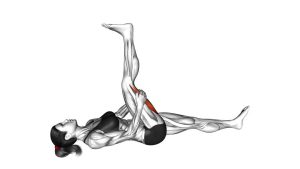
Roll Rectus Femoris: Foam Roller Quad Release Guide
Learn the Roll Rectus Femoris exercise to release tight quads, improve hip mobility, and support recovery with proper foam rolling form.
Roll Rectus Femoris
This exercise is best used as a mobility and recovery drill, not as a strength movement. It can help reduce perceived tightness in the front thigh, improve warm-up quality, and prepare the quadriceps and hip-flexor area for squats, lunges, running, cycling, or lower-body training.
Quick Overview
| Body Part | Quads |
|---|---|
| Primary Muscle | Rectus femoris |
| Secondary Muscle | Vastus intermedius, vastus lateralis, vastus medialis, hip flexor region |
| Equipment | Foam roller; optional exercise mat |
| Difficulty | Beginner-friendly, but pressure level can be adjusted |
Sets & Reps (By Goal)
- General warm-up: 1–2 sets × 30–45 seconds per side before lower-body training.
- Mobility focus: 2–3 sets × 45–60 seconds per side with slow controlled passes.
- Recovery session: 1–3 sets × 60–90 seconds per side at light-to-moderate pressure.
- Tender spot release: Pause 10–20 seconds on a tight area while breathing calmly.
Progression rule: Increase control and time before increasing pressure. More pain does not mean better results.
Setup / Starting Position
- Place the roller: Position the foam roller under the upper front thigh, just below the hip crease.
- Lie face down: Support your upper body on your forearms with elbows under or slightly in front of the shoulders.
- Extend the working leg: Keep the target leg mostly straight so the roller tracks along the front thigh.
- Use the opposite leg: Place the other leg slightly to the side for balance and pressure control.
- Brace lightly: Keep your ribs controlled and avoid letting your lower back sag toward the floor.
Tip: Start with lighter pressure. You can shift more body weight onto the roller only after the movement feels controlled.
Execution (Step-by-Step)
- Set your body position: Keep your forearms planted, core lightly engaged, and neck relaxed.
- Begin the roll: Use your arms to slowly move your body forward so the roller travels down the front thigh.
- Stay on the muscle: Roll from the upper thigh toward the mid-thigh or just above the knee, avoiding the kneecap.
- Control pressure: Use your opposite leg and forearms to reduce or increase body weight on the roller.
- Pause when needed: If you find a tight spot, stop briefly and breathe instead of bouncing over it.
- Return slowly: Pull your body backward to roll the foam roller toward the upper thigh again.
- Repeat smoothly: Continue with slow, even passes while keeping the target thigh relaxed.
Pro Tips & Common Mistakes
- Roll slowly: Fast rolling usually reduces control and makes it harder to locate tight areas.
- Do not roll the kneecap: Stop above the knee joint and stay on the soft tissue of the thigh.
- Keep pressure tolerable: Aim for moderate discomfort, not sharp pain.
- Use breathing: Slow exhales help reduce guarding and allow the thigh to relax.
- Avoid over-arching the back: Keep your core lightly braced so pressure stays on the thigh, not the spine.
- Change angle slightly: A small inward or outward angle can target different quad fibers, but avoid extreme twisting.
- Do not rush tender spots: Pause and breathe for 10–20 seconds instead of grinding aggressively.
- Pair with active mobility: After rolling, use lunges, quad stretches, squats, or hip-flexor mobility drills.
FAQ
What muscle does the Roll Rectus Femoris target?
It primarily targets the rectus femoris, a quadriceps muscle located on the front of the thigh. Because the rectus femoris crosses both the hip and knee, it is often involved in quad tightness and hip-flexor tension.
Should foam rolling the rectus femoris hurt?
It may feel uncomfortable, especially if the quad is tight, but it should not feel sharp, burning, or nerve-like. Reduce pressure if you feel pain that makes you tense up or hold your breath.
How long should I roll each thigh?
Start with 30–60 seconds per side. For recovery sessions, you can use 60–90 seconds as long as the pressure remains controlled and symptoms do not increase afterward.
Is this exercise good before squats and lunges?
Yes. It can be useful before squats, lunges, leg presses, running, or cycling because it helps prepare the front thigh and hip-flexor region for movement. Follow it with active warm-up drills for best results.
Can I bend my knee while rolling?
Beginners should usually keep the leg mostly straight. More advanced users may bend and straighten the knee gently while pausing on a tight spot, but this should be done carefully and without sharp discomfort.
Recommended Equipment
- High-Density Foam Roller — best basic tool for rolling the rectus femoris and quads.
- Textured Foam Roller — adds deeper pressure for users who already tolerate basic foam rolling well.
- Thick Exercise Mat — improves comfort for elbows, hips, and knees during prone rolling.
- Massage Stick Roller — useful for lighter quad massage when floor-based rolling feels too intense.
- Massage Ball Set — helpful for smaller tight areas around the hip flexors, glutes, and lower body.
Tip: Choose a softer roller if you are new to foam rolling. Choose a firmer roller only when you can stay relaxed and breathe normally during the drill.