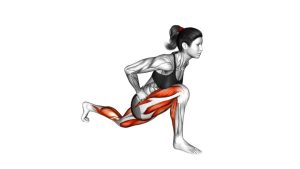
Side-Lying Quadriceps Stretch: Form, Benefits, Sets & FAQ
Learn the Side-Lying Quadriceps Stretch for better thigh flexibility, hip comfort, and recovery. Includes setup, form tips, FAQs, and equipment.
Side-Lying Quadriceps Stretch
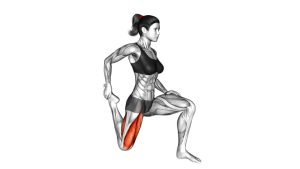
This stretch is useful after leg training, running, cycling, or long periods of sitting. It helps reduce front-thigh tightness, supports better hip extension, and can improve lower-body comfort when performed with slow breathing and clean alignment.
Quick Overview
| Body Part | Legs |
|---|---|
| Primary Muscle | Quadriceps, especially rectus femoris |
| Secondary Muscle | Hip flexors, front hip tissues, and light core stabilizers |
| Equipment | None required; optional mat, towel, or stretching strap |
| Difficulty | Beginner-friendly |
Sets & Reps (By Goal)
- General flexibility: 2–3 sets × 20–30 seconds per side
- Post-workout recovery: 1–3 sets × 30–45 seconds per side
- Mobility improvement: 3–4 sets × 30–60 seconds per side with relaxed breathing
- Desk or sitting reset: 1–2 sets × 20–30 seconds per side
Progression rule: Increase hold time before increasing stretch intensity. A mild to moderate stretch is better than aggressive pulling.
Setup / Starting Position
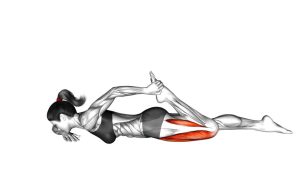
- Lie on your side: Rest on a mat with your body in a straight, comfortable line.
- Stabilize the bottom leg: Keep the bottom leg slightly bent for balance and support.
- Bend the top knee: Bring the top heel toward your glutes without forcing the range.
- Grip the ankle or foot: Use your top hand to hold the ankle, foot, or shoe.
- Stack the hips: Keep one hip directly above the other and avoid rolling backward.
Execution (Step-by-Step)
- Set your posture: Keep your ribs quiet, spine neutral, and shoulders relaxed.
- Draw the heel in: Gently pull the top heel toward the glutes until you feel a stretch in the front thigh.
- Keep the knee aligned: Avoid letting the top knee drift far forward or flare away from the body.
- Control the pelvis: Keep the hips stacked and lightly brace the core to prevent lower-back arching.
- Hold and breathe: Maintain the stretch while taking slow, relaxed breaths.
- Release slowly: Let go gently and return the leg to a relaxed position before switching sides.
Pro Tips & Common Mistakes
- Keep the hips stacked: Rolling backward reduces the quality of the stretch.
- Avoid lower-back arching: Lightly tighten the glutes and keep the ribs down.
- Do not yank the foot: Pull gradually and stay within a comfortable range.
- Use a strap if needed: If grabbing the ankle strains your shoulder or knee, loop a towel or strap around the foot.
- Keep the top knee close: Letting the knee flare too wide can shift tension away from the quadriceps.
- Breathe slowly: Relaxed breathing helps reduce protective tension and improves stretch tolerance.
FAQ
Where should I feel the Side-Lying Quadriceps Stretch?
You should feel it through the front of the thigh, mainly in the quadriceps. A light stretch near the front of the hip is also normal because the rectus femoris crosses both the hip and knee.
Is this stretch good for tight quads?
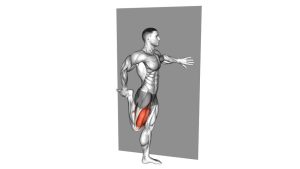
Yes. It is one of the easiest beginner-friendly ways to stretch tight quads because the floor supports your body and removes the balance challenge of a standing quad stretch.
Why does my knee hurt during this stretch?
Knee discomfort may happen if you pull too hard, bend the knee beyond your current range, or compress the joint. Reduce the stretch, use a strap, or choose a gentler quad stretch variation.
Should I squeeze my glutes during the stretch?
A light glute squeeze can help keep the pelvis controlled and reduce lower-back arching. Do not squeeze so hard that the stretch becomes tense or uncomfortable.
When should I do this stretch?
It works well after lower-body workouts, running, cycling, or long sitting periods. For warm-ups, keep the hold shorter and gentle instead of using a long, intense static stretch.
Recommended Equipment (Optional)
- Exercise Mat — provides comfort for the hip, shoulder, and knee while lying on the floor
- Stretching Strap — helps you reach the foot without straining the shoulder or forcing the knee
- Yoga Block — useful for support, positioning, and modified mobility work
- Foam Roller — helpful for gentle quad tissue prep before stretching
- Exercise Knee Pad — adds extra cushioning if your knees or hips feel sensitive on hard floors
Tip: Equipment is optional. The most important tools are controlled positioning, relaxed breathing, and a stretch intensity you can hold comfortably.