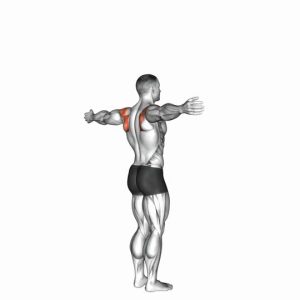
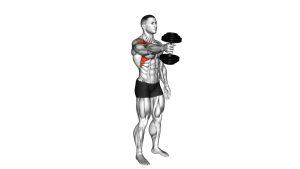
Standing Underhand Crossover Raise: Form, Muscles Worked, Sets & Tips
Learn how to do the Standing Underhand Crossover Raise with proper form. Discover muscles worked, setup, execution steps, sets by goal, common mistakes, FAQs, and recommended equipment.
Standing Underhand Crossover Raise
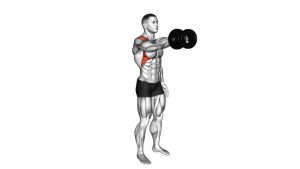
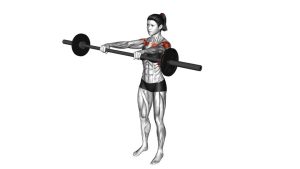
This exercise works best with light-to-moderate resistance and excellent control. Because the arms travel upward and slightly inward, the movement can create a strong contraction in the front delts without requiring heavy load. Keep the chest tall, ribs down, and shoulders relaxed. The goal is smooth repetition quality, not momentum.
Quick Overview
| Body Part | Front Shoulders |
|---|---|
| Primary Muscle | Anterior deltoid |
| Secondary Muscle | Upper chest, biceps (stabilizing), serratus anterior |
| Equipment | Light dumbbells, small weight plates, cables, or household substitutes like water bottles |
| Difficulty | Beginner to intermediate |
Sets & Reps (By Goal)
- Muscle tone / hypertrophy: 3–4 sets × 10–15 reps with controlled tempo and 45–75 sec rest
- Shoulder activation / warm-up: 2–3 sets × 12–20 reps using very light resistance and smooth form
- Technique practice: 2–3 sets × 8–12 reps with slow lowering and perfect control
- Light endurance work: 2–4 sets × 15–20 reps with easy-to-moderate weight
Progression rule: Increase reps first, then resistance in very small steps. The exercise should stay clean and shoulder-driven, never jerky or trap-dominant.
Setup / Starting Position
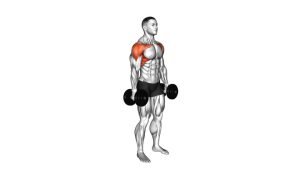
- Stand tall: Place your feet about hip- to shoulder-width apart and keep your knees softly unlocked.
- Hold the weights: Use a light pair of weights with an underhand grip so the palms face forward or slightly upward.
- Start low in front: Let the arms hang slightly in front of the thighs rather than directly at the sides.
- Brace lightly: Tighten the core, keep the ribs stacked, and avoid leaning back.
- Set the shoulders: Keep them down and relaxed, with a slight bend in the elbows.
Tip: Start lighter than you think. This movement becomes much more effective when the front delts do the work instead of the traps or lower back.
Execution (Step-by-Step)
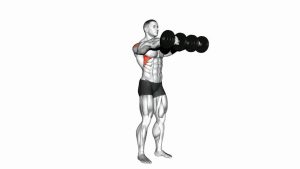
- Begin the raise: Lift both arms forward together using the front shoulders, keeping the elbows softly bent.
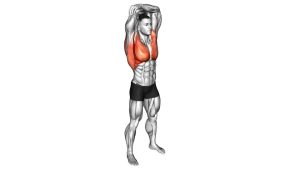
- Cross the arms smoothly: As the weights rise, let one arm move slightly across the other in a controlled crossover pattern.
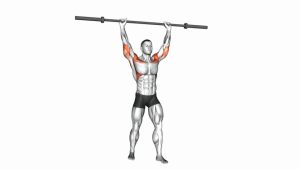
- Reach shoulder height: Stop when the hands reach about shoulder level or slightly above, only if it feels smooth and pain-free.
- Pause briefly: Hold the top for a moment without shrugging the shoulders toward the ears.
- Lower with control: Reverse the motion slowly, uncrossing the arms naturally as they return to the start position.
Pro Tips & Common Mistakes
- Use light weight: This exercise is about precision and tension, not heavy loading.
- Keep the underhand grip consistent: Don’t let the hands rotate wildly as the arms rise.
- Lift only as high as you can control: Shoulder height is enough for most lifters.
- Avoid shrugging: If the upper traps take over, reduce the weight and reset your shoulder position.
- Don’t swing the torso: Leaning back shifts the work away from the shoulders and stresses the lower back.
- Lower slowly: The eccentric phase helps build control and keeps tension on the target muscles.
- Keep the crossover subtle: The arms should cross naturally, not slam across the midline.
FAQ
What muscles does the Standing Underhand Crossover Raise work?
It mainly targets the anterior deltoids, with support from the upper chest and small stabilizers. The underhand grip can also increase biceps involvement as a secondary stabilizer.
Is this better than a regular front raise?
It is not always better, but it offers a different feel. The underhand grip and crossover path can make the movement feel smoother for some lifters and can create a unique front-delt contraction.
How heavy should I go?
Stay light enough to keep every rep smooth. Most people get better results from controlled reps with modest resistance than from swinging heavier weights.
Should I raise above shoulder height?
Usually, shoulder height is enough. Going slightly higher is fine only if it feels comfortable and you can maintain good shoulder mechanics.
Can beginners do this exercise?
Yes. It is beginner-friendly when performed with very light weight and strict form. Start small and prioritize control before progression.
Recommended Equipment (Optional)
- Light Dumbbells Set — ideal for controlled front-delt isolation and gradual progression
- Adjustable Dumbbells — useful if you want multiple resistance options without taking up much space
- Mini Weight Plates — a comfortable option for raise variations when full dumbbells feel bulky
- Resistance Bands Set with Handles — good for shoulder-friendly front raise alternatives and home workouts
- Exercise Mat — helpful for creating a stable workout area and pairing with accessory shoulder drills
Tip: For this exercise, the best equipment is usually the one that lets you use small load jumps. Front-delt isolation movements respond very well to light, controlled resistance.