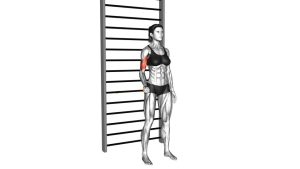
Weighted Plate Standing Biceps Curl: Form, Sets, Tips & FAQ
Learn how to do the Weighted Plate Standing Biceps Curl with proper form to build biceps, brachialis, grip strength, and forearm control.
Weighted Plate Standing Biceps Curl
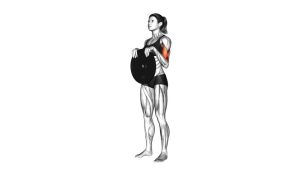
This exercise is excellent when you want a curl variation that feels slightly different from standard dumbbell curls. Because the plate is held by its edges, your grip must stay active throughout the entire rep. The goal is to curl the plate smoothly toward the upper chest while keeping the elbows close to the body and avoiding momentum.
Quick Overview
| Body Part | Forearms |
|---|---|
| Primary Muscle | Biceps brachii |
| Secondary Muscle | Brachialis, brachioradialis, forearm flexors, wrist stabilizers |
| Equipment | Weight plate |
| Difficulty | Beginner to Intermediate |
Sets & Reps (By Goal)
- Muscle growth: 3–4 sets × 8–12 reps with a controlled tempo.
- Grip and forearm endurance: 2–4 sets × 12–20 reps using a lighter plate.
- Strength focus: 3–5 sets × 5–8 reps with a heavier plate and strict form.
- Warm-up activation: 2 sets × 10–15 reps using an easy plate.
Progression rule: Add reps first, then increase plate weight only when you can keep your wrists stable and avoid swinging.
Setup / Starting Position
- Stand tall with your feet about shoulder-width apart.
- Hold a weight plate vertically with both hands gripping the sides of the plate.
- Let your arms hang down in front of your thighs with elbows close to your torso.
- Keep your chest lifted, ribs controlled, shoulders relaxed, and core lightly braced.
- Set your wrists in a strong neutral position before beginning the curl.
Execution (Step-by-Step)
- Start from full control: Hold the plate steady at thigh level without letting it swing.
- Curl upward: Bend your elbows and lift the plate toward your chest.
- Keep elbows tucked: Do not let your elbows drift far forward or flare outward.
- Squeeze at the top: Pause briefly when the plate reaches upper-abdominal or lower-chest height.
- Lower slowly: Return the plate to the starting position with control.
- Reset each rep: Keep the plate stable before beginning the next repetition.
Pro Tips & Common Mistakes
- Use a strict tempo: Lift for 1–2 seconds and lower for 2–3 seconds.
- Do not lean back: Leaning turns the curl into a momentum lift and reduces biceps tension.
- Keep wrists strong: Avoid letting the wrists bend backward under the plate.
- Do not shrug: Keep shoulders down so the traps do not take over.
- Avoid half reps: Lower the plate fully while keeping tension in the arms.
- Grip evenly: Keep both hands balanced on the plate so one arm does not dominate.
- Choose the right plate: A plate that is too heavy will usually cause swinging, wrist collapse, or poor range of motion.
FAQ
Is the Weighted Plate Standing Biceps Curl good for forearms?
Yes. Because you grip the sides of the plate, your forearm flexors and wrist stabilizers must work hard to keep the load secure. This makes it more forearm-demanding than many standard curl variations.
Can beginners do this exercise?
Yes, beginners can perform it with a light plate. The key is to use a manageable load, keep the elbows close, and avoid swinging.
Should I use one plate or two plates?
Start with one plate. Two plates increase grip difficulty and may be harder to control. Use two only if your form stays strict.
Where should I feel this exercise?
You should feel the main work in the biceps, with strong secondary tension in the forearms and grip muscles. You should not feel sharp wrist, elbow, or shoulder pain.
Is this better than dumbbell curls?
It is not necessarily better, but it offers a different stimulus. Dumbbells may allow more natural wrist positioning, while plate curls add extra grip and forearm stability demand.
Recommended Equipment
- Olympic Weight Plate — the main tool for performing the exercise.
- Tri-Grip Weight Plate — easier to hold securely during plate curls.
- Weightlifting Gloves — improves grip comfort and reduces hand irritation.
- Wrist Wraps — useful if you need extra wrist support during heavier sets.
- Forearm Grip Strengthener — helps build grip endurance that carries over to plate curls.
Tip: A tri-grip plate is usually the easiest option for this exercise because the handles make the plate more secure and comfortable to control.