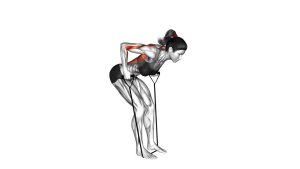
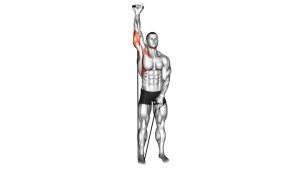
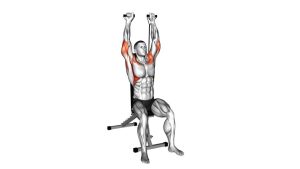
Resistance Band Standing Around the World: Proper Form, Sets, Tips & FAQ
Learn the Resistance Band Standing Around the World for shoulder and chest activation, mobility, and control. Includes proper form, step-by-step execution, sets by goal, common mistakes, FAQs, and recommended equipment.
Resistance Band Standing Around the World
This exercise is especially useful for building shoulder endurance, improving upper-body coordination, and training the shoulders through a larger range of motion than many basic band raises. Because the band keeps tension on the muscles throughout the circle, even light resistance can create a strong training effect. Focus on posture, even arm paths, and controlled tempo rather than trying to move the band too fast.
Quick Overview
| Body Part | Shoulders |
|---|---|
| Primary Muscle | Anterior deltoids (front shoulders) |
| Secondary Muscle | Lateral deltoids, upper chest, serratus anterior, rotator cuff stabilizers |
| Equipment | Resistance band with handles or loop band |
| Difficulty | Beginner to Intermediate |
Sets & Reps (By Goal)
- Shoulder activation / warm-up: 2–3 sets × 10–15 reps with light resistance and smooth tempo
- Muscle endurance: 2–4 sets × 12–20 reps with controlled circles and 30–60 sec rest
- Hypertrophy / shoulder development: 3–4 sets × 8–15 reps using a challenging but clean band tension
- Mobility + control work: 2–3 sets × 8–12 slow reps focusing on full, pain-free range of motion
Progression rule: First improve control and range of motion, then add reps, then increase band resistance. Never sacrifice circle quality just to use a heavier band.
Setup / Starting Position
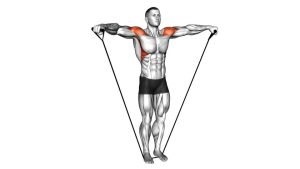
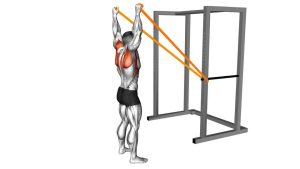
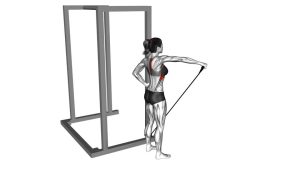
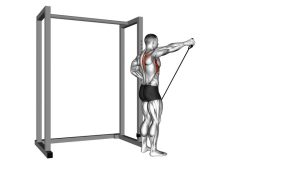
- Anchor or position the band: Stand on the middle of the resistance band or use a secure anchor behind the body, depending on the variation shown.
- Stand tall: Place your feet about shoulder-width apart and brace the core lightly.
- Grip the handles evenly: Hold the band with both hands and keep a slight bend in the elbows.
- Set shoulder position: Keep the shoulders down and back—not shrugged toward the ears.
- Start with tension: Begin with light tension in the band so the movement feels controlled from the first inch of motion.
Tip: A lighter band usually produces better circles and more shoulder control than a heavy band that forces compensations.
Execution (Step-by-Step)
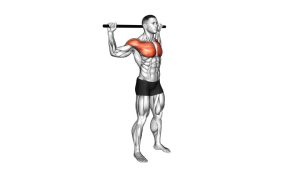
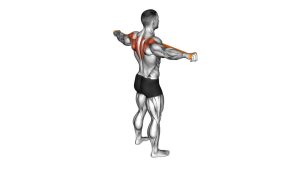
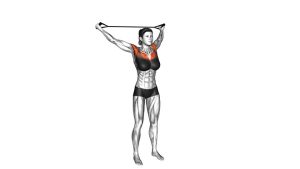
- Lift in a wide arc: Raise both arms forward and outward in a big circular path instead of straight up.
- Keep elbows softly bent: Maintain a slight bend throughout the motion without turning the movement into a curl or press.
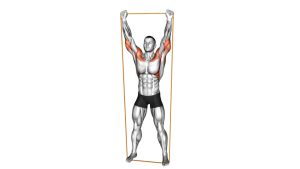
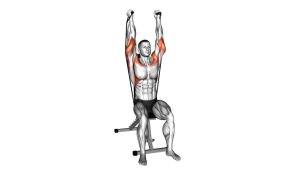
- Reach overhead smoothly: Bring the hands up and around above shoulder level while keeping the ribcage down and torso stable.
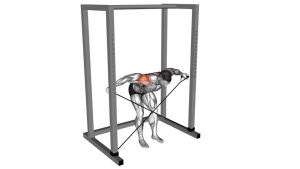
- Continue the circle: Let the arms travel outward and downward to complete the round “around the world” pattern.
- Control the return: Resist the pull of the band on the way back and keep the circle even, smooth, and symmetrical.
Pro Tips & Common Mistakes
- Use a wide arm path: The movement should feel like a big circle, not a narrow front raise.
- Keep the chest tall: Avoid collapsing forward as the arms move around the body.
- Don’t lean back: Excessive lower-back arching usually means the band is too strong or the core is not braced.
- Control the eccentric: Do not let the band snap your arms backward or downward.
- Shoulders stay relaxed: Shrugging reduces efficiency and places extra stress on the upper traps.
- Use smooth tempo: This exercise is more effective when tension stays constant through the whole circle.
- Stay within pain-free range: Slight discomfort from muscle effort is fine, but joint pinching is not.
FAQ
What muscles does the Resistance Band Standing Around the World work?
It mainly targets the front delts and also trains the side delts, upper chest, and smaller shoulder stabilizers that help control the circular path.
Is this exercise for mobility or muscle building?
It can be used for both. With lighter resistance and slower tempo, it works well for mobility and control. With moderate tension and higher effort, it can also support shoulder hypertrophy and endurance.
Should I go heavy on this movement?
Usually no. This exercise works best with light to moderate resistance so you can keep the circle smooth, maintain shoulder position, and avoid compensating with the lower back or traps.
Why do I feel my traps more than my shoulders?
That often happens when the band is too heavy or when you shrug the shoulders during the lift. Try reducing resistance, slowing the rep, and thinking about keeping the shoulders down while the arms move.
Can beginners use this exercise?
Yes. Beginners can benefit from it as long as they use a light band and focus on control, posture, and range of motion rather than speed or resistance.
Recommended Equipment
- Resistance Bands with Handles — ideal for smooth upper-body movement patterns and adjustable resistance
- Loop Resistance Bands — a compact option for shoulder activation, mobility, and light strength work
- Door Anchor for Resistance Bands — useful for setting band height and improving exercise setup variety
- Exercise Mat — provides a stable and comfortable training surface for band workouts
- Adjustable Resistance Band Set — helpful for progressing from light activation work to more challenging sets
Tip: Start with the lightest resistance that allows a clean circular motion. Shoulder exercises usually respond better to precision and consistency than to excessive load.