Dumbbell Standing Around the World: Form, Muscles Worked, Sets, Tips & FAQ
Learn how to do the Dumbbell Standing Around the World with proper form. Discover muscles worked, setup, execution steps, sets and reps by goal, common mistakes, FAQs, and recommended equipment.
Dumbbell Standing Around the World
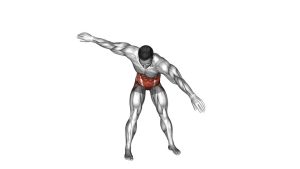
This exercise works best with strict control rather than heavy weight. The shoulders should do the work while the torso stays tall and steady. Each rep should look like one smooth circular arc around the body, with the arms slightly bent and the movement staying deliberate from start to finish. If you need momentum, the dumbbells are too heavy.
Quick Overview
| Body Part | Shoulders |
|---|---|
| Primary Muscle | Deltoids (anterior, lateral, and posterior fibers) |
| Secondary Muscle | Upper trapezius, rotator cuff stabilizers, upper chest, core |
| Equipment | Pair of dumbbells |
| Difficulty | Beginner to Intermediate (best with light-to-moderate loads and clean control) |
Sets & Reps (By Goal)
- Shoulder warm-up / activation: 2–3 sets × 8–10 reps per direction with very light dumbbells
- Muscular endurance / control: 3–4 sets × 10–15 reps with controlled tempo and short rest
- Hypertrophy accessory work: 2–4 sets × 8–12 reps after primary pressing or raise work
- Mobility-focused finisher: 1–2 sets × 12–15 slow, smooth reps with perfect form
Progression rule: Increase control first, then range quality, then reps, and only after that move up in weight. This exercise rewards precision more than load.
Setup / Starting Position
- Stand tall: Position your feet about hip-width to shoulder-width apart and keep your posture upright.
- Hold the dumbbells at your sides: Start with a neutral grip and a slight bend in the elbows.
- Brace your core: Keep the ribs down and avoid leaning backward as the arms rise.
- Set the shoulders: Keep them packed and controlled without shrugging toward the ears.
- Choose a light load: This is not a max-strength move; light dumbbells usually produce better reps.
Tip: If your shoulders click, shrug, or lose position early in the circle, reduce the weight and shorten the range slightly until control improves.
Execution (Step-by-Step)
- Begin from the sides: Start with the dumbbells hanging beside your thighs and the chest lifted.
- Raise the arms forward: Sweep the dumbbells up in front of the body in a wide arc.
- Continue overhead: Bring the dumbbells toward the top position while keeping a slight elbow bend and steady torso.
- Move through the back half of the circle: Continue the motion so the arms travel outward and back down in a smooth circular path.
- Return to the start: Finish with the dumbbells back at your sides under control.
- Repeat smoothly: Perform all reps in one direction, then switch direction if desired for balanced shoulder development.
Pro Tips & Common Mistakes
- Use lighter dumbbells than you think: Heavy weights usually turn this into a swinging motion.
- Keep a slight elbow bend: Locked elbows can make the movement feel harsher on the joints.
- Stay tall through the torso: Avoid arching the lower back to “help” the weight overhead.
- Do not rush the circle: Smooth arcs train the delts and stabilizers better than fast sloppy reps.
- Avoid shrugging: Let the delts work without excessive trap takeover.
- Control both directions: Forward and reverse circles can each help challenge shoulder control from different angles.
- Stop short of painful range: A full circle should be comfortable and controlled, not forced.
FAQ
What muscles does the Dumbbell Standing Around the World work?
It mainly targets the deltoids, including the front, side, and rear portions. The rotator cuff, upper traps, upper chest, and core also assist with stability and control.
Is this a mass-building exercise or more of a control exercise?
It is primarily a control, endurance, and stability-focused movement. It can contribute to shoulder development, but it shines most as an accessory exercise, warm-up drill, or light hypertrophy finisher.
How heavy should the dumbbells be?
Start lighter than you would for front raises or lateral raises. Most lifters get better results with a load they can move in a smooth circle without leaning, swinging, or shrugging.
Should I do both directions?
Yes, you can. Performing both forward and reverse circles can create a more balanced shoulder stimulus and improve control through multiple movement paths.
Who should be careful with this exercise?
Anyone with active shoulder impingement, painful overhead motion, or recent shoulder injury should be cautious. Reduce range, lower the weight, or substitute a more comfortable exercise if needed.
Recommended Equipment
- Adjustable Dumbbells — ideal for progressing shoulder work without taking up much space
- Resistance Bands — useful for shoulder warm-ups, activation drills, and extra mobility work
- Workout Gloves — can improve grip comfort during higher-rep dumbbell sessions
- Exercise Mat — helpful for warm-ups, kneeling prep work, and general home gym comfort
- Foam Roller — useful for thoracic mobility work that can support healthier shoulder movement
Tip: Pair this exercise with light bands and mobility work if your goal is smoother shoulder mechanics rather than just fatigue.