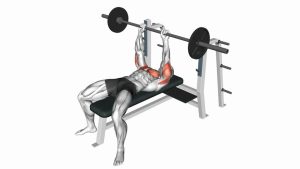
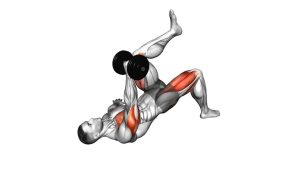
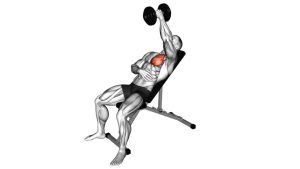
Barbell One-Arm Floor Press: Proper Form, Sets, Tips & FAQ
Learn how to do the Barbell One-Arm Floor Press with proper form. Discover setup, execution, sets by goal, common mistakes, FAQs, and recommended Amazon equipment for safer unilateral pressing.
Barbell One-Arm Floor Press
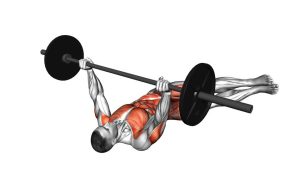
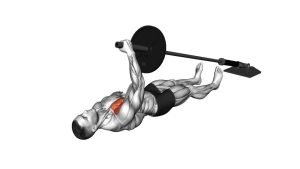
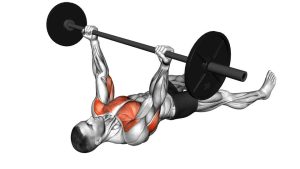
This exercise is best performed with a controlled setup, a stable wrist, and a deliberate tempo. Since only one arm is pressing the load, your trunk and hips must stay braced so the body does not twist toward the working side. You should feel the press mainly through the triceps and chest, with the core working hard to keep you square on the floor.
Quick Overview
| Body Part | Triceps |
|---|---|
| Primary Muscle | Triceps brachii |
| Secondary Muscle | Chest (pectoralis major), anterior deltoid, core stabilizers |
| Equipment | Barbell, weight plates, open floor space or lifting mat |
| Difficulty | Intermediate to advanced (requires unilateral stability and careful setup) |
Sets & Reps (By Goal)
- Strength: 3–5 sets × 4–6 reps per arm, 90–150 sec rest
- Muscle growth: 3–4 sets × 6–10 reps per arm, 60–90 sec rest
- Control and stability: 2–4 sets × 8–12 reps per arm, slow tempo, 45–75 sec rest
- Accessory pressing work: 2–3 sets × 6–8 reps per arm after main press work
Progression rule: Increase load only when you can keep the torso from rotating, the wrist stacked, and every rep controlled from floor touch to lockout.
Setup / Starting Position
- Lie on the floor: Bend your knees and plant your feet firmly to create a stable base.
- Grip the bar with one hand: Center the hand carefully so the bar stays balanced over the working-side shoulder.
- Set the non-working arm: Place it out to the side on the floor for extra balance if needed.
- Brace your torso: Tighten your abs and keep your ribcage down so the body stays square.
- Start with the elbow bent: Position the bar above or slightly in front of the shoulder with the forearm vertical.
Tip: This movement is much safer when the starting position is organized before the first rep. Do not rush the hand placement or bar balance.
Execution (Step-by-Step)
- Lock in your brace: Keep your feet planted, glutes lightly engaged, and core tight before moving the bar.
- Lower with control: Bring the bar down until your upper arm or triceps lightly touches the floor.
- Pause briefly: Let the floor stop the range naturally without bouncing or relaxing the shoulder.
- Press straight up: Drive the bar back to lockout while keeping the wrist stacked over the elbow.
- Resist rotation: Do not let your torso twist or your hips shift toward the pressing side.
- Finish tall at lockout: Stabilize the bar over the shoulder, then begin the next rep under control.
Pro Tips & Common Mistakes
- Keep the forearm vertical: This helps maintain better pressing leverage and wrist alignment.
- Do not bounce off the floor: The floor is a safety limiter, not a rebound surface.
- Stay square through the trunk: The anti-rotation demand is one of the biggest benefits of this exercise.
- Use moderate loads first: This is a coordination-heavy movement, not just a brute-force press.
- Avoid excessive elbow flare: Let the elbow travel naturally, but do not let it shoot too far out.
- Control the eccentric: A slower lowering phase improves stability and tension.
- Do not overarch: Keep the ribs down and avoid turning it into a sloppy partial bench press.
FAQ
What muscles does the Barbell One-Arm Floor Press work most?
The movement primarily targets the triceps, while the chest and anterior deltoid assist the press. Your core also works hard to resist rotation because the load is only on one side.
Why do this on the floor instead of a bench?
The floor shortens the bottom range of motion, which can reduce shoulder stress for some lifters and place more emphasis on the mid-to-top range and lockout strength.
Is this exercise good for building triceps?
Yes. Because the range is limited at the bottom and the press finishes from a dead stop, the triceps often take on a big role, especially near lockout.
Can beginners do the Barbell One-Arm Floor Press?
Most beginners should first learn bilateral floor presses, dumbbell presses, and core bracing before attempting this variation. It requires more balance and control than standard pressing movements.
What is the biggest mistake with this exercise?
The most common issue is losing body position—twisting the torso, letting the wrist collapse, or lowering the bar without full control. Stable setup and moderate loading matter more than ego here.
Recommended Equipment (Optional)
- Weightlifting Wrist Wraps — helpful for keeping the wrist more stable during unilateral barbell pressing
- Exercise Puzzle Mat — adds floor protection and cushioning for setup, bracing, and plate contact
- Adjustable Squat Rack — useful if you want a safer way to stage and handle barbell loading around pressing work
- Liquid Chalk for Weightlifting — improves grip security when one hand must stabilize the entire bar
- Barbell Storage Wall Mount — practical for keeping your training area organized if you frequently use barbells at home
Choose gear that improves control, grip, and training-space safety rather than chasing unnecessary accessories.