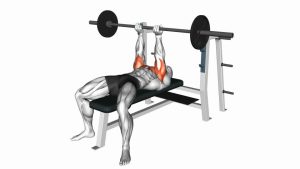
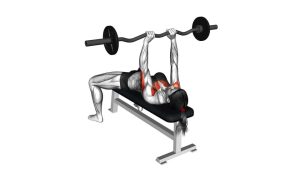
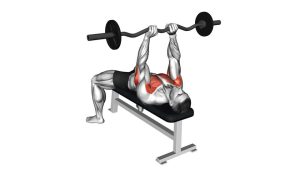
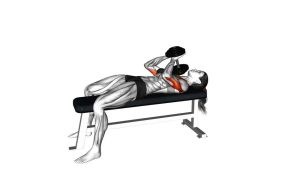
Barbell Close-Grip Bench Press: Proper Form, Sets, Tips & FAQ
Learn how to perform the Barbell Close-Grip Bench Press with proper form to build stronger triceps, improve lockout strength, and train the upper body safely. Includes setup, execution, sets by goal, common mistakes, FAQs, and recommended equipment.
Barbell Close-Grip Bench Press
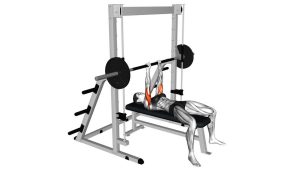
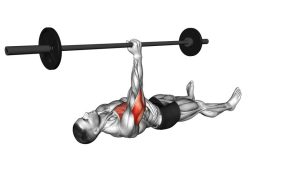
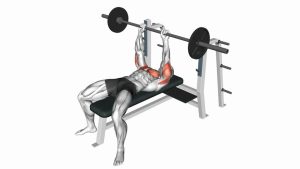
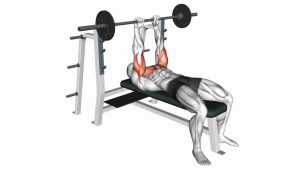
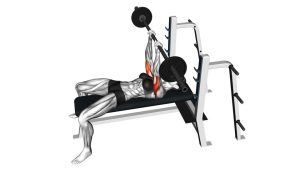
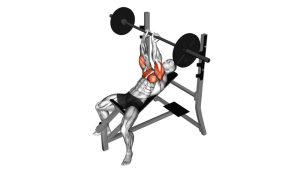
This exercise works best when you combine a solid bench setup with a close but comfortable grip. The movement should feel powerful through the triceps, with the wrists stacked, elbows tucked, and shoulders stable on the bench. You do not need an extremely narrow grip. In most cases, a grip just inside shoulder width is enough to shift the emphasis toward the triceps while keeping the lift strong and safe.
Quick Overview
| Body Part | Triceps |
|---|---|
| Primary Muscle | Triceps brachii |
| Secondary Muscle | Pectoralis major, anterior deltoids, forearms |
| Equipment | Barbell, flat bench, weight plates, optional rack/safeties |
| Difficulty | Intermediate |
Sets & Reps (By Goal)
- Muscle growth: 3–4 sets × 6–10 reps with 60–90 seconds rest
- Strength: 4–5 sets × 3–6 reps with 2–3 minutes rest
- Triceps-focused accessory work: 3–4 sets × 8–12 reps with controlled tempo
- Technique practice: 2–3 sets × 5–8 reps using a moderate load and perfect bar path
Progression rule: Add weight only when you can lower the bar with control, maintain tucked elbows, and finish every rep with a clean lockout.
Setup / Starting Position
- Set the bench and rack height: Position the bar so you can unrack it without losing shoulder tension.
- Lie flat on the bench: Keep your eyes under the bar and plant your feet firmly on the floor.
- Grip the bar close: Use a grip slightly inside shoulder width. Your hands should be narrow enough to emphasize the triceps, but not so narrow that your wrists collapse inward.
- Retract your shoulders: Pull your shoulder blades down and back to create a stable upper back.
- Brace your body: Keep your chest up, core tight, and glutes connected to the bench.
- Unrack with control: Bring the bar over your lower chest / sternum area with straight wrists and locked elbows.
Tip: A close grip does not mean your hands must touch. Use the narrowest grip that still lets you press strongly and keep your joints aligned.
Execution (Step-by-Step)
- Start at lockout: Hold the bar directly above the lower chest with your elbows extended and shoulders packed.
- Lower the bar slowly: Bring the bar down under control toward the lower chest or sternum while keeping the elbows tucked close to your torso.
- Touch softly: Let the bar make a light, controlled touch without bouncing it off the chest.
- Press upward: Drive the bar back up by extending the elbows and pushing through the triceps.
- Follow a strong bar path: Press slightly back toward the shoulder line as the bar rises.
- Finish the rep: Reach full lockout with control, stabilize the bar, and repeat for the next rep.
Pro Tips & Common Mistakes
- Keep elbows tucked: A moderate tuck helps target the triceps and protects the shoulders.
- Do not grip too narrow: An overly narrow grip can stress the wrists and reduce pressing power.
- Control the descent: Lowering too fast often ruins the touch point and elbow path.
- Stack the wrists: Keep the bar balanced over the forearms rather than letting the wrists fold backward.
- Use full lockout: This lift is excellent for triceps development, so finish each rep completely.
- Do not bounce the bar: A soft, controlled chest touch keeps the movement safer and more effective.
- Keep the upper back tight: Shoulder retraction improves pressing stability and bar control.
FAQ
What muscles does the Barbell Close-Grip Bench Press work most?
The main target is the triceps brachii. The chest and front delts also assist, but the narrower grip and tucked elbows make this variation especially useful for upper-arm development and lockout strength.
How close should my grip be?
In most cases, your hands should be placed slightly inside shoulder width. You want a close grip that emphasizes the triceps without forcing your wrists into an awkward position.
Is this better than a regular bench press for triceps?
For direct triceps emphasis, yes. A standard bench press usually involves more chest contribution, while the close-grip version shifts more of the workload toward elbow extension and lockout strength.
Should the bar touch my chest?
Yes, in most cases the bar should come down to a controlled touch on the lower chest or sternum area. Avoid bouncing, collapsing the shoulders, or shortening the range just to lift more weight.
Can beginners do close-grip bench press?
Yes, but beginners should start light and first learn how to keep the wrists stacked, elbows tucked, and shoulders stable. Good setup matters more than heavy loading.
Recommended Equipment
- Olympic Barbell — the primary tool for performing close-grip bench press with stable loading
- Flat Weight Bench — provides the sturdy base needed for safe pressing mechanics
- Barbell Collars — helps keep the plates secure during pressing sessions
- Wrist Wraps — useful for lifters who need extra wrist support with heavier close-grip pressing
- Power Rack with Safety Arms — improves safety when training alone or working with heavier weights
Tip: For safer heavy bench variations, use a rack with safeties or train with a spotter whenever possible.