Deep Push-Up (Chest Emphasis): Form, Sets & Tips for Chest Growth
Learn the Deep Push-Up (Chest Emphasis) to build your chest with a bigger stretch and longer range of motion. Step-by-step form, sets by goal, common mistakes, FAQs, and recommended equipment.
Deep Push-Up (Chest Emphasis)
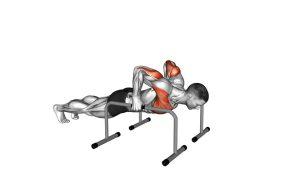
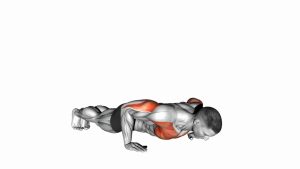
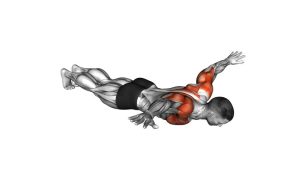
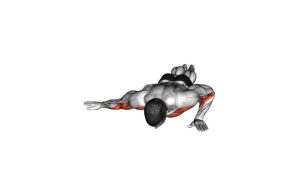
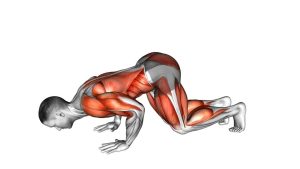
This movement is all about controlled depth. The deeper range can be great for chest growth, but only if your shoulders stay stable and your torso stays tight. Think: slow down, own the bottom, and press up smoothly without losing alignment.
Quick Overview
| Body Part | Chest |
|---|---|
| Primary Muscle | Pectoralis major (chest) |
| Secondary Muscle | Anterior deltoids, triceps, serratus anterior, core stabilizers |
| Equipment | Push-up handles or parallettes (optional: resistance band or weight vest for progression) |
| Difficulty | Intermediate (advanced if you add load or pause deep) |
Sets & Reps (By Goal)
- Chest hypertrophy: 3–5 sets × 6–12 reps (2–3 sec lowering, 60–90 sec rest)
- Strength emphasis: 4–6 sets × 3–6 reps (add load, 90–150 sec rest)
- Control & stability: 2–4 sets × 6–10 reps (2–5 sec pause deep, 60–90 sec rest)
- Finisher / pump: 2–3 sets × 10–20 reps (smooth tempo, 45–75 sec rest)
Progression rule: Add range control first (slower eccentric or pause), then add reps, then add resistance (band/vest/plate backpack). Never increase depth if your shoulders roll forward at the bottom.
Setup / Starting Position
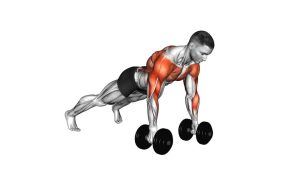
- Set the handles: Place push-up handles/parallettes shoulder-width to slightly wider than shoulder-width on a stable surface.
- Grip and stack: Hands neutral on the handles, wrists straight. Stack shoulders over (or slightly in front of) hands.
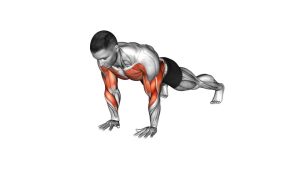
- Lock in a plank: Feet back, legs straight, glutes tight, ribs down. Your body should form a straight line.
- Set the scapula: Think “shoulders down and wide” (stable, not shrugged).
- Brace before moving: Take a small breath, tighten core, and keep the neck neutral.
Tip: If your shoulders feel unstable, reduce depth at first and aim for a controlled bottom position with no forward shoulder drift.
Execution (Step-by-Step)
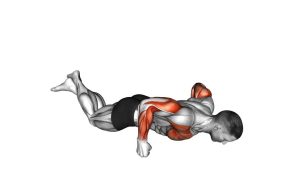
- Start strong: From a tight plank, squeeze glutes and keep your ribs down so your hips don’t sag.
- Lower slowly: Bend elbows and lower your chest between the handles. Aim for elbows about 30–45° from your torso.
- Reach deep range: Descend until your chest is slightly below hand level (only as deep as you can keep shoulders stable).
- Own the bottom: Pause briefly or keep tension—no bouncing, no collapsing forward.
- Press up: Drive the handles into the floor and push up smoothly back to plank, keeping your body in one line.
Pro Tips & Common Mistakes
- Control the eccentric: A 2–4 second lower increases chest tension and keeps shoulders safe.
- Don’t “dive” into depth: The deep position should feel like a controlled stretch, not a shoulder dump.
- Avoid elbow flare: Keep elbows around 30–45° to bias chest while protecting shoulders.
- Keep a solid plank: Sagging hips shifts stress away from the chest and into the lower back.
- Pause deep for growth: A 1–2 second pause at the bottom increases time under tension (if pain-free).
- Progress smart: Add reps → add tempo/pauses → add load (band/vest) as the final step.
FAQ
What makes a deep push-up different from a normal push-up?
The handles/parallettes let your chest drop below your hands, increasing range of motion. That bigger stretch can increase chest activation and make each rep harder.
Where should I feel it?
Mainly in the chest, with support from triceps and front shoulders. If you feel sharp shoulder pinching, reduce depth and focus on keeping the shoulders stable at the bottom.
Is this safe for shoulders?
It can be, if you control the bottom position and avoid collapsing forward. Start with a smaller range, keep elbows at 30–45°, and progress depth only when you can maintain stability without pain.
How do I make it harder without weights?
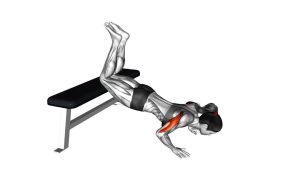
Slow down the lowering, add a pause at the bottom, elevate the feet, or use a resistance band for added tension. Range + tempo changes can be just as effective as adding load.
Can beginners do this?
Most beginners should start with a standard push-up (or incline push-up) first. Deep push-ups demand more shoulder control and strength in the stretched position.
Recommended Equipment
- Push-Up Handles — improves wrist comfort and increases range of motion for deeper reps
- Parallettes Bars — stable option for deficit push-ups and other calisthenics pushing movements
- Resistance Bands Set — adds tension at the top and increases difficulty without heavy equipment
- Weighted Vest — simple progression tool for push-up strength and hypertrophy
- Exercise Mat — improves comfort for knees/toes and makes setup more stable at home
Tip: Choose handles/parallettes with non-slip feet. Stability matters more than height when you’re training deep range.