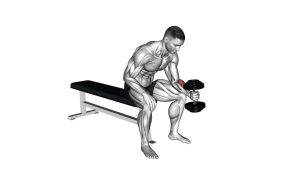
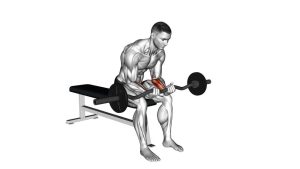
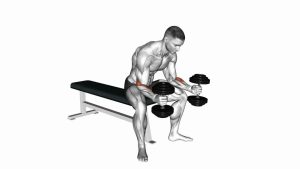
Barbell Wrist Curl: Proper Form, Sets, Benefits & FAQ
Learn how to do the Barbell Wrist Curl with proper form to build bigger, stronger forearms. Includes setup, execution, sets by goal, common mistakes, FAQs, and recommended equipment.
Barbell Wrist Curl
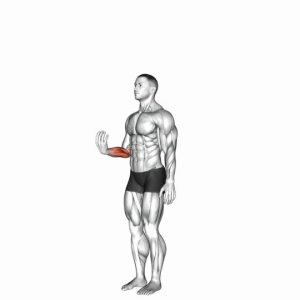
This exercise works best when you keep the movement strict and focused. The forearms should do the work while the elbows stay planted and the shoulders stay relaxed. A small rolling motion into the fingers can increase the stretch and make each rep more effective, but the bar should always remain under control.
Quick Overview
| Body Part | Forearms |
|---|---|
| Primary Muscle | Forearm flexors (wrist flexors) |
| Secondary Muscle | Finger flexors and grip muscles |
| Equipment | Barbell, bench or thighs for support, optional weight plates/collars |
| Difficulty | Beginner to Intermediate |
Sets & Reps (By Goal)
- Muscle growth: 3–4 sets × 10–15 reps with a controlled stretch and squeeze
- Forearm endurance: 2–4 sets × 15–20 reps using lighter weight and steady tempo
- Grip support / accessory work: 2–3 sets × 12–18 reps after rows, deadlifts, or curls
- Technique practice: 2–3 sets × 8–12 reps focusing on full range and zero momentum
Progression rule: First improve control, range of motion, and top-end squeeze. Then add small weight increases while keeping the wrists—not the arms—responsible for moving the bar.
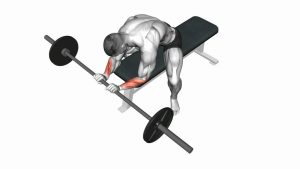
Setup / Starting Position
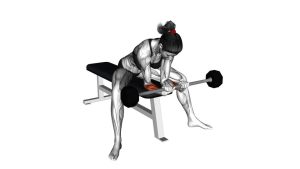
- Sit on a bench: Lean slightly forward with your feet planted firmly on the floor.
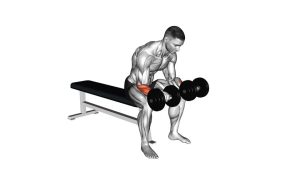
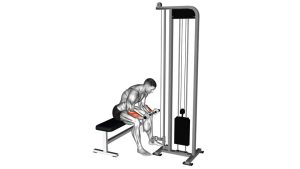
- Rest the forearms: Place your forearms across your thighs or on a bench with the wrists hanging just past the knees or edge.
- Use a palms-up grip: Hold the barbell with a shoulder-width or slightly narrower grip.
- Let the bar sit low: Allow it to rest closer to the fingers instead of burying it deep in the palm.
- Start in a stretch: Let the wrists extend downward under control before beginning the curl.
Tip: Keeping the forearms fully supported helps isolate the wrist flexors and reduces cheating from the shoulders and elbows.
Execution (Step-by-Step)
- Begin from the bottom: Let the wrists extend so the bar rolls slightly toward the fingertips.
- Close the hands: Secure the bar by wrapping the fingers around it as you prepare to curl.
- Curl the wrists upward: Flex the wrists to raise the barbell as high as comfortably possible.
- Squeeze at the top: Pause briefly and contract the forearm flexors without lifting the elbows.
- Lower slowly: Reverse the motion under control until the wrists extend again into the starting stretch.
- Repeat smoothly: Keep the movement strict, rhythmic, and controlled for every rep.
Pro Tips & Common Mistakes
- Use full range: Get a real stretch at the bottom and a strong squeeze at the top.
- Keep your forearms planted: If the elbows move, the exercise becomes less effective.
- Do not rush: A slower eccentric improves tension and makes lighter weights more productive.
- Let the bar roll slightly: Controlled finger extension can increase forearm involvement.
- Avoid excessive weight: Too much load usually shortens the range and causes sloppy reps.
- Don’t bend the torso repeatedly: Momentum takes stress off the target muscles.
- Train both sides of the forearm: Pair wrist curls with reverse wrist curls for more balanced development.
FAQ
What muscles do barbell wrist curls work?
They mainly target the forearm flexors, which are responsible for wrist flexion and contribute to grip strength and forearm size.
Should I let the bar roll into my fingers?
Yes, slightly. Letting the bar roll toward the fingers at the bottom can increase the stretch and improve forearm activation, as long as you stay in control.
How heavy should I go on wrist curls?
Use a load you can move with strict form and a full range of motion. Wrist curls usually work better with moderate or lighter weights than with ego lifting.
Are barbell wrist curls good for grip strength?
Yes. They strengthen the wrist and finger flexors, which can support overall grip development, especially when combined with rows, carries, and static holds.
How often can I train this exercise?
Most people can perform barbell wrist curls 1–3 times per week depending on total forearm volume, recovery, and how much gripping work they already do in other lifts.
Recommended Equipment
- Wrist Roller / Forearm Trainer — useful for extra direct forearm work and grip-focused finishers
- Grip Strength Trainer — helps build crushing grip and complements wrist curl training
- Lifting Straps — useful on heavy pulling days so forearm fatigue does not limit bigger compound lifts
- Barbell Collars — helps keep plates secure for safer, more stable barbell setup
- Forearm Roller — a great accessory for adding wrist flexion, extension, and endurance work
Tip: For the best results, use wrist curls as part of a broader forearm routine that also includes reverse wrist curls, holds, and grip work.