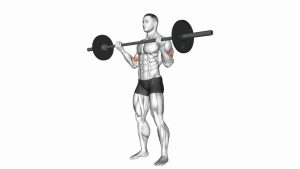
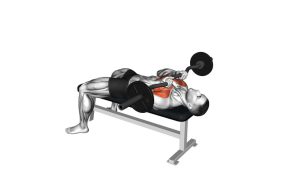
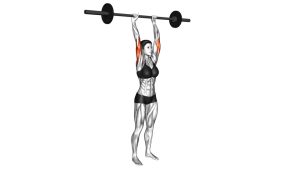
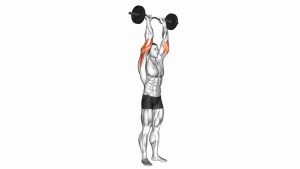
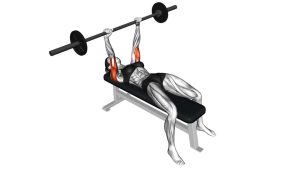
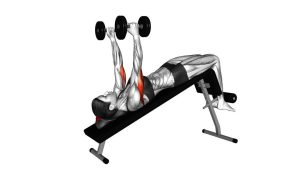
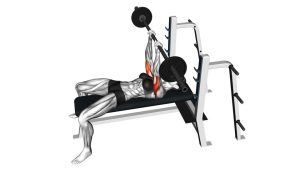
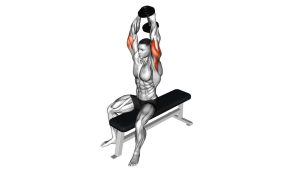
Barbell Seated Overhead Triceps Extension: Proper Form, Sets, Tips & FAQ
Learn how to perform the Barbell Seated Overhead Triceps Extension with proper form. Discover setup tips, step-by-step execution, sets and reps by goal, common mistakes, FAQs, and recommended equipment.
Barbell Seated Overhead Triceps Extension
This exercise works best when you keep your torso tall, core braced, and elbows pointed generally forward instead of letting them drift too wide. You should feel a strong stretch in the triceps at the bottom and a hard contraction at the top. Keep the tempo controlled and avoid bouncing out of the bottom position. A moderate load with clean mechanics is usually far more effective than going too heavy and losing elbow control.
Quick Overview
| Body Part | Triceps |
|---|---|
| Primary Muscle | Triceps brachii (long head emphasis) |
| Secondary Muscle | Medial triceps head, lateral triceps head, anterior deltoids, upper back and core stabilizers |
| Equipment | Barbell and flat or upright bench |
| Difficulty | Intermediate |
Sets & Reps (By Goal)
- Muscle growth: 3-4 sets × 8-12 reps with 60-90 seconds of rest
- Strength-focused triceps work: 4-5 sets × 5-8 reps with 90-120 seconds of rest
- Technique and control: 2-3 sets × 10-15 reps with a slow eccentric and 45-75 seconds of rest
- Finisher after presses: 2-3 sets × 12-15 reps using strict form and moderate weight
Progression rule: Add load only when you can complete all reps with steady elbows, full control in the stretch, and no torso rocking. Small jumps in weight work best on overhead triceps movements.
Setup / Starting Position
- Sit tall on a bench: Plant your feet firmly and keep your torso upright with your core braced.
- Grip the barbell securely: Use a close-to-shoulder-width grip that feels strong and comfortable on the wrists.
- Press or place the bar overhead: Start with the bar above your head and your arms nearly straight.
- Set the elbows: Keep them pointed mostly forward and avoid letting them flare too wide.
- Brace before moving: Keep the ribs down, head neutral, and shoulders stable before you begin lowering.
Tip: A slightly upright bench back can help some lifters stay tall and reduce unwanted torso sway during the set.
Execution (Step-by-Step)
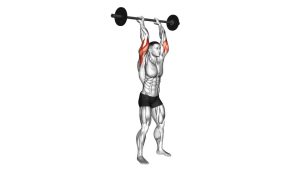
- Start at the top: Hold the bar overhead with the elbows nearly extended and the upper arms stable.
- Lower behind the head: Bend at the elbows and bring the bar down in a controlled arc behind your head.
- Keep upper arms steady: Let the elbows flex, but do not let the shoulders take over the movement.
- Reach a deep but safe stretch: Lower until your triceps are fully loaded without losing posture or joint comfort.
- Extend to return: Drive through the triceps and straighten the elbows to bring the bar back overhead.
- Finish under control: Stop just short of an aggressive lockout and reset before the next rep.
Pro Tips & Common Mistakes
- Keep the elbows controlled: A little movement is normal, but excessive flare reduces isolation and stresses the shoulders.
- Use a full stretch: The long head of the triceps responds well to overhead work with controlled depth.
- Do not rush the bottom: Lower slowly instead of dropping the bar behind your head.
- Stay upright: Avoid arching the lower back or leaning excessively to finish the rep.
- Choose the right weight: Going too heavy usually shortens the range and turns the lift into a grindy shoulder movement.
- Keep wrists stacked: Let the forearms stay aligned under the bar for better control and comfort.
- Warm up elbows first: Light pushdowns or band extensions can help before heavier overhead work.
FAQ
What part of the triceps does this exercise emphasize most?
The overhead position places a strong stretch on the long head of the triceps, which is why this exercise is so effective for total upper-arm development.
Is the seated version better than the standing version?
The seated version often makes it easier to reduce momentum and focus on the triceps. The standing version can work well too, but it usually demands more total-body stabilization.
How low should I lower the bar?
Lower it until you feel a strong triceps stretch while keeping control and joint comfort. Do not force extra depth if it causes shoulder, elbow, or neck discomfort.
Can beginners use this exercise?
Beginners can use it, but many do better starting with dumbbell or cable overhead extensions first. Barbells require more control, especially if shoulder mobility is limited.
Should I lock out fully at the top?
You can reach near full extension, but avoid snapping the elbows aggressively. A controlled top position keeps tension on the triceps and is usually friendlier on the joints.
Recommended Equipment (Optional)
- Olympic Barbell — the main tool for performing the movement with stable loading
- Adjustable Weight Bench — provides a solid seated setup and can help support a more upright posture
- Barbell Collars — helps keep plates secure during overhead triceps work
- Weight Plates — lets you progress the exercise gradually over time
- Wrist Wraps — optional support if wrist positioning becomes uncomfortable under load
Tip: Choose equipment that allows smooth setup and safe control overhead. Stability and manageable loading matter more than using the heaviest possible bar.