Bent-Arm Chest Stretch: Proper Form, Hold Times, Tips & FAQ (Chest Opener)
Learn the Bent-Arm Chest Stretch to open tight pecs, improve shoulder posture, and reduce “rounded shoulders.” Step-by-step setup, hold times by goal, common mistakes, FAQs, and optional Amazon equipment.
Bent-Arm Chest Stretch
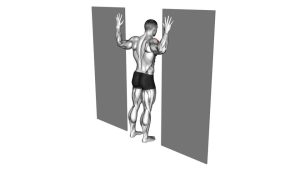
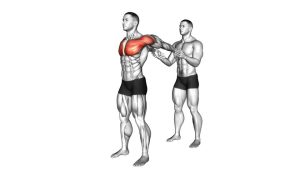
This stretch works best with light intensity and slow breathing. The goal is to restore comfortable chest length and improve posture mechanics—not to force range. You should feel the stretch mainly in the pec area, not deep inside the shoulder joint.
Quick Overview
| Body Part | Chest |
|---|---|
| Primary Muscle | Pectoralis major (chest) |
| Secondary Muscle | Pectoralis minor, anterior deltoid (light), biceps long head (light) |
| Equipment | Wall / door frame / rack upright (optional: strap or towel) |
| Difficulty | Beginner (great for posture, warm-ups, or cooldowns) |
Sets & Reps (By Goal)
- Warm-up mobility (before training): 1–2 rounds × 15–30 sec hold per side (easy effort)
- Posture / daily chest opening: 2–3 rounds × 20–45 sec hold per side
- Cooldown / recovery: 2–4 rounds × 30–60 sec hold per side (slow breathing)
- Desk break “reset”: 1–2 rounds × 20–30 sec per side (gentle, no forcing)
Progression rule: Increase time and breathing control first. Only increase range if you can keep the shoulder down and avoid pinching in the front of the joint.
Setup / Starting Position
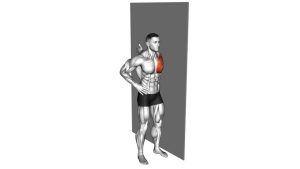
- Pick your surface: Use a wall, door frame, or rack upright that won’t move.
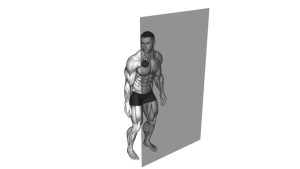
- Stand side-on: Position your body next to the surface with feet stable (slight stagger is fine).
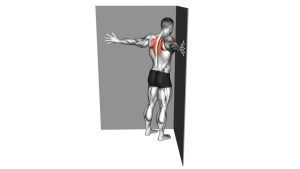
- Make an “L” shape: Raise the arm and bend the elbow about 90° (upper arm roughly level with the shoulder).
- Anchor gently: Place your forearm/palm against the wall—no aggressive pushing.
- Set the shoulder: Think down and back (avoid shrugging or rolling forward).
Tip: If you feel shoulder pinching, lower the elbow slightly or reduce the amount of torso rotation.
Execution (Step-by-Step)
- Start tall: Keep ribs relaxed (don’t over-arch) and neck neutral.
- Rotate away slowly: Turn your torso away from the anchored arm until you feel a chest stretch.
- Hold and breathe: Maintain a steady position and take slow breaths (avoid tensing the neck/shoulders).
- Micro-adjust: Slightly reduce rotation if you feel joint pinching; the stretch should stay in the chest.
- Return with control: Rotate back to neutral and repeat on the other side.
Pro Tips & Common Mistakes
- Keep the shoulder down: Shrugging turns this into neck/trap tension instead of chest length.
- Don’t force range: More rotation isn’t better if it causes shoulder pinching.
- Use breathing to “unlock” tension: Long exhales usually improve comfort and range safely.
- Avoid rib flare: Excessive lower-back arching can fake range and irritate the front of the shoulder.
- Adjust elbow height: Slightly lower often feels better for sensitive shoulders.
- Pair it smart: Great after pressing days, and even better with upper-back work (rows/face pulls).
FAQ
Where should I feel the stretch?
Mostly across the chest (pecs) and sometimes the front of the shoulder. If you feel deep joint pinching, reduce rotation or lower the elbow slightly.
Is this better on a wall or a doorway?
Both work. A doorway often allows easier positioning, while a wall can feel more stable. Choose what lets you keep the shoulder down without discomfort.
How long should I hold it?
For most people, 20–45 seconds per side is enough. If you’re very tight, use 2–4 rounds with calm breathing instead of forcing a single long hold.
What if I feel shoulder pain or pinching?
Reduce the rotation, lower the elbow a little, and ensure the shoulder isn’t rolling forward. If pain persists, skip the stretch and consider gentler pec mobility or professional guidance.
Recommended Equipment (Optional)
- Stretching Strap — helpful for additional chest/shoulder mobility drills
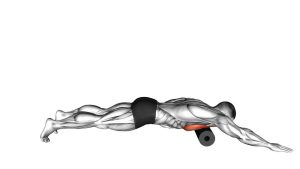
- Foam Roller — supports thoracic extension work to improve chest opening
- Massage Ball (Lacrosse-Style) — great for pec minor/upper chest soft tissue release
- Resistance Bands Set — perfect for pairing with posture work (band pull-aparts, face pulls)
- Doorway Pull-Up Bar — optional anchor point for hang-based chest/lat opening and shoulder decompression
Tip: Equipment is optional—this stretch works great with just a wall. Add tools only if they keep you comfortable and consistent.