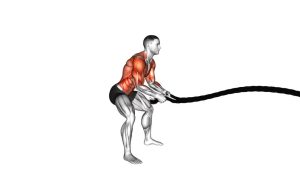
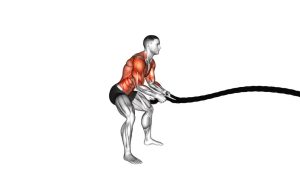
Battling Ropes Power Slam: Form, Benefits, Sets & Tips
Learn the Battling Ropes Power Slam for explosive power, conditioning, core strength, and full-body athletic performance with proper form.
Battling Ropes Power Slam
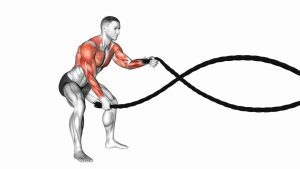
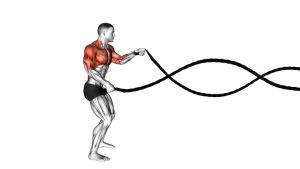
This exercise works best when the whole body contributes. The arms guide and accelerate the ropes, but the legs, hips, trunk, and upper back create the real power. Each repetition should look like a controlled athletic drop: lift the ropes, brace the core, drive the ropes down, absorb the force through your legs, and reset quickly. When performed correctly, the Battling Ropes Power Slam trains explosive output without needing a barbell, dumbbell, or machine.
The movement is especially useful for athletes, combat-sport training, HIIT sessions, conditioning finishers, and full-body power circuits. Because the rope creates continuous resistance and recoil, you must stay stable from the feet to the hands. This makes the exercise demanding for the core, shoulders, lats, traps, glutes, quads, and cardiovascular system.
Quick Overview
| Body Part | Plyometrics |
|---|---|
| Primary Muscle | Shoulders, core, upper back, and full-body power chain |
| Secondary Muscle | Glutes, quads, hamstrings, traps, lats, forearms, and calves |
| Equipment | Battling ropes and a secure anchor point |
| Difficulty | Intermediate because it requires timing, bracing, power, and conditioning |
Sets & Reps (By Goal)
- Power development: 4–6 sets × 6–10 powerful slams, resting 60–90 seconds between sets.
- Conditioning: 4–8 rounds × 15–30 seconds of work, resting 30–60 seconds between rounds.
- HIIT finisher: 6–10 rounds × 20 seconds work / 40 seconds rest.
- Beginner practice: 3–4 sets × 8–12 controlled reps with moderate rope speed.
- Athletic endurance: 3–5 rounds × 30–45 seconds, keeping the rope waves consistent.
Progression rule: Increase rope speed, work duration, or slam power gradually. Do not progress all three at the same time. Clean mechanics should always come before fatigue.
Setup / Starting Position
- Anchor the ropes securely: Attach or loop the battling ropes around a strong anchor point. The ropes should not slide, shift, or pull the anchor loose during hard slams.
- Stand facing the anchor: Hold one rope end in each hand and step back until the ropes have slight tension. Avoid standing so far back that the ropes become stiff and hard to move.
- Set your feet: Use a shoulder-width stance. Keep your feet flat, knees soft, and weight balanced through the midfoot.
- Brace your core: Keep your ribs stacked over your pelvis. Your torso may lean slightly forward, but your back should not round.
- Relax your shoulders: Keep your neck long and avoid shrugging before the movement starts. Grip the ropes firmly without squeezing so hard that your arms fatigue too early.
Setup tip: A small amount of rope slack helps create a strong wave. Too much slack makes the movement messy, while too much tension reduces the slam effect.
Execution (Step-by-Step)
- Start in an athletic stance: Bend your knees slightly, push your hips back, and keep your chest open. Your arms should hold the rope ends in front of your body.
- Lift both ropes together: Drive the rope ends upward using your shoulders, arms, and a small extension through the hips and knees.
- Brace before the slam: Tighten your core as the ropes reach the top position. Keep your ribs down so your lower back does not arch.
- Slam the ropes down: Pull both rope ends downward with force while dropping into a partial squat. Think about throwing the ropes into the floor, not just lowering them.
- Absorb the recoil: Let your knees and hips bend naturally as the ropes hit the ground. Stay balanced and avoid letting the ropes pull your torso forward.
- Reset immediately: As the ropes rebound, lift them again and repeat the next slam with the same rhythm and posture.
Pro Tips & Common Mistakes
Pro Tips
- Use your legs: Drop with the slam so the movement comes from your full body, not only your arms.
- Stay tall through the chest: A strong torso position helps transfer force into the ropes.
- Exhale on the slam: Breathe out sharply as the ropes hit the floor to improve bracing and rhythm.
- Keep the waves powerful: The goal is a visible, heavy wave that travels toward the anchor.
- Control the reset: Do not let the rope rebound pull your shoulders forward.
Common Mistakes
- Using only the arms: This reduces power and causes the shoulders to fatigue too quickly.
- Rounding the back: A collapsed torso increases stress on the lower back during repeated slams.
- Standing too upright: Without an athletic stance, you lose force and balance.
- Letting the ropes go slack: Too much slack makes the movement less explosive and less controlled.
- Going too fast too soon: Speed without control leads to poor wave quality and sloppy mechanics.
FAQ
What muscles does the Battling Ropes Power Slam work?
The Battling Ropes Power Slam trains the shoulders, core, upper back, lats, traps, forearms, glutes, quads, hamstrings, and calves. It also challenges cardiovascular conditioning because the exercise requires repeated explosive effort.
Is the Battling Ropes Power Slam good for fat loss?
Yes. It can support fat-loss training because it raises heart rate quickly and uses many muscle groups at once. However, results still depend on total training consistency, nutrition, recovery, and overall weekly activity.
Is this exercise beginner-friendly?
Beginners can perform a lighter version with shorter intervals, slower reps, and less force. However, the power slam is usually best for people who already understand basic athletic stance, core bracing, and hip-knee bending.
How heavy should the battle ropes be?
Choose ropes that allow strong waves without forcing you to round your back or lose rhythm. A common starting point is a moderate rope thickness that you can control for 15–30 seconds with clean technique.
Can I use Battling Ropes Power Slams as a workout finisher?
Yes. They work very well as a finisher after strength training or as part of a HIIT circuit. Keep the work periods short enough to maintain explosive rope speed and safe posture.
Recommended Equipment
- Battle Ropes — the main tool needed for power slams, conditioning waves, and rope circuits.
- Battle Rope Anchor Kit — helps keep the rope secure during repeated high-force slams.
- Training Gloves — improves grip comfort and helps reduce friction during longer rope sessions.
- Exercise Mat / Floor Protection — protects indoor flooring and reduces rope impact noise.
- Interval Timer — useful for HIIT rounds, conditioning intervals, and power-rest timing.
Tip: Choose equipment based on your training space. Outdoor surfaces can handle heavier rope impact, while indoor spaces may need mats or floor protection.