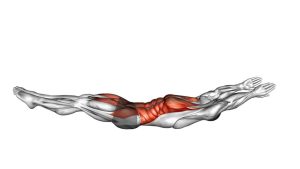
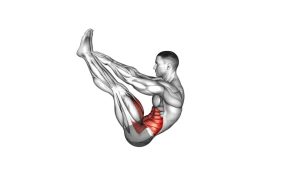
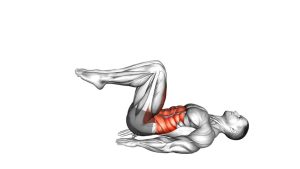
Pulse-Up Exercise: Lower Abs Form, Sets, Tips & FAQ
Learn the Pulse-Up exercise for lower abs control, core strength, and pelvic lift technique with step-by-step form, sets, tips, FAQs, and equipment.
Pulse-Up
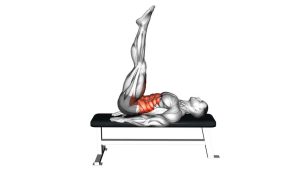
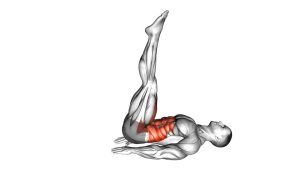
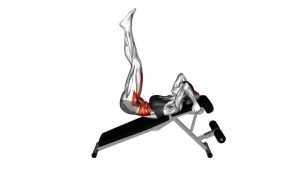
This exercise works best when the motion stays small, strict, and controlled. The legs should remain nearly vertical, while the hips lift only a few centimeters from the floor. Therefore, the Pulse-Up is not a full leg raise or a large reverse crunch. Instead, it is a focused abdominal pulse that keeps tension on the core from start to finish.
Quick Overview
| Body Part | Core |
|---|---|
| Primary Muscle | Lower abdominals / rectus abdominis |
| Secondary Muscle | Hip flexors, deep core stabilizers, obliques |
| Equipment | None; optional exercise mat |
| Difficulty | Intermediate because strict pelvic control is required |
Sets & Reps (By Goal)
- Core control: 2–3 sets × 8–12 controlled reps with a short pause at the top.
- Lower-ab endurance: 3–4 sets × 12–20 reps using a smooth, steady tempo.
- Strength-focused core work: 3–5 sets × 6–10 slow reps with strict hip lift control.
- Finisher: 2–3 sets × 20–30 seconds while keeping constant abdominal tension.
Progression rule: First improve control and reduce momentum. After that, add reps, longer pauses, or slower lowering phases.
Setup / Starting Position
- Lie on your back: Start flat on the floor with your body aligned and your core lightly braced.
- Place your arms beside you: Keep the arms straight along the sides with the palms pressing gently into the floor for balance.
- Raise your legs vertically: Extend both legs upward so the feet are stacked roughly above the hips.
- Keep the legs straight: Maintain a long-leg position without bending the knees during the pulse.
- Brace before moving: Pull the ribs down slightly and prepare to lift the pelvis with the abs, not with momentum.
Execution (Step-by-Step)
- Start with tension: Keep your legs vertical, arms grounded, and lower abs engaged.
- Lift the pelvis slightly: Curl the hips upward a few centimeters by contracting the lower abdominals.
- Keep the legs stacked: Avoid swinging the legs forward or backward as the hips pulse upward.
- Pause briefly: Hold the top position for a moment while keeping the movement small and clean.
- Lower with control: Return the pelvis toward the floor slowly without fully relaxing the core.
- Repeat evenly: Continue with the same small pulse range for every rep.
Pro Tips & Common Mistakes
- Use a small range: The Pulse-Up is a short pelvic lift, not a full reverse crunch.
- Avoid leg swinging: Momentum reduces abdominal tension and changes the purpose of the exercise.
- Keep the legs vertical: Let the hips move, but keep the feet stacked above the hips as much as possible.
- Press the arms lightly: Use the hands for stability, not to push the body aggressively upward.
- Control the lowering phase: Dropping the hips quickly removes tension and may stress the lower back.
- Do not chase height: A clean, small pulse is more effective than a high, sloppy lift.
- Keep your neck relaxed: Avoid pulling the head forward or straining through the upper body.
FAQ
What muscles does the Pulse-Up work?
The Pulse-Up mainly targets the lower portion of the rectus abdominis through a small pelvic lift. Additionally, the hip flexors and deep core muscles help stabilize the legs and pelvis.
Is the Pulse-Up the same as a reverse crunch?
No. Although both exercises involve pelvic curling, the Pulse-Up uses a much smaller range of motion. The legs stay vertical, and the hips perform short controlled pulses instead of a larger reverse-crunch movement.
Should my legs move during Pulse-Ups?
The legs should stay as still and vertical as possible. A small amount of movement may happen naturally, but swinging the legs usually means you are using momentum instead of abdominal control.
Why do I feel Pulse-Ups in my hip flexors?
Some hip-flexor involvement is normal because the legs stay lifted. However, if the hip flexors dominate, reduce the range, slow down, and focus on curling the pelvis upward with the lower abs.
Can beginners do Pulse-Ups?
Beginners can try the exercise if they can keep the legs controlled and the lower back comfortable. However, reverse crunches with bent knees may be easier before progressing to straight-leg Pulse-Ups.
Recommended Equipment (Optional)
- Exercise Mat — adds floor comfort and helps protect the spine during supine core work.
- Thick Yoga Mat — useful if you need extra cushioning under the lower back and hips.
- Adjustable Ankle Weights — optional progression for advanced users who can already control strict reps.
- Core Sliders — helpful for pairing Pulse-Ups with other floor-based abdominal drills.
- Ab Training Accessories — useful for building a complete home core-training setup.
Tip: Equipment is not required for the Pulse-Up. Start with bodyweight first, then add tools only when your form stays strict and your hips lift without swinging.