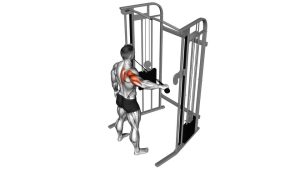
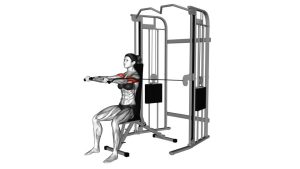
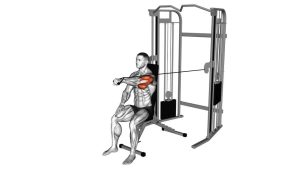
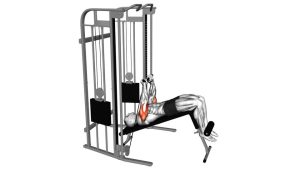
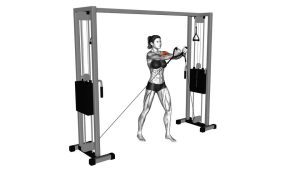
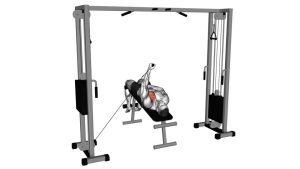
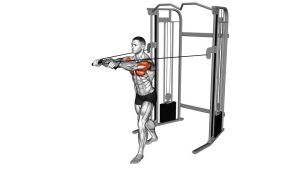
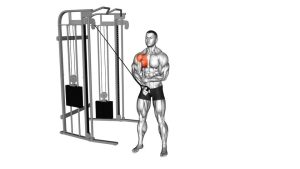
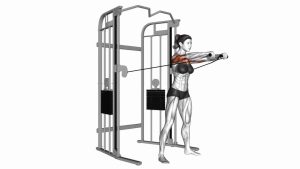
Cable Standing Squeeze Upper Chest Press: Upper Chest Form, Sets & Tips
Learn the Cable Standing Squeeze Upper Chest Press to target the upper pecs with constant cable tension. Step-by-step form, sets by goal, common mistakes, FAQs, and recommended equipment.
Cable Standing Squeeze Upper Chest Press
This exercise rewards a controlled tempo and clean mechanics. You should feel most of the work in the upper chest, with assistance from the front delts and triceps. If you feel pinching in the front of the shoulder, reduce range, lower the load, and adjust the pulley height so the press angle stays comfortable.
Quick Overview
| Body Part | Chest (Upper Chest Emphasis) |
|---|---|
| Primary Muscle | Pectoralis major (clavicular head / upper chest) |
| Secondary Muscle | Anterior deltoids, triceps, serratus anterior (stability) |
| Equipment | Dual cable machine (functional trainer) + D-handles |
| Difficulty | Intermediate (requires cable setup control and shoulder positioning) |
Sets & Reps (By Goal)
- Muscle growth (hypertrophy): 3–5 sets × 8–12 reps (60–90 sec rest)
- Strength focus: 4–6 sets × 5–8 reps (90–150 sec rest, strict form)
- Endurance / pump: 2–4 sets × 12–20 reps (45–75 sec rest)
- Upper-chest finisher: 2–3 sets × 15–25 reps (light load, big squeeze)
Progression tip: Add reps first (hit the top of the rep range with clean control), then increase load slightly. Maintain the same press angle and a deliberate squeeze—don’t trade form for weight.
Setup / Starting Position
- Set pulley height: Place both pulleys slightly below chest level so the press travels up and in (upper-chest line).
- Choose stance: Use a staggered stance (one foot forward) for stability. Soft knees, glutes lightly engaged.
- Grip and elbow angle: Hold D-handles with a neutral-to-slightly-pronated grip. Elbows start down and slightly out (not flared high).
- Torso position: Stand tall with a slight forward lean if needed. Keep ribs down and core braced (no excessive arch).
- Shoulder set: Think “shoulders down and back” before you press. Chest proud, neck neutral.
Setup cue: Step forward until you feel steady tension at the start—handles should not go slack at any point.
Execution (Step-by-Step)
- Start under control: With elbows bent, bring the handles near the outer chest line. Keep wrists stacked and shoulders stable.
- Press up and in: Drive the handles forward on a diagonal path (low-to-high) toward the upper chest line.
- Squeeze the chest: At the top, bring the hands close together and actively crush inward for 1 second—don’t shrug.
- Slow return: Let the arms open back with control until you feel a comfortable stretch across the chest.
- Repeat smoothly: Keep tension constant and your torso quiet—no rocking or bouncing.
Pro Tips & Common Mistakes
- Press on the right angle: Upper chest = up and in. If you press straight forward, it becomes more mid-chest.
- Own the squeeze: Think “hug and press” at the top—controlled inward adduction boosts peak contraction.
- Keep ribs stacked: Avoid leaning back and turning it into a low-back arch press.
- Don’t flare elbows high: Too much flare can stress the shoulder—keep elbows slightly below shoulder line.
- Slow eccentrics build chest: Use a 2–3 second return to load the stretch safely.
- Common mistake: Letting cables yank you back—reduce load and control the negative.
FAQ
What pulley height is best for upper chest emphasis?
Start with pulleys slightly below chest height so the press travels low-to-high. If it feels too shoulder-heavy, lower the pulleys a bit and reduce elbow flare.
Should my hands touch at the top?
They can touch or come close, but the goal is tension and squeeze—not overreaching. Keep shoulders down and stop short if your shoulders roll forward.
Why do I feel this more in my shoulders than my chest?
Common causes are pulleys too high, elbows flaring, or losing scapular control. Lower the load, set the shoulders “down and back,” and focus on the inward squeeze.
Is this a good substitute for incline bench pressing?
It’s an excellent upper-chest builder—especially for constant tension and safer joint angles. For best results, pair it with a heavier press (incline DB/BB) or use it as a hypertrophy-focused main movement.
What’s a simple progression?
Add reps first (up to your target range), then increase load slightly. You can also pause longer at the top or slow the eccentric to increase difficulty without changing technique.
Recommended Equipment (Optional)
- Cable D-Handles (Pair) — comfortable grip and smooth pressing for cable work
- Cable Attachment Set — adds handle options (single grips, straps, bars) for variation
- Resistance Bands Set — great backup option for squeeze-press patterns and warm-ups
- Gym Gloves (Grip Support) — helps grip endurance on higher-rep cable sets
- Home Cable Pulley System — a compact option if you don’t have a full cable station
Tip: Choose loads you can control. The upper chest responds best when the squeeze is strong and the return is slow—no jerking.