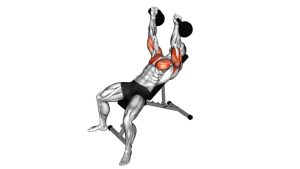
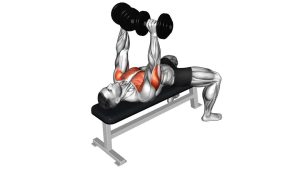
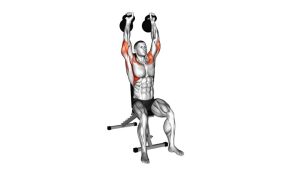
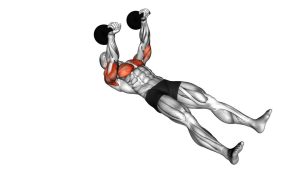
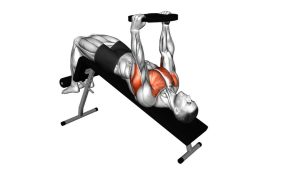
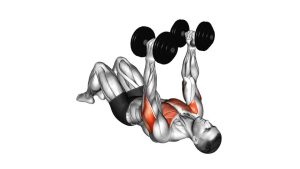
Kettlebell Bench Press: Proper Form, Sets & Reps, Tips, and FAQs
Learn how to do the kettlebell bench press with perfect form. Step-by-step execution, sets and reps by goal, pro tips, common mistakes, FAQs, and recommended equipment.
Kettlebell Bench Press (Male Demo)
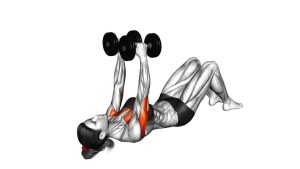
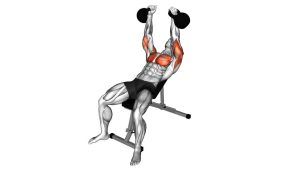
Done correctly, this press feels strong through the pecs with steady support from the triceps and the front delts, while the shoulder stabilizers work in the background to keep the kettlebell from drifting or wobbling. Prioritize control over load—especially if you’re pressing one arm at a time.
Quick Overview
| Body Part | Chest |
|---|---|
| Primary Muscle | Pectoralis major (mid / sternal fibers emphasized on a flat bench) |
| Secondary Muscle | Triceps, anterior deltoid, serratus anterior; rotator cuff for stabilization |
| Equipment | Flat bench + kettlebell (one or two) |
| Difficulty | Intermediate (higher stability demand than dumbbells) |
Sets & Reps (By Goal)
- Strength: 3–5 sets × 4–6 reps (2–3 min rest, crisp reps, no wobble)
- Hypertrophy: 3–4 sets × 8–12 reps (60–90 sec rest, controlled tempo)
- Muscular endurance: 2–3 sets × 12–20 reps (45–75 sec rest, lighter load)
- Stability / skill focus: 3–5 sets × 6–10 reps (3 sec down, 1 sec pause, smooth press)
Progression rule: First improve stability (zero wrist bend, steady lockout, consistent press path). Then add reps, then load. If the kettlebell wobbles, you progressed too fast.
Setup / Starting Position
- Bench position: Lie flat with feet planted firmly on the floor.
- Upper back tight: Retract and depress your shoulder blades (“back and down”) to build a stable base.
- Grip & wrist: Hold the kettlebell handle deep in the palm; keep the wrist straight and stacked over the elbow.
- Elbow angle: Keep the elbow slightly tucked (about 30–45° from your torso), not flared straight out.
- Start position: Kettlebell over the mid-chest/shoulder line with control before the first rep.
Tip: If pressing one arm at a time, brace your core to resist rotating. Your torso should stay square on the bench.
Execution (Step-by-Step)
- Inhale and brace: Take a controlled breath, keep ribs down, and maintain a stable upper back.
- Lower with control: Bring the kettlebell down toward the outer-mid chest while keeping the forearm vertical.
- Pause briefly: Stop just above the chest (or lightly touch if controlled)—no bounce.
- Press straight up: Drive the kettlebell upward until near full extension, keeping the shoulder packed (no shrug).
- Finish stable: At the top, maintain a stacked wrist and steady kettlebell—then repeat smoothly.
Pro Tips & Common Mistakes
Pro Tips
- Keep a vertical forearm: Wrist stacked over elbow at the bottom improves leverage and comfort.
- Own the eccentric: Lower for ~2–3 seconds to build control and chest tension.
- Repeat the same path: Consistent pressing line equals better strength and safer shoulders.
- Use unilateral sets: Single-arm presses improve stability and expose imbalances.
Common Mistakes
- Wrist collapsing backward: Usually too heavy or poor handle placement—stack the wrist.
- Elbows flaring wide: Increases shoulder stress—keep a slight tuck.
- Shoulders shrugging at lockout: Keep shoulders down; don’t finish with traps.
- Bouncing off the chest: Lose tension + irritate joints—pause and stay controlled.
- Losing scapular position: Keep shoulder blades set through the whole set.
FAQ
Is the kettlebell bench press better than dumbbells?
It’s not “better,” just different. Kettlebells add an offset load that increases stability demands and improves control. Dumbbells are usually easier to load heavier for classic hypertrophy progressions.
Should I press with one kettlebell or two?
One kettlebell is excellent for stability and anti-rotation core work. Two kettlebells feel closer to a standard press, while still challenging wrist and shoulder control.
Where should I feel it?
Mostly in the chest and triceps. You’ll also feel shoulder stabilizers working to keep the kettlebell steady. If you feel sharp front-shoulder pinching, reduce range and adjust elbow angle.
How deep should I lower the kettlebell?
Lower until your upper arm is near parallel with the bench (or as deep as you can maintain a stacked wrist and stable shoulder). Depth should never force the shoulder forward or cause pain.
What’s a good progression?
Start with strict tempo and perfect stability. Progress by adding reps first, then a slightly heavier kettlebell. You can also add a pause at the bottom before increasing load.
Recommended Equipment (Optional)
- Cast Iron Kettlebell — durable and reliable for pressing and general strength work
- Competition Kettlebell — consistent size across weights; often more comfortable for rack/press variations
- Flat Weight Bench — stable bench improves pressing mechanics and safety
- Lifting Chalk — improves grip security on the kettlebell handle
- Resistance Bands Set — great for warm-ups (band pull-aparts) and shoulder-friendly accessories
Tip: Choose a kettlebell you can press with zero wrist collapse. Stability comes first—load comes second.